The Hidden Health Crisis Inside Dubai’s Offices
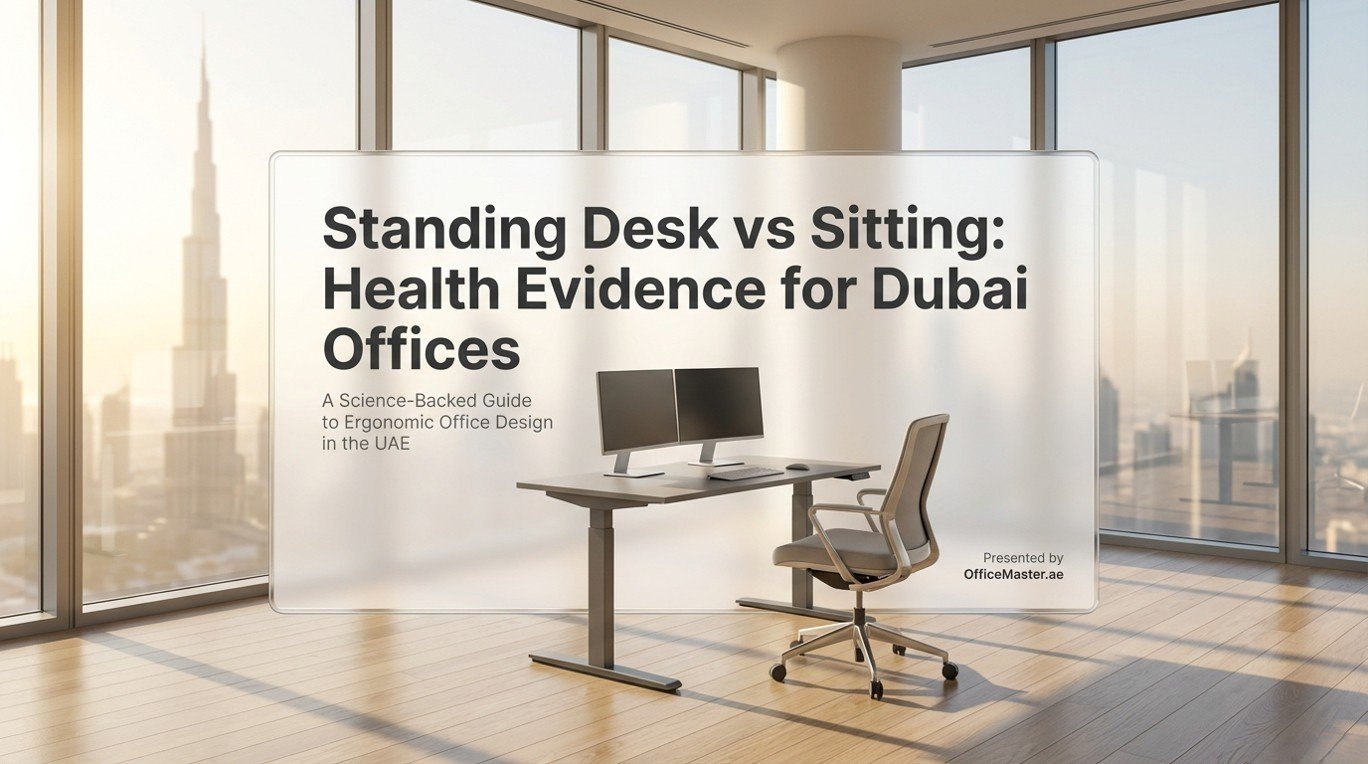
Dubai’s skyline is synonymous with ambition, innovation, and modernity. But behind the floor-to-ceiling glass facades of the emirate’s gleaming commercial towers, a quiet and cumulative health crisis is unfolding one chair at a time. The average office professional in the UAE spends between eight and ten hours per day seated, often with minimal movement, inadequate lumbar support, and screen positions that strain the cervical spine. This is not a trivial lifestyle preference. It is a clinically documented health risk.
Globally, the World Health Organization classifies physical inactivity as the fourth leading risk factor for mortality. Within the GCC region, sedentary behavior is linked to the alarming prevalence of lifestyle diseases including type 2 diabetes, cardiovascular disease, and chronic musculoskeletal disorders. For employers and HR directors evaluating office furniture Dubai procurement, the standing desk conversation has moved well beyond aesthetics or trend. It is, unambiguously, a matter of organizational health, productivity, and long-term liability.
This article draws on peer-reviewed research, ergonomic science, and occupational health data to provide a definitive, evidence-based comparison of prolonged sitting versus standing desk usage in modern office environments with specific context for the unique climatic, cultural, and commercial realities of Dubai and the UAE. Whether you are outfitting a new office or retrofitting an existing workplace, the evidence presented here should inform every decision you make.
1. The Sedentary Reality: How Much Are Dubai Office Workers Actually Sitting?
Before evaluating solutions, it is essential to understand the scale of the problem. Research published in the International Journal of Environmental Research and Public Health found that desk-based employees in high-income urban environments sit for an average of 9.7 hours daily — exceeding the recommended threshold by nearly double. In the UAE, where the majority of the professional workforce operates in air-conditioned offices due to the extreme heat climate, this figure is compounded by reduced outdoor activity and limited lunchtime walks.
A 2022 survey by the Dubai Health Authority revealed that approximately 61% of UAE residents do not meet the WHO’s recommended 150 minutes of moderate-intensity physical activity per week. For sedentary office professionals, this gap is significantly wider. The combination of long commutes, desk-bound workdays, and limited natural movement creates what occupational health specialists refer to as a ‘triple sedentary risk’ — and Dubai’s professional population sits squarely within this high-risk category.
The commercial implications are equally significant. A 2023 SHRM-commissioned report estimated that sedentary-related absenteeism and reduced productivity cost employers in the MENA region upwards of USD 890 per employee annually. For a 100-person office in Dubai, that translates to nearly AED 327,000 in avoidable productivity losses each year. This is the financial context that makes the case for ergonomic office setup Dubai investments not merely attractive, but economically rational.
2. The Science of Sitting: What Prolonged Sedentary Behavior Does to the Body
2.1 Spinal and Postural Degradation
The human spine evolved for movement. When seated particularly in a forward-flexed, screen-facing posture the lumbar spine bears significantly greater compressive load than in a standing position. Research by Nachemson (1981), still widely cited in occupational medicine, demonstrated that intradiscal pressure in the lumbar spine during sitting is approximately 40% higher than during standing, and up to 270% higher when seated and leaning forward.
Sustained sitting causes the hip flexor muscles to shorten and tighten, while the glutes, core stabilizers, and thoracic extensors progressively weaken from disuse. This muscular imbalance clinically called ‘lower crossed syndrome’ progressively tilts the pelvis anteriorly, flattening the lumbar curve and placing the vertebral discs under chronic asymmetric load. Over months and years, this can accelerate degenerative disc disease, increase the risk of disc herniation, and create persistent low back pain that significantly impairs daily function.
Studies published in Applied Ergonomics confirm that 54% of office workers report clinically significant neck or back pain, with prolonged static sitting as the most commonly identified cause. In Dubai’s offices, where ergonomic awareness is still maturing, this figure is likely to be consistent with or higher than global benchmarks particularly in organizations that have not invested in office ergonomics UAE-standard workstation assessments.
2.2 Metabolic Dysfunction and Weight Management
When the large skeletal muscles of the legs and trunk are inactive as they are during prolonged sitting the enzyme lipoprotein lipase (LPL), which is critical for fat metabolism, dramatically reduces its activity. A landmark study by Hamilton et al. (2007) found that LPL activity in leg muscles dropped by as much as 90% after just one hour of sitting. This metabolic ‘switch-off’ impairs the body’s ability to process blood triglycerides and glucose, elevating the risk of dyslipidemia and insulin resistance.
The caloric expenditure difference between sitting and standing is modest but compounding. Standing burns approximately 50 additional calories per hour compared to sitting. For a professional who stands for just three hours of a standard workday, this equates to around 750 extra calories per week, or approximately 30,000 calories the equivalent of roughly 8 lbs. of fat over a year. While standing desks are not a substitute for dedicated exercise, this metabolic contribution is measurable and clinically meaningful when sustained over time.
A 2016 systematic review in the British Medical Journal (BMJ) found that replacing sitting with standing or light activity was associated with a 2.1 mmHg reduction in systolic blood pressure and a significant reduction in blood glucose spikes after meals both important risk factors for type 2 diabetes and cardiovascular disease.

2.3 Cardiovascular Risk: The Sitting Disease
The phrase ‘sitting is the new smoking’ popularized by Dr. James Levine of the Mayo Clinic may be a rhetorical simplification, but the underlying research is sobering. A comprehensive meta-analysis of 18 studies involving nearly 800,000 participants, published in the European Heart Journal, found that those who sat for the longest periods daily had a 147% greater risk of cardiovascular events than the least sedentary individuals independent of leisure-time physical activity levels.
This ‘exercise paradox’ is critical for understanding office health in Dubai: going to the gym three times a week does not fully offset the physiological harm of sitting for eight-plus hours daily. The cardiovascular system requires consistent, low-intensity movement throughout the day to maintain vascular tone, regulate blood pressure, and sustain healthy endothelial function. A person who exercises moderately but sits for nine hours at a desk remains at elevated cardiovascular risk.
For UAE employers, where employee health insurance costs are directly tied to claims frequency, reducing sedentary risk through workplace wellness UAE programmed including ergonomic sit-stand furniture represents a calculable return on investment with actuarial support.

2.4 Mental Health, Cognitive Performance, and Productivity
The relationship between physical posture and cognitive output is increasingly supported by neuroscience. A 2018 study in the journal Frontiers in Psychology found that standing during cognitively demanding tasks was associated with improved executive function, working memory, and creative ideation with participants reporting higher states of mental energy and task engagement compared to those seated.
Cerebral blood flow, which directly influences focus, problem-solving speed, and decision quality, is enhanced by movement and standing. When sedentary, venous pooling in the lower extremities reduces cardiac output, which in turn reduces the volume of oxygenated blood reaching the prefrontal cortex the region responsible for complex reasoning, planning, and impulse control. Simply put, sitting makes thinking harder.
A 2016 Texas A&M University study tracked call center employees over six months and found that those using sit-stand desks were 46% more productive than their seated counterparts. When applied to office productivity Dubai environments where knowledge work forms the backbone of the commercial economy this productivity premium represents a compelling argument for ergonomic investment.
Sitting vs Standing — Key Health Impact Comparison
| Health Parameter | Prolonged Sitting | Regular Standing / Movement | Evidence Level |
|---|---|---|---|
| Lumbar spinal pressure | 40–270% higher vs standing | Baseline / reduced | Strong (peer-reviewed) |
| LPL enzyme activity (fat metabolism) | Drops up to 90% in 1 hour | Maintained at functional levels | Strong |
| Blood glucose regulation | Elevated post-meal spikes | 2.1 mmHg BP reduction noted | Moderate–Strong |
| Cardiovascular event risk | +147% for highest sitters | Significantly lower | Strong (meta-analysis) |
| Caloric expenditure | Baseline (approx. 80 kcal/hr.) | Approx. 130 kcal/hr. | Moderate |
| Workplace productivity | Baseline | Up to +46% in some studies | Moderate |
| Neck and back pain incidence | 54% of office workers affected | Reduced with sit-stand variety | Strong |
| Cognitive performance / focus | Reduced with extended sessions | Improved executive function | Moderate |
| All-cause mortality risk | Elevated with 8+ hrs./day sitting | Lower with movement breaks | Strong (meta-analysis) |
Sources: Hamilton et al. (2007); Wilmot et al. European Heart Journal (2012); Biswas et al. Annals of Internal Medicine (2015); Texas A&M University (2016); BMJ Open (2018)

3. Standing Desks — Genuine Benefits, Honest Limitations
3.1 The Proven Benefits of Height-Adjustable Desks
A standing desk Dubai particularly a sit-stand desk UAE model with motorized height adjustment enables workers to alternate postures throughout the day, which is the central mechanism through which ergonomic benefits are achieved. The evidence base is robust enough to support several clear conclusions:
- Reduced musculoskeletal discomfort: A 2011 study published in Applied Ergonomics found a 54% reduction in upper back and neck discomfort after just four weeks of sit-stand desk usage among office workers.
- Improved energy levels: The Stand Up Australia trial, involving over 231 participants, reported significant improvements in self-rated energy, mood, and concentration among workers who alternated between sitting and standing.
- Reduced fatigue: While counterintuitive, research suggests that alternating postures reduces the type of static muscle fatigue associated with both prolonged sitting and prolonged standing, resulting in lower end-of-day fatigue scores.
- Engaged workplace culture: Offices that invest in modern office furniture UAE-standard ergonomic solutions — including adjustable desk Dubai options — consistently report higher employee satisfaction scores and stronger employer branding performance in talent surveys.
- Lower absenteeism: A study in the Journal of Occupational and Environmental Medicine found that employees with access to sit-stand workstations took significantly fewer sick days related to musculoskeletal complaints — averaging 1.8 fewer days absent per year per employee.
3.2 The Limitations: What Standing Desks Cannot Do
Intellectual honesty demands acknowledging that standing desks, used incorrectly, can introduce new problems rather than eliminate existing ones. These limitations are important for any Dubai office manager or fit-out consultant to understand:
- Prolonged standing is also harmful: Research published in the American Journal of Epidemiology identified prolonged standing (more than four hours continuously) as an independent risk factor for varicose veins, lower limb oedema, and plantar fasciitis. The goal is postural variety, not a wholesale replacement of sitting with standing.
- Improper setup negates benefits: A standing desk at the wrong height — typically too low — increases wrist flexion and shoulder elevation, creating new injury pathways at the wrist and shoulder rather than eliminating spinal risk.
- No substitute for exercise: Standing at a desk does not replicate the cardiovascular benefits of moderate-intensity exercise. It is a complement to a physically active lifestyle, not a replacement.
- Anti-fatigue mats are essential: Without appropriate flooring or anti-fatigue matting, prolonged standing on hard office surfaces creates musculoskeletal load on the knees, hips, and lower back that can rival the harm of extended sitting.
Estimated Caloric Expenditure — Sitting vs Standing (Per Hour, 70 kg Individual)
| Activity | Approx. kcal/hr | Over 8-Hour Workday | Over 250 Working Days/Year |
|---|---|---|---|
| Sitting (desk work) | ~80 kcal | ~640 kcal | ~160,000 kcal |
| Standing (desk work) | ~130 kcal | ~1,040 kcal | ~260,000 kcal |
| Light walking (around office) | ~195 kcal | ~1,560 kcal (est.) | ~390,000 kcal (est.) |
| Sit-stand alternation (50/50) | ~105 kcal | ~840 kcal | ~210,000 kcal |
| Additional kcal from standing vs sitting | +50 kcal/hr. | +400 kcal/day | +100,000 kcal/yr (~28.5 kg fat) |
Note: Estimates based on MET values from Compendium of Physical Activities. Individual variation applies. Values are indicative, not prescriptive.

4. The Sit-Stand Balance: Evidence-Based Ratios for Dubai Office Environments
The most robust body of ergonomic research — including guidelines published by NICE (UK), OSHA (US), and the Human Factors and Ergonomics Society — converges on a consistent recommendation: office workers should alternate between sitting and standing, aiming for approximately 30 minutes of standing or light movement for every hour of desk work, gradually progressing to a 50/50 sit-stand ratio over two to four weeks.
In the UAE context, where ambient temperatures exceed 40°C for several months of the year and outdoor activity is frequently impractical between May and September, the office workstation is effectively the only ergonomic environment many professionals inhabit for extended periods. This amplifies the importance of ergonomic office setup Dubai solutions that are specifically calibrated for long daily occupancy.
Recommended Sit-Stand Ratios by Acclimatization Phase
| Phase | Duration | Sitting Target | Standing Target | Movement Breaks |
|---|---|---|---|---|
| Week 1–2 (Introduction) | 2 weeks | 75% | 25% | Every 60 min (5 min walk) |
| Week 3–4 (Adaptation) | 2 weeks | 60% | 40% | Every 45 min (5–10 min) |
| Month 2–3 (Optimization) | 6 weeks | 50% | 50% | Every 30–40 min (5–10 min) |
| Month 4+ (Maintenance) | Ongoing | 40–50% | 50–60% | Every 25–30 min (5 min) |
| NICE / HSE Global Guideline | Benchmark | 50% | 50% (target) | Hourly minimum |
Source: NICE Guidance NG187; HSE Manual Handling Operations; Journal of Occupational Health (2018)

5. Posture Impact Analysis — From the Chair to the Standing Platform
5.1 Ergonomic Anatomy of the Seated Position
An ideal seated posture distributes body weight across the seat pan, lower back (lumbar support), and feet, with the hips at 90–100 degrees, knees at 90 degrees, feet flat on the floor, and the screen at or slightly below eye level. In practice, fewer than 15% of office workers sustain this posture for more than 30 consecutive minutes, according to research from the British Medical Journal.
Screen glare, poor placement of keyboards and mice, and chairs adjusted to desk height (rather than body height) are the most common postural disruptors in Dubai offices. Without formal ergonomic workstation assessment, even premium office furniture Dubai investments deliver suboptimal health outcomes because the setup is incorrect for the individual user’s anthropometry.
5.2 Ergonomic Anatomy of the Standing Position
When standing at an adjustable desk Dubai, the optimal ergonomic position places the desktop surface at elbow height when the arms are hanging naturally at the sides — typically between 95 and 110 cm for most adults. The screen should be at arm’s length, with the top of the display at eye level, and the keyboard should allow the wrists to be in a neutral, non-extended position.
The most commonly observed errors in standing desk usage are: the desk set too low (causing forward neck and shoulder flexion), the screen too far away (causing forward head posture), and no anti-fatigue mat (causing lower limb discomfort that leads workers to abandon standing altogether). These setup errors are preventable with a proper ergonomic induction — an essential step in any office wellness solutions UAE implementation.

Postural Risk Analysis — Sitting vs Standing Workstations
| Body Region | Risk at Seated Desk (Unadjusted) | Risk at Standing Desk (Correct Setup) | Risk at Standing Desk (Incorrect Setup) |
|---|---|---|---|
| Lumbar spine (lower back) | High (increased disc pressure) | Low (neutral alignment) | Moderate (if desk too low) |
| Cervical spine (neck) | High (forward head posture) | Low–Moderate | High (screen too far/low) |
| Shoulders & upper traps | High (elevated/protracted) | Low (arms hang naturally) | High (desk too low) |
| Wrists and hands | Moderate (extension if desk wrong height) | Low (neutral) | High (desk too low = wrist flexion) |
| Hips and hip flexors | High (chronic shortening) | Low | Low |
| Knees and lower limbs | Low (minimal load) | Moderate (if prolonged without mat) | Moderate–High (prolonged standing) |
| Core musculature | Low (passive sitting disengages core) | Moderate–High (engaged for balance) | Moderate |

6. Expert Analysis — What Occupational Health Specialists and Ergonomists Recommend
Expert Perspective: The Ergonomic Consensus
The global consensus among certified ergonomists, occupational physicians, and physical therapists is that the optimal workplace intervention is not the standing desk in isolation — it is a movement-rich workday. The standing desk is the most practical tool for achieving this in a modern office environment, provided it is correctly configured and paired with ergonomic training.
6.1 The Role of the Certified Ergonomist
Leading ergonomics bodies including the Human Factors and Ergonomics Society (HFES) and the Chartered Institute of Ergonomics and Human Factors (CIEHF) are unequivocal: furniture investment alone is insufficient without workstation assessment. An ergonomist evaluates the user’s anthropometric data (seated elbow height, popliteal height, eye height), work task profile, and existing pain or injury history to configure the workspace optimally.
For UAE businesses investing in sit stand desk UAE solutions, the most effective approach combines quality adjustable furniture with at least one professional ergonomic workstation assessment per employee, followed by a light refresher assessment at six and twelve months. Research published in Ergonomics found that this combined intervention reduced injury-related compensation claims by 67% compared to furniture investment alone.
6.2 Behavioral Science and the Movement Habit
Even the best adjustable desk Dubai cannot benefit a user who does not change position. Behavioral science research including Fogg’s Behavior Model and implementation intention theory demonstrates that transition from sitting to standing must be prompted by environmental cues or technology reminders to overcome the inertia of habit.
The most successful sit-stand implementations in corporate Dubai offices have incorporated: programmable desk memory positions (so users can switch height with one button touch), software-based movement reminders (tools such as Stretchly, Move, or built-in macOS/Windows wellness features), and manager-modelled behavior, where team leaders visibly use their standing desks during meetings and calls.
6.3 The Role of the Full Ergonomic Ecosystem
A sit-stand desk is most effective when it is part of a holistic ergonomic office ecosystem, which includes: an ergonomic chair with adjustable lumbar support, armrests, and seat depth; a monitor arm to achieve precise screen positioning at any desk height; an ergonomic keyboard and mouse to maintain wrist neutrality; an anti-fatigue mat for standing periods; and adequate task lighting to reduce eye strain and the compensatory forward head posture that screen glare induces.
OfficeMaster.ae offers integrated office ergonomics UAE consultation to help businesses in Dubai configure all elements of this ecosystem, ensuring that the investment in modern office furniture UAE delivers the full spectrum of intended health and productivity returns.
For procurement teams and office managers in Dubai evaluating furniture investment, the decision between traditional fixed-height desks and sit-stand workstations warrants a multi-dimensional analysis that goes beyond upfront cost to include total cost of ownership, health risk liability, and productivity impact.
Cost Comparison — Traditional Desks vs Sit-Stand Workstations (AED, 2026 Market Estimates)
| Cost Factor | Traditional Fixed Desk | Manual Crank Sit-Stand | Electric Sit-Stand Desk |
|---|---|---|---|
| Unit purchase cost (AED) | AED 500 – 1,800 | AED 1,200 – 2,800 | AED 2,500 – 7,500+ |
| Ergonomic chair (paired) | AED 400 – 1,500 | AED 400 – 1,500 | AED 400 – 1,500 |
| Anti-fatigue mat required | No | Yes (AED 80–300) | Yes (AED 80–300) |
| Monitor arm recommended | Optional | Yes (AED 200–600) | Yes (AED 200–600) |
| Annual health risk cost (est.) | AED 900–1,200/employee | AED 500–700/employee | AED 300–500/employee |
| Productivity premium (est.) | Baseline | +10–25% (est.) | +25–46% (optimal use) |
| Lifespan (average) | 8–12 years | 7–10 years | 8–12 years (motor warranty: 5 yr) |
| ROI timeframe (est.) | N/A | 12–18 months | 18–24 months |
AED estimates based on 2026 Dubai market pricing. Health risk cost estimate adapted from SHRM/MENA employer health data. ROI calculations are illustrative based on productivity and absenteeism literature.

8. Practical Implementation Guide — Rolling Out Sit-Stand Desks in Dubai Offices
8.1 Phase 1: Needs Assessment and Stakeholder Alignment
Any successful office ergonomics UAE initiative begins with a structured needs assessment. This involves: reviewing existing employee health and absenteeism data; surveying team members on musculoskeletal complaints and productivity perceptions; conducting a physical walk-through of the existing office layout; and engaging HR leadership, facilities management, and ideally an occupational health physician or ergonomic consultant.
In Dubai’s commercial real estate context, where offices are frequently purpose-built or tenanted in premium buildings, the assessment should also consider: floor load capacity (motorized desks add weight); cable management requirements; and power socket availability adjacent to desk positions, since electric sit-stand desks require mains power.
8.2 Phase 2: Product Selection and Specification
When selecting an adjustable desk Dubai product, specify against the following key performance criteria:
- Height range: A quality electric sit-stand desk should offer a height range of at least 65–125 cm to accommodate 95% of adult anthropometric variability in a mixed-gender, multicultural workforce.
- Motor quality and noise level: Premium desks use dual or triple motor systems with noise levels below 45 dB — quiet enough to adjust without disrupting open-plan office conversations.
- Weight capacity: Specify a minimum 80 kg desktop load capacity to accommodate multiple monitors, docking stations, and accessories without instability.
- Memory presets: At least two programmable height memory positions enable frictionless, one-touch switching between sit and stand configurations.
- Desktop material: Specify scratch-resistant, non-reflective laminate surfaces in configurations appropriate for the office’s aesthetic — OfficeMaster.ae offers customized modern office furniture UAE finishes including real wood veneer, compact laminate, and glass options.
- Anti-collision safety: Electric desks should incorporate obstacle detection sensors that stop motor movement if resistance is encountered.
8.3 Phase 3: Rollout, Training, and Habit Formation
The deployment phase is where most corporate sit-stand programmed either succeed or fail. A structured rollout should include: individual workstation setup sessions led by an ergonomic trainer; distribution of a simple reference card showing the correct standing and sitting configurations for each user; a 30-day challenge framework to motivate early adoption, with team-level standing minutes tracked via a shared dashboard; and manager check-ins at weeks two and four to identify and correct any setup issues before pain develops.
OfficeMaster.ae provides post-installation ergonomic setup support as part of its comprehensive office furniture Dubai delivery service, ensuring that every sit-stand desk reaches its intended health outcome from day one.
8.4 Phase 4: Monitoring, Optimization, and Culture Embedding
Sustained behavior change requires ongoing measurement. Quarterly pulse surveys asking employees about musculoskeletal discomfort, energy levels, and productivity perception provide a longitudinal dataset against which investment returns can be calculated. More rigorous organizations may invest in desk sensor technology available from providers like Density or Space well that tracks actual sit-stand transition frequency and provides anonymized team-level insights for ergonomic programmed managers.
9. Productivity Metrics — The Business Case for Dubai Employers
For CFOs and C-suite decision-makers, the health argument for sit-stand desks must be translated into financial language. The productivity and retention metrics associated with ergonomic workplace wellness UAE investments present a compelling commercial case.
Workplace Productivity and Wellness Metrics — Sit-Stand vs Traditional Desks
| Metric | Traditional Desk Office | Sit-Stand Desk Office | Source |
|---|---|---|---|
| Employee-reported back pain (% affected) | 54% | 28–35% | Applied Ergonomics (2021) |
| Average sick days (musculoskeletal cause) | 4.2 days/year | 2.4 days/year | JOEM (2018) |
| Self-rated productivity score (1–10) | 6.8 / 10 | 7.9 / 10 | Texas A&M Study (2016) |
| Employee satisfaction with workspace | 61% satisfied | 79% satisfied | CBRE Workplace Survey (2022) |
| Talent attraction preference (ergonomic office) | N/A (baseline) | +34% preference among candidates | LinkedIn Workforce Survey (2023) |
| Annual health cost per employee (est.) | AED 1,100 – 1,400 | AED 450 – 700 | SHRM/MENA adaptation |
| Productivity uplift (conservative estimate) | Baseline | +12–18% in knowledge work | Cochrane Review (2018) |
| Retention improvement (ergonomic workplace) | Baseline | +11% year-over-year retention | CIPD Wellbeing Report (2023) |

Frequently Asked Questions (FAQ) — Standing Desks and Office Health in Dubai
Q: Are standing desks actually good for you, or is it just a wellness trend?
Standing desks are supported by a substantial and growing body of peer-reviewed research. When used correctly — with proper height adjustment, regular postural alternation, and appropriate ergonomic accessories — they demonstrably reduce musculoskeletal discomfort, improve metabolic markers, and enhance cognitive performance. They are not a trend; they are an evidence-based ergonomic intervention. The key distinction is that standing desks must be used as sit-stand desks, not standing-only desks.
Q: How many hours a day should I stand at my desk in a Dubai office?
Current ergonomic guidelines recommend working up to a 50/50 sit-stand ratio over several weeks of adaptation. Practically, this means standing for approximately 15–30 minutes per hour of desk work, gradually increasing as comfort improves. For new users, 15 minutes of standing per hour in the first two weeks is a healthy and sustainable starting point. Avoid standing for more than 60 consecutive minutes without a short walking break.
Q: What is the best height for a standing desk?
The optimal standing desk height places the desktop surface at elbow height when your arms hang naturally at your sides — typically between 95 and 110 cm for most adults. Your wrists should rest flat on the keyboard without extension or flexion. The top of your monitor should be at or slightly below eye level, approximately 50–70 cm from your eyes. Electric sit-stand desks with memory presets allow you to save your exact sitting and standing heights for effortless, repeatable configuration.
Q: Do standing desks help with back pain?
Yes, with important caveats. Studies consistently show that alternating between sitting and standing reduces lumbar spinal pressure, hip flexor shortening, and the static muscle fatigue that contributes to chronic low back pain. A 2011 Applied Ergonomics study found a 54% reduction in upper back and neck discomfort after four weeks of sit-stand desk usage. However, a standing desk at the wrong height, without ergonomic chair support during sitting phases, or used in a standing-only manner, can create or worsen different types of back pain.
Q: Is it bad to stand at a desk all day?
Yes. Prolonged continuous standing — particularly on hard surfaces — is an independent risk factor for varicose veins, lower limb oedema, plantar fasciitis, and chronic lower back pain. Research in the American Journal of Epidemiology found that workers who stood for more than four continuous hours showed elevated lower extremity health risks. The goal is postural variety — alternating between sitting, standing, and brief walking — not the wholesale replacement of sitting with standing.
Q: Where can I buy a standing desk in Dubai?
OfficeMaster.ae offers a curated range of electric and manual sit-stand desks in Dubai, including height-adjustable models suitable for individual use and enterprise-scale office fit-outs. Their range includes desks with dual-motor systems, programmable memory presets, and a variety of desktop sizes and surface finishes to suit both open-plan and private office environments across the UAE.
Q: How much does a sit-stand desk cost in the UAE?
Pricing in the UAE ranges from approximately AED 1,200 for manual crank sit-stand desks to AED 7,500 or more for premium motorized models with advanced features. Mid-range electric sit-stand desks with good motor quality, adequate height range, and memory presets are typically priced between AED 2,500 and AED 4,500 — a range that delivers strong value relative to the long-term health and productivity returns documented in ergonomic research.
The evidence strongly suggests yes. The landmark Texas A&M University study found a 46% productivity increase in call center workers using sit-stand desks over a six-month period. More conservative Cochrane Review estimates suggest a 12–18% productivity improvement in knowledge work settings. For Dubai businesses, where talent costs are high and competitive pressure is intense, even a 10% productivity improvement across a team of 20 knowledge workers represents a substantial annual return on the investment in ergonomic office furniture.
A standing desk is most effective when paired with: an anti-fatigue mat (essential for standing comfort on hard office floors); a monitor arm to maintain correct screen height across both sitting and standing positions; an ergonomic keyboard and mouse for wrist neutrality; a high-quality ergonomic chair with lumbar support and adjustable armrests for sitting phases; and adequate task lighting to reduce screen glare and compensatory neck posture.
Q: Is sitting all day bad for your heart?
Yes. A meta-analysis of 18 studies published in the European Heart Journal found that those who sat for the longest periods daily had a 147% greater relative risk of cardiovascular events compared to the least sedentary individuals — and this risk was independent of leisure-time physical activity. Regular exercise does not fully offset the cardiovascular harm of prolonged daily sitting. Low-intensity movement throughout the day — including standing at a desk — is needed to maintain vascular health.
Q: What is the difference between a sit-stand desk and a regular standing desk?
A sit-stand desk (also called a height-adjustable desk) allows the user to easily change the desktop height between a seated position and a standing position — either manually via a crank mechanism or electrically via a motor. A fixed standing desk is set at a height for standing only and does not allow the user to sit at it. For office use, sit-stand (height-adjustable) desks are strongly preferred by ergonomists because they support postural variety, which is the key mechanism behind the health and productivity benefits.
An ergonomic office setup Dubai should include: a height-adjustable desk set to elbow height; a chair adjusted so your feet are flat on the floor and your hips are at 90–100 degrees; a monitor at arm’s length with the screen top at or slightly below eye level; keyboard and mouse positioned to allow neutral wrist posture; and task lighting to eliminate screen glare. OfficeMaster.ae ergonomic consultation service can guide you through a personalized workstation setup.
Q: Are standing desks worth it for a small Dubai startup or SME?
Absolutely. While the upfront investment is higher than a traditional desk, the medium-term returns — in reduced absenteeism, higher productivity, improved employee retention, and stronger employer brand — are documented across businesses of all sizes. For a startup, offering ergonomic workstations is also a powerful signal of the organization investment in employee wellbeing, which significantly enhances talent attraction in Dubai’s competitive job market. Entry-level quality sit-stand desks are available from AED 1,200 upwards.
Q: Does Dubai workplace law require employers to provide ergonomic furniture?
The UAE Labor Law (Federal Decree-Law No. 33 of 2021) places a general duty of care on employers to maintain a safe and healthy work environment. While there is no specific legislative mandate prescribing ergonomic furniture as of the time of writing, the Dubai Health Authority’s occupational health guidelines increasingly reference ergonomic standards in workplace health assessments. Beyond regulatory compliance, the employer liability and insurance cost implications of sedentary-related musculoskeletal injuries provide a strong commercial motivation for ergonomic investment.
Q: Can standing desks help with fatigue and afternoon energy slumps?
Yes. The post-lunch circadian dip in alertness — commonly experienced between 1:30 and 3:30 PM — is exacerbated by sedentary posture and the metabolic depression associated with prolonged sitting after a meal. Research shows that transitioning to a standing position during this window improves blood glucose regulation, reduces the post-meal glycemic spike that contributes to afternoon lethargy, and increases cerebral blood flow. Many office professionals report that a 20–30 minute standing period immediately after lunch is among the most effective and immediate benefits of their sit-stand desk.
Movement Is Medicine — And Dubai’s Offices Are Ready
The evidence is comprehensive, consistent, and compelling: prolonged, uninterrupted sitting is a modifiable health risk with measurable consequences for spinal health, metabolic function, cardiovascular health, and cognitive performance. In Dubai’s office environment where long working days, extreme outdoor heat, and sedentary commutes compound the risk the need for proactive ergonomic intervention is acute.
Standing desks, deployed as sit-stand workstations with proper ergonomic configuration, represent the most practical, scalable, and evidence-backed tool available to modern offices for reducing sedentary risk. They are not a luxury — they are, in the language of occupational medicine, a clinically supported workplace health intervention with a documented return on investment.
The businesses that will lead Dubai’s commercial landscape in the decade ahead are those that understand this: healthy employees are productive employees, and productive employees are the foundation of every competitive advantage. Whether you are a startup in Business Bay, a law firm in DIFC, or an enterprise in Dubai Internet City, the investment in ergonomic office furniture is an investment in the people who power your business.
Ready to Transform Your Dubai Office?
OfficeMaster.ae is the UAE’s trusted destination for premium sit-stand desks, ergonomic office furniture, and complete workplace wellness solutions. From individual workstations to enterprise-wide office fit-outs in Dubai, Abu Dhabi, and across the Emirates, we help businesses build offices where people can do their best work — comfortably, healthily, and productively.
✦ Explore Our Standing Desk Dubai Range ✦ Book a Free Ergonomic Consultation ✦ Request a Corporate Quote
Visit: www.officemaster.ae | Email: info@officemaster.ae