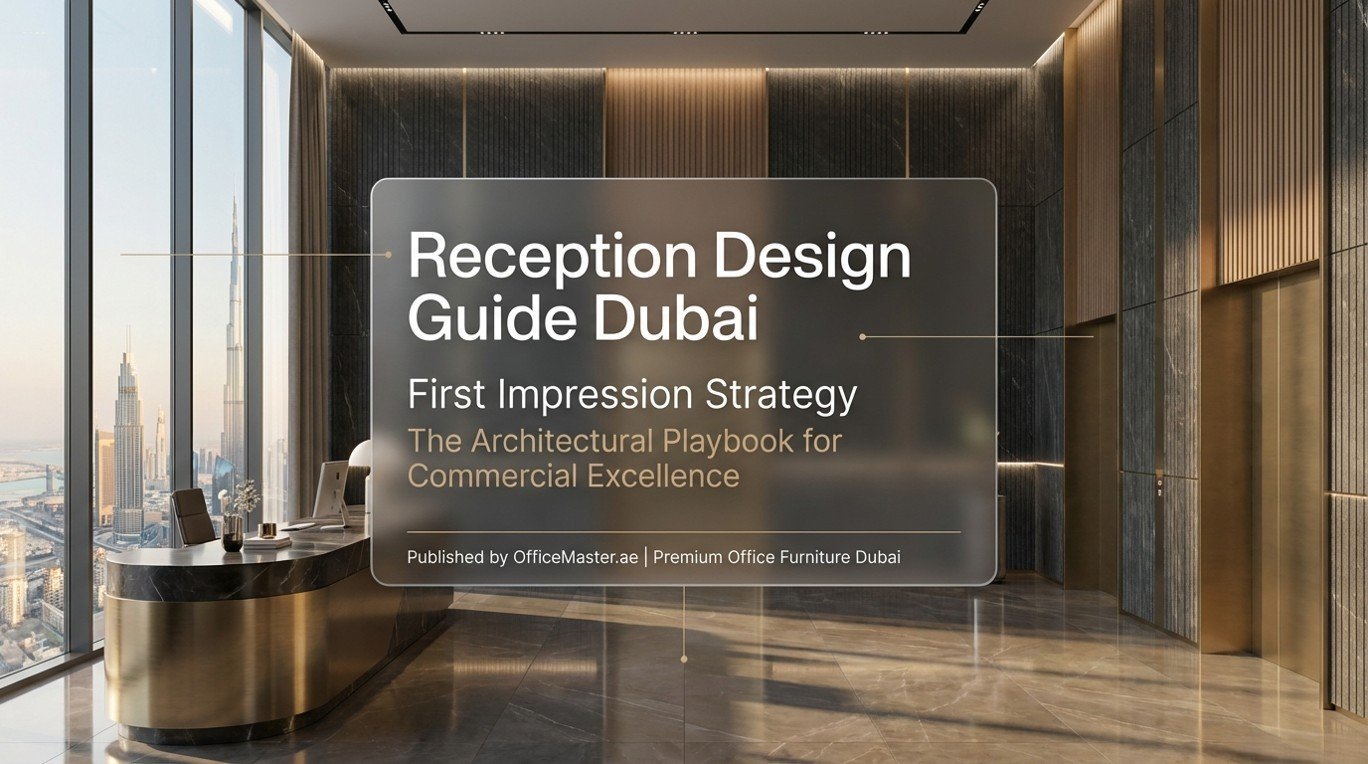
Your reception area is the most commercially powerful square footage in your entire office. It is the first physical manifestation of your brand that every client, investor, candidate, and partner encounters. In Dubai’s hyper-competitive business landscape where corporate image is directly tied to commercial credibility a well-designed reception is not a luxury. It is a strategic necessity.
This comprehensive guide has been created specifically for business owners, facility managers, corporate decision-makers, and office designers operating in Dubai and the wider UAE. It covers every dimension of reception design strategy: psychology, architecture, furniture selection, technology, lighting, branding, visitor flow, and emerging trends shaping the future of corporate spaces across the Emirates.
Whether you are fitting out a new commercial office in Business Bay, refurbishing an established headquarters in DIFC, or optimizing a free zone workspace in Dubai South this guide delivers the knowledge, data, and frameworks you need to design a reception area that creates powerful first impressions and supports long-term business success.
1. Why Your Reception Area Is Your Most Valuable Business Asset
Research in environmental psychology consistently demonstrates that humans form lasting judgements within the first 7–10 seconds of entering a space. In a corporate context, this means your reception area is performing a subconscious sales presentation before a single word has been exchanged.
A 2023 study published in the Journal of Environmental Psychology found that visitors who rated a corporate reception environment positively were 67% more likely to report confidence in the organization’s competence and 54% more likely to proceed with a commercial engagement. In Dubai where business culture places enormous emphasis on presentation, hospitality, and status these numbers are even more pronounced.
1.1 The Commercial ROI of Reception Design
High-quality reception design directly influences:
- Client retention and perception of brand premium
- Talent attraction candidates assess cultural fit from the moment they walk in
- Investor confidence and perceived organizational stability
- Staff pride and motivation employees are influenced by the spaces they work in
- Vendor and partner trust first impressions shape negotiation dynamics
In Dubai’s commercial property market, where Grade A office space in DIFC or Downtown can command AED 180–300+ per sq ft annually, optimizing every square meter of reception space is both a design and financial imperative.
1.2 Dubai’s Unique Corporate Reception Culture
Dubai operates within a distinct cultural and business framework that directly shapes reception design requirements. Arabic hospitality traditions characterized by warmth, generosity, and attentiveness are deeply embedded in corporate culture. A reception that feels cold, clinical, or rushed communicates the wrong values entirely.
Simultaneously, Dubai’s global business community demands international standards of professionalism, technology integration, and efficiency. The ideal Dubai office reception balances local hospitality values with global corporate precision.
Key Dubai-specific considerations include:
- Bilingual signage (Arabic and English) as a cultural courtesy and often a legal requirement
- Prayer room proximity and discreet wayfinding for visiting Muslim professionals
- High-quality refreshment presentation Arabic coffee (qahwa) and dates service areas
- Security protocol compliance for freezones (DIFC, DAFZA, JAFZA, DMCC) and commercial towers
- Climate-appropriate design —managing the transition from extreme outdoor heat to air-conditioned interiors

2. The Psychology of First Impressions in Corporate Reception Design
2.1 Sensory Architecture: Designing for Emotional Response
World-class reception design is fundamentally an exercise in emotional engineering. Every design decision spatial proportion, material texture, lighting temperature, acoustic quality, scent, and color contributes to the subconscious emotional response of every visitor.
Visual Hierarchy
The eye naturally seeks dominant focal points upon entering a new space. In reception design, this means your brand element (logo wall, feature panel, or art installation) should be immediately visible from the entry point, with the reception desk positioned as the secondary focal point. This dual-anchor approach communicates both brand identity and functional welcome simultaneously.
Spatial Proportion
Ceiling height profoundly affects perceived organizational confidence. Research by the University of Minnesota’s Carlson School of Management found that high-ceiling environments increase cognitive freedom and expansive thinking. For Dubai’s premium office towers many of which feature floor-to-ceiling glazing and generous column-free spans leveraging architectural volume in reception design signals organizational ambition and scale.
Acoustic Comfort
Hard surfaces (marble, glass, concrete) amplify sound, creating acoustic stress that visitors subconsciously associate with organizational chaos. Strategic placement of acoustic panels, soft furnishings, rugs, and biophilic elements significantly improves perceived professionalism and visitor comfort.
2.2 Color Psychology for Corporate Reception Spaces
Color selection in corporate reception design is a precise science. Different palettes communicate fundamentally different brand values and emotional associations:
- Deep Blues and Navies Trust, stability, corporate authority. Dominant in financial services, legal, and government sectors.
- Warm Neutrals (Beige, Stone, Taupe) Approachability, quality, premium hospitality. Highly effective in real estate, luxury retail, and professional services.
- Black and Charcoal Power, luxury, exclusivity. Appropriate for fashion, tech, and media brands with premium positioning.
- Green Tones Growth, sustainability, wellness. Increasingly prominent as ESG and sustainability credentials become corporate priorities.
- White and Light Grey Clarity, innovation, modernity. Common in technology, healthcare, and research organizations.
In Dubai’s multicultural corporate environment, it is critical to consider cross-cultural color associations. While white signifies purity in Western contexts, it carries different connotations in various Asian cultures. For offices serving highly diverse client bases common across UAE freezones conservative neutral palettes with accent colors offer the safest, most universally positive reception environment.

3. Reception Desk Design: The Command Centre of Your Entrance
3.1 Functional Design Principles for Reception Desks
The reception desk is simultaneously a functional workspace, a brand statement, a security checkpoint, and a hospitality hub. Effective reception desk design must serve all four functions without compromise.
Ergonomic Height Standards
Standard reception desk height guidelines for Dubai commercial offices follow international ergonomic principles while accounting for local preferences:
- Primary working surface: 720–760mm (ADA and international ergonomic standard for seated work)
- Secondary counter (visitor-facing): 900–1,100mm (comfortable for standing visitors to rest documents or devices)
- Dual-height designs are increasingly standard, allowing the receptionist to work privately at lower height while maintaining an elevated public-facing counter
- Under-desk ergonomic chair clearance: minimum 650mm height with 600mm depth
3.2 Reception Desk Material Selection Guide
Choosing the right material for your reception desk directly impacts maintenance requirements, visual appeal, longevity, and total cost of ownership. The table below provides a comprehensive comparison aligned with Dubai commercial office standards.
| Material | Aesthetic Appeal | Durability | Maintenance | Cost Range (AED) | Best For |
|---|---|---|---|---|---|
| Marble / Stone | Luxury, Timeless | Very High | Medium-High | 8,000 – 25,000+ | Financial, Legal, Luxury Brands |
| Engineered Wood (MDF/HDF) | Modern, Versatile | High | Low | 2,500 – 8,000 | Startups, SMEs, Tech Offices |
| Tempered Glass | Contemporary, Open | High | Medium | 3,500 – 12,000 | Creative Agencies, Media |
| Solid Wood (Oak/Walnut) | Warm, Premium | Very High | Medium | 5,000 – 18,000 | Hospitality, Professional Services |
| Stainless Steel / Metal | Industrial, Sleek | Excellent | Low | 4,000 – 15,000 | Tech, Manufacturing, Corporate |
| Acrylic / Composites | Modern, Lightweight | Medium | Low | 1,800 – 6,000 | Retail, Lifestyle, Co-working |

3.3 Layout Configurations for Reception Desks
The geometric configuration of your reception desk determines traffic flow, visual dominance, security control, and the quality of visitor interaction. Common professional configurations include:
- Linear / Straight — Best for compact spaces; single or double-sided. Clear sightlines from entry.
- L-Shape — Allows private workspace for the receptionist while maintaining a public-facing counter. Ideal for medium-sized offices.
- U-Shape — Encloses the receptionist in a three-sided configuration offering maximum security and workflow control. Suitable for high-traffic corporate HQs.
- Curved / Organic — Contemporary design statement that softens the authoritative desk form. Popular in hospitality, luxury brand offices, and creative studios.
- Island / Freestanding Pedestal —360-degree accessible desk that creates a central focal point in large lobby environments. Common in premium towers and hotel-standard offices.
- Modular / Configurable — Flexible, scalable systems suited for co-working, flex spaces, and offices expecting growth.

4. Reception Area Layout Planning: Size, Zoning, and Visitor Flow
4.1 Space Standards by Office Type
Allocating the correct amount of space to your reception area is one of the most critical and most frequently underestimated decisions in office planning. Too small and the space feels cramped and unwelcoming; too large without strategic zoning and it feels empty and impersonal.
| Office Size | Staff Count | Reception Area (sq ft) | Desk Dimensions (m) | Seating Capacity | Recommended Layout Style |
|---|---|---|---|---|---|
| Small Office | 1–20 | 100 – 200 | 1.2m x 0.6m | 2–4 visitors | Compact Linear / L-Shape |
| Medium Office | 21–100 | 200 – 500 | 1.8m x 0.75m | 4–8 visitors | U-Shape / Island Desk |
| Large Corporate HQ | 101–500 | 500 – 1,200 | 2.4m x 0.9m | 8–16 visitors | Full Reception Suite |
| Enterprise / Tower | 500+ | 1,200 – 3,000+ | Custom curved / modular | 16–30+ visitors | Multi-Zone Command Hub |
| Co-Working / Flex | Varies | 150 – 400 | 1.5m x 0.7m | 4–10 visitors | Open / Moveable Modular |
| Hotel / Hospitality | Varies | 400 – 800+ | 2.0m x 0.85m | 6–12 visitors | Curved Panoramic Desk |
4.2 Strategic Spatial Zoning
Professional reception design divides the entrance space into distinct functional zones, each serving a specific purpose in the visitor journey:
Zone 1: Arrival and Orientation
The first two to five meters from the entrance. This zone must provide immediate visual orientation a clear sightline to the reception desk, brand presence, and unambiguous wayfinding. Cluttered or architecturally confusing arrival zones create anxiety and negative first impressions.
Zone 2: Reception Desk and Host Interface
The primary interaction point. Must be immediately accessible, clearly identified, and ergonomically designed for both staff and visitor comfort. Natural light or high-quality artificial lighting is essential here.
Zone 3: Visitor Waiting and Hospitality
The holding area where visitors wait for their host contact. This zone should priorities comfort, privacy, and positive brand immersion. Quality office waiting area furniture, ambient music, refreshment access, and engaging brand content all belong here.
Zone 4: Security and Access Transition
The boundary between public reception and private office space. In Dubai’s commercial environment particularly in freezones with strict security protocols this zone may include access control barriers, ID verification stations, and badge issuance points.

4.3 Visitor Flow Optimization Strategies
| Challenge | Design Solution | Dubai Context | Expected Outcome |
|---|---|---|---|
| Congestion at peak entry | Double-sided reception desk | High-rise lobby with multiple tenants | 40% reduction in wait time |
| Poor wayfinding | Illuminated floor graphics + digital signage | Multi-language signage (Arabic/English) | Improved self-navigation |
| Privacy for check-in | Angled desk orientation | DIFC, ADGM compliance sensitivity | Visitor data protection |
| Long wait times | Self-service digital kiosks | Tech-forward visitor management | Reduced front-desk load by 60% |
| Access control gaps | Integrated turnstiles with visitor badges | Freezone security requirements | Full audit trail compliance |
| Unclear seating zones | Color zoning + furniture clustering | Mixed-language visitor base | Intuitive space reading |
4.4 Accessibility and UAE Regulatory Compliance
Office reception design in Dubai must comply with UAE Federal Law No. 29 of 2006 concerning persons with disabilities and the Abu Dhabi International Building Code accessibility standards adopted across the Emirates. Key requirements include:
- Minimum clear pathway width of 1,500mm throughout reception
- Reception counter with accessible lower section (720–760mm) for wheelchair users
- Non-slip flooring within 1,500mm of the main entry point
- Tactile ground surface indicators for visually impaired visitors at key transition points
- Accessible parking drop-off points directly connected to reception entrance
- Door opening force compliance maximum 22N for push operations
5. Lighting Strategy for Corporate Reception Areas
5.1 Why Lighting Is the Most Underestimated Element of Reception Design
Professional interior designers consistently identify lighting as the single variable that most dramatically transforms the perception of a space yet it remains the most frequently compromised element in office fitout budgets. A reception area with exceptional furniture but poor lighting will always underperform a modestly furnished space with thoughtfully designed illumination.
In Dubai’s commercial environment, where natural light is abundant outside but often screened within office towers for solar heat control, artificial lighting strategy is especially critical. High-quality reception lighting must compensate for the dramatic transition from bright outdoor sunlight to controlled indoor environments.
5.2 Lighting Recommendations by Zone
| Zone | Recommended Lux | Colour Temp (K) | Light Type | Purpose |
|---|---|---|---|---|
| Reception Desk | 400–600 lux | 3,000–4,000K | Recessed LED + Task | Task clarity for staff |
| Visitor Waiting Area | 200–350 lux | 2,700–3,000K | Pendant / Indirect | Comfort and relaxation |
| Entry / Lobby | 300–500 lux | 3,000–4,500K | Downlights + Accent | Welcoming, navigation |
| Brand Wall / Signage | 500–800 lux (spot) | 3,000–4,000K | Track or LED Strip | Brand visibility |
| Corridor / Transition | 150–250 lux | 3,500–4,000K | Recessed linear | Safe wayfinding |
| VIP / Executive Lobby | 100–200 lux (ambient) | 2,700K warm | Cove + Chandelier | Prestige and luxury |
5.3 Sustainable Lighting for UAE Commercial Offices
Dubai’s government has established aggressive sustainability targets under the Dubai Clean Energy Strategy 2050 and UAE Net Zero 2050 Initiative. LEED and Estidama certification requirements directly impact lighting specifications in commercial office fitouts.
- All new commercial fitouts in Dubai should specify LED lighting exclusively
- Motion and occupancy sensor integration reduces energy consumption by 25–40%
- Daylight harvesting systems adjust artificial light levels based on natural light availability
- Circadian lighting systems that shift from cooler morning tones to warmer afternoon tones improve both wellbeing and energy compliance ratings

6. Technology Integration in Modern Dubai Reception Areas
6.1 The Digital Transformation of Corporate Reception
The corporate reception is undergoing a fundamental technological transformation. Traditional paper-based visitor books have been replaced by sophisticated digital management ecosystems. In Dubai one of the world’s most technology-forward business environments the expectation for digitally enhanced reception experiences is high across all commercial sectors.
| Technology | Function | Integration Level | Cost Estimate (AED) | ROI Impact |
|---|---|---|---|---|
| Visitor Management Software (VMS) | Digital check-in, badges, alerts | High | 3,000–12,000/yr | Staff efficiency +45% |
| Digital Reception Displays | Brand, wayfinding, announcements | Medium | 5,000–20,000 (HW) | Brand impressions +70% |
| Access Control & Smart Locks | Secure entry, visitor tracking | High | 8,000–35,000 | Security compliance |
| AI Receptionist Kiosks | Self-service check-in + Q&A | Medium-High | 15,000–50,000 | Staff cost savings 30–50% |
| Video Conferencing Units | Remote host greeting | Medium | 5,000–25,000 | Remote work integration |
| Ambient Sensor Lighting | Occupancy-based dimming | Low-Medium | 2,000–8,000 | Energy savings 25–35% |
6.2 Visitor Management System (VMS) Integration
A VMS is now considered standard infrastructure for any Dubai office processing more than 20 daily visitors. Leading platforms deployed across UAE corporate environments include Envoy, Proxy click, Swiped On, and locally developed solutions integrated with UAE access control standards.
Critical VMS features for Dubai businesses include:
- NDA and Non-Disclosure Agreement digital signature capture on arrival
- Emirates ID / passport scan integration for freezone security compliance
- Automatic host notification via SMS, email, or Microsoft Teams/Slack integration
- GDPR and UAE Personal Data Protection Law (PDPL) compliant data handling
- Arabic language interface options for UAE government visitor segments
6.3 Digital Displays and Brand Storytelling
Large-format digital displays in reception areas have evolved from simple welcome screens to sophisticated brand storytelling platforms. Leading Dubai corporations deploy 75–110 inch commercial displays (not consumer TVs) with 24/7 operational ratings to present:
- Dynamic company portfolio and project highlights
- Live social media feeds and brand campaigns
- Welcome messages personalized for expected VIP visitors
- Corporate sustainability and CSR achievement highlights
- Financial results and growth metrics for investor-facing receptions

7. Workplace Branding Through Reception Design
7.1 From Decoration to Brand Architecture
The most progressive organizations in Dubai no longer approach reception design as an interior decoration exercise. They approach it as brand architecture the deliberate, three-dimensional expression of their corporate identity through space, material, light, and experience.
Workplace branding design in reception encompasses every sensory dimension of the visitor experience:
- Visual: Color palette, logo presentation, typography in signage, imagery, and artwork
- Spatial: Scale, proportion, and spatial sequence that communicates organizational values
- Material: Surface textures and finishes that reinforce brand personality (smooth glass for innovation; warm timber for sustainability; polished marble for luxury)
- Experiential: Staff behavior, refreshment offering, music and scent environment, digital touchpoints
- Auditory: Background music volume and genre, acoustic environment, and even the quality of the receptionist’s greeting script
7.2 Brand Integration Best Practices
The brand logo should appear as a three-dimensional installation raised lettering, backlit acrylic, brushed metal, or bespoke fabrication on the primary wall visible from the reception desk and entry point. Flat printed or vinyl logos communicate budget constraints and underinvestment. In Dubai’s commercial culture, where physical quality signals financial stability, three-dimensional logo installations are an investment that consistently delivers brand perception returns.
The 60-30-10 rule of interior design provides an effective framework: 60% of the space in a neutral base color, 30% in a secondary brand-aligned tone, and 10% in an accent brand color. This prevents the space from feeling like an advertisement while maintaining strong brand coherence.
- Curated Artwork and Brand Narratives
Original commissioned artworks, photography walls featuring project highlights, or timeline installations that tell the brand’s story are increasingly common in premium Dubai corporate receptions. These create natural conversation starters for visitors during wait times and powerfully reinforce brand credibility and heritage.

8. Office Furniture Selection Guide for Reception Areas
8.1 Comprehensive Furniture Specification Framework
Selecting the right office furniture for your reception area requires balancing aesthetic aspiration with practical commercial demands. In Dubai’s climate where commercial properties are heavily air-conditioned and heavily used furniture durability and maintenance characteristics are as important as visual appeal.
| Furniture Item | Purpose | Key Spec | Material Options | Budget Range (AED) |
|---|---|---|---|---|
| Reception Desk | Central command point | Height: 750–900mm | Wood, Glass, Marble, Steel | 3,000–30,000+ |
| Visitor Seating (Sofas) | Comfort during wait | Seat height: 400–450mm | Leather, Fabric, Vinyl | 1,500–12,000 |
| Coffee / Side Tables | Convenience, aesthetics | Height: 350–450mm | Glass, Wood, Metal | 400–3,000 |
| Magazine / Literature Rack | Engagement material | Floor or wall-mounted | Metal, Acrylic, Wood | 200–1,500 |
| Coat / Umbrella Stand | Guest comfort | Freestanding, compact | Metal, Wood | 150–800 |
| Reception Chair (Staff) | Ergonomic working posture | Adjustable height + lumbar | Mesh, Leather | 600–4,000 |
| Planter / Biophilic Elements | Air quality, aesthetics | Low maintenance species | Ceramic, Fiberglass pots | 300–5,000 |
8.2 Ergonomics for Reception Staff
While visitor comfort is visible and frequently prioritized, the ergonomic welfare of reception staff is critical to sustainable business operations. In Dubai’s talent-competitive market, staff wellbeing directly impacts retention, presenteeism, and sick leave. Reception staff typically spend 6–8 hours per day in a fixed workstation, making ergonomic design non-negotiable.
When specifying ergonomic reception furniture for staff positions, key considerations include:
- Height-adjustable desks (sit-stand functionality) to reduce musculoskeletal strain
- Ergonomic task chairs with lumbar support, seat depth adjustment, and armrest customization
- Anti-fatigue mats for positions that involve significant standing
- Monitor arms to achieve correct screen distance (500–700mm) and angle (15–20 degrees below eye line)
- Wrist rests for keyboard-intensive roles
- Under-desk cable management to prevent floor-level trip hazards and maintain a professional appearance
8.3 Visitor Seating Strategy
The selection of visitor seating office waiting area furniture communicates more about your brand and hospitality values than almost any other furniture decision. Seating that is uncomfortable, dated, or poorly maintained communicates neglect. Premium, thoughtfully selected visitor seating communicates investment in the visitor experience.
- Avoid high-back chairs that create visual barriers between visitors low-back or medium-back designs maintain social openness
- Provide a mix of seating formats for diverse visitor profiles: sofas for informal meetings, individual chairs for solo visitors, and a small side table configuration for groups
- In Dubai’s multicultural business environment, ensure seating proportions accommodate diverse body types and cultural preferences around personal space
- Fabric selection should priorities durability and hygiene commercial-grade fabrics with Martindale ratings above 50,000 rubs are standard for high-traffic Dubai offices

9. Material Selection and Sustainability Standards for Dubai Receptions
9.1 Climate-Adaptive Material Choices
Dubai’s extreme climate summer temperatures regularly exceeding 45°C outdoors places specific demands on material selection for reception areas. While interior spaces are fully climate-controlled, materials must manage thermal transitions and maintain appearance under heavy UV-filtered artificial lighting over extended periods.
- Natural stone surfaces may require sealing against humidity fluctuations in transition seasons (November–March)
- Timber veneers should specify moisture-resistant adhesives appropriate for UAE climate conditions
- Leather and faux-leather upholstery must be UV-stable and tested for the specific light spectrum of Dubai commercial buildings
- Metal finishes (brass, bronze, rose gold) popular in Dubai luxury interiors require clear-coat protection against oxidation in the Gulf’s slightly saline air conditions
9.2 Sustainable Material Standards and LEED Alignment
As Dubai accelerates its commitment to sustainability under the UAE Net Zero by 2050 Strategy and the Dubai 2040 Urban Master Plan, sustainable material selection in commercial fit outs is moving from optional to commercially advantageous with LEED-certified offices commanding rental premiums of 10–20% in Dubai’s Grade A market.
Sustainable material priorities for Dubai reception design include:
- FSC-certified timber and wood products
- Low-VOC paints, adhesives, and surface coatings
- Recycled content composite materials for wall panels and desk surfaces
- Modular furniture systems that can be reconfigured rather than replaced as office needs evolve
- Locally sourced stone and mineral materials reducing transportation carbon footprint
10. Security Design Considerations for Dubai Office Receptions
10.1 Balancing Security with Hospitality
One of the most nuanced challenges in Dubai corporate reception design is integrating robust security infrastructure without creating an environment that feels fortress-like, unwelcoming, or hostile. Dubai’s freezone environments and tall tower buildings operate under strict access control frameworks, yet the business culture demands warm, generous hospitality.
The most effective approach in Dubai’s market is what security designers call ‘integrated security’ where access control elements are architecturally embedded into the design so they are fully functional but aesthetically invisible.
10.2 Security Infrastructure Integration
- Turnstiles and speed gates specified in finishes matching the reception desk (brushed steel, black, or custom-branded) rather than utilitarian grey
- Reception desk positioning that naturally creates a visual sightline to all entry and waiting areas security by design rather than by surveillance
- Visitor badge printers integrated flush into reception desk surfaces
- Discreet CCTV integration within ceiling design rather than overt pole-mounted cameras
- Panic button and duress alarm integration within reception desk specification a legal requirement in many UAE commercial buildings
- Access card readers specified in premium architectural finishes to maintain design integrity

11. Dubai-Specific Reception Design Trends 2026
11.1 Biophilic Design Integration
The global biophilic design movement which integrates natural elements (plants, water, natural materials, organic forms) into built environments has arrived decisively in Dubai’s corporate reception landscape. Research published in the Harvard Business Review links biophilic workplaces with a 15% increase in wellbeing and a 6% increase in productivity.
In Dubai, where the built environment is predominantly urban and the outdoor climate is often inhospitable, bringing nature indoors carries particular psychological resonance. Premium corporate receptions increasingly feature:
- Living plant walls (moss walls or vertical gardens) as branded focal points
- Indoor trees (Ficus, olive, and date palms culturally resonant in UAE) as statement installations
- Water features providing acoustic screening and sensory engagement
- Natural stone and timber surfaces that reference the landscape of the Gulf region

11.2 The Post-Pandemic Reception Redesign
COVID-19 permanently reshaped expectations around reception hygiene, touchless technology, and spatial separation. Dubai’s commercial market which recovered rapidly in 2021–2022 absorbed these shifts into standard specification, meaning post-pandemic design features are now baseline expectations rather than premium add-ons:
- Touchless entry systems (facial recognition, QR code check-in, app-based access)
- Air quality monitoring displays showing CO2 levels, humidity, and particulate matter increasingly relevant to ESG reporting
- Increased separation between visitor waiting zones
- Antimicrobial surface specifications for high-touch areas (reception desk counter, door handles, digital kiosks)
11.3 Flexible and Hybrid-Ready Reception Design
Dubai’s commercial real estate market has seen significant growth in hybrid and flexible work models, particularly across the technology, media, and professional services sectors. This is reshaping reception design toward modular, adaptable configurations:
- Modular reception desk systems that can be reconfigured from single-staffed to multi-staffed configurations based on peak demand
- Hot-desk reception counters for buildings sharing reception resources across multiple tenants
- Digital-first reception models where a full-time physical receptionist is replaced or supplemented by AI kiosk and remote video concierge
11.4 Luxury Material Trends in Dubai Premium Offices
Dubai’s luxury commercial segment concentrated in DIFC, Gate Village, One Central, and premium towers along Sheikh Zayed Road continues to push material innovation boundaries:
- Fluted surfaces (vertically ribbed timber or stone panels) on feature walls combining texture and geometric sophistication
- Terrazzo flooring (composite stone with visible aggregate) in bespoke brand colors
- Backlit onyx stone a statement material combining translucency with natural veining
- Micro-cement wall finishes offering seamless, industrial-luxury aesthetics without grout lines
- Bronze and aged brass hardware and fixture accents replacing the chrome and stainless steel of the previous decade

Frequently Asked Questions — Reception Design in Dubai
What is the ideal size for a reception area in a Dubai office?
The recommended reception area size depends on your office footprint and expected visitor volume. For small offices (up to 20 staff), 100–200 sq ft is standard. Medium-sized companies benefit from 200–500 sq ft, while large corporate headquarters in locations like DIFC or Business Bay often allocate 500–1,200 sq ft. The key is to balance openness with functional zoning — incorporating a reception desk, waiting area, branding wall, and clear pathways within the available space.
How much does it cost to design a professional reception area in Dubai?
Reception design costs in Dubai vary significantly based on size, materials, and technology. A basic professional setup starts from AED 15,000–30,000. Mid-range corporate receptions with branded elements, quality furniture, and technology integration typically range from AED 50,000–150,000. Luxury reception fitouts for premium offices in DIFC, Downtown Dubai, or Sheikh Zayed Road can exceed AED 300,000+. Always factor in furniture, lighting, signage, flooring, technology, and installation costs.
What furniture is essential for a corporate reception area?
Essential office furniture for a corporate reception includes: a reception desk suited to your brand and workflow, ergonomic staff seating, visitor sofas or chairs in the waiting area, a coffee or side table, a branded feature wall or logo panel, adequate lighting, and storage for the receptionist. Optional but high-value additions include digital display screens, biophilic planters, and a self-service kiosk.
What are the best reception desk materials for Dubai offices?
The most popular reception desk Dubai materials include marble and engineered stone for luxury offices, engineered wood (MDF/HDF) for modern and budget-conscious firms, tempered glass for contemporary creative environments, and solid wood for warm, premium aesthetics. Given Dubai’s climate-controlled commercial interiors, most materials perform well year-round. The choice should align with your brand identity, maintenance preferences, and budget.
How can I make my office reception area reflect my brand?
Effective workplace branding design in reception starts with brand color integration in walls, furniture, and signage. Install a backlit logo wall or dimensional lettering as the focal point. Use branded welcome screens or digital displays. Choose furniture that reflects your brand’s values — sleek and minimalist for tech firms, warm and tactile for hospitality brands. Ensure your receptionist’s desk height, materials, and layout reinforce professionalism and approachability simultaneously.
Is visitor management technology necessary for Dubai offices?
Yes, visitor management systems (VMS) are increasingly standard in Dubai’s commercial buildings, particularly in freezones like DIFC, DAFZA, and Dubai Silicon Oasis where security compliance is enforced. A VMS allows digital check-in, host notifications, badge printing, and full visitor logs. It reduces front-desk workload by up to 60%, improves security compliance, and enhances the visitor experience by eliminating paper-based sign-ins.
What lighting is recommended for a corporate reception in Dubai?
For corporate reception areas in Dubai, target 400–600 lux at the reception desk (task lighting), 200–350 lux in the waiting area (ambient), and 300–500 lux at the entrance (welcoming). Colour temperatures between 3,000–4,000K offer a professional yet warm atmosphere. Supplement with accent lighting to highlight brand walls or artwork. LED is strongly recommended for energy efficiency given UAE sustainability goals and LEED building standards.
How should I plan the layout of a reception area for optimal visitor flow?
Start by mapping the natural visitor journey from building entrance to reception desk to waiting zone to inner-office access. Ensure the reception desk is immediately visible upon entry. Separate visitor seating from the working area of the receptionist. Use visual cues like floor graphics, ceiling indicators, and signage for wayfinding. Allow clear circulation pathways of at least 1,500–1,800mm width to comply with UAE accessibility guidelines and HAAD standards for commercial spaces.
What are current reception design trends for offices in Dubai 2024–2025?
Current trends in Dubai office reception design include biophilic design with indoor plants and natural materials, tech-integrated self-service kiosks, panoramic video walls for immersive brand storytelling, curved reception desks with LED underlighting, neutral warm palettes with metallic accents, acoustic panels for noise control, and sustainable materials aligned with UAE Vision 2030 and Net Zero targets. There is also growing demand for modular reception setups in flexible co-working spaces.
Can OfficeMaster.ae help design and supply reception furniture for my Dubai office?
Yes. OfficeMaster.ae specializes in supplying and installing office furniture Dubai businesses trust for quality, durability, and design. From reception desks to waiting area sofas, ergonomic staff chairs, and branded feature walls, OfficeMaster.ae provides end-to-end workspace solutions. Their team assists with space planning, material selection, and furniture sourcing tailored to Dubai corporate environments, helping you create a first-class reception that reflects your brand from day one.
Designing a Reception That Works as Hard as You Do
A reception area that delivers genuine commercial value is not accidental. It is the result of deliberate, research-backed decisions about space, material, light, technology, furniture, and brand storytelling. In Dubai’s competitive business environment, where first impressions determine commercial outcomes with exceptional regularity, the design of your corporate entrance is one of the most consequential investments your organization can make.
From the strategic selection of your reception desk materials to the calibration of your lighting temperature, from the placement of biophilic elements to the integration of visitor management technology every decision in this guide is oriented toward one outcome: ensuring that every person who walks through your door leaves with a more positive, more confident, and more commercially valuable impression of your organization.
OfficeMaster.ae provides Dubai businesses with the complete range of office furniture, reception desk solutions, workspace planning expertise, and commercial interior support needed to realize this vision. Whether you are starting from an empty shell or transforming an existing space, our team combines international design standards with deep knowledge of Dubai’s commercial landscape to deliver reception environments that perform at the highest level.
Ready to transform your reception area? Contact OfficeMaster.ae today at www.officemaster.ae your trusted partner for office furniture Dubai and commercial workspace solutions across the UAE.