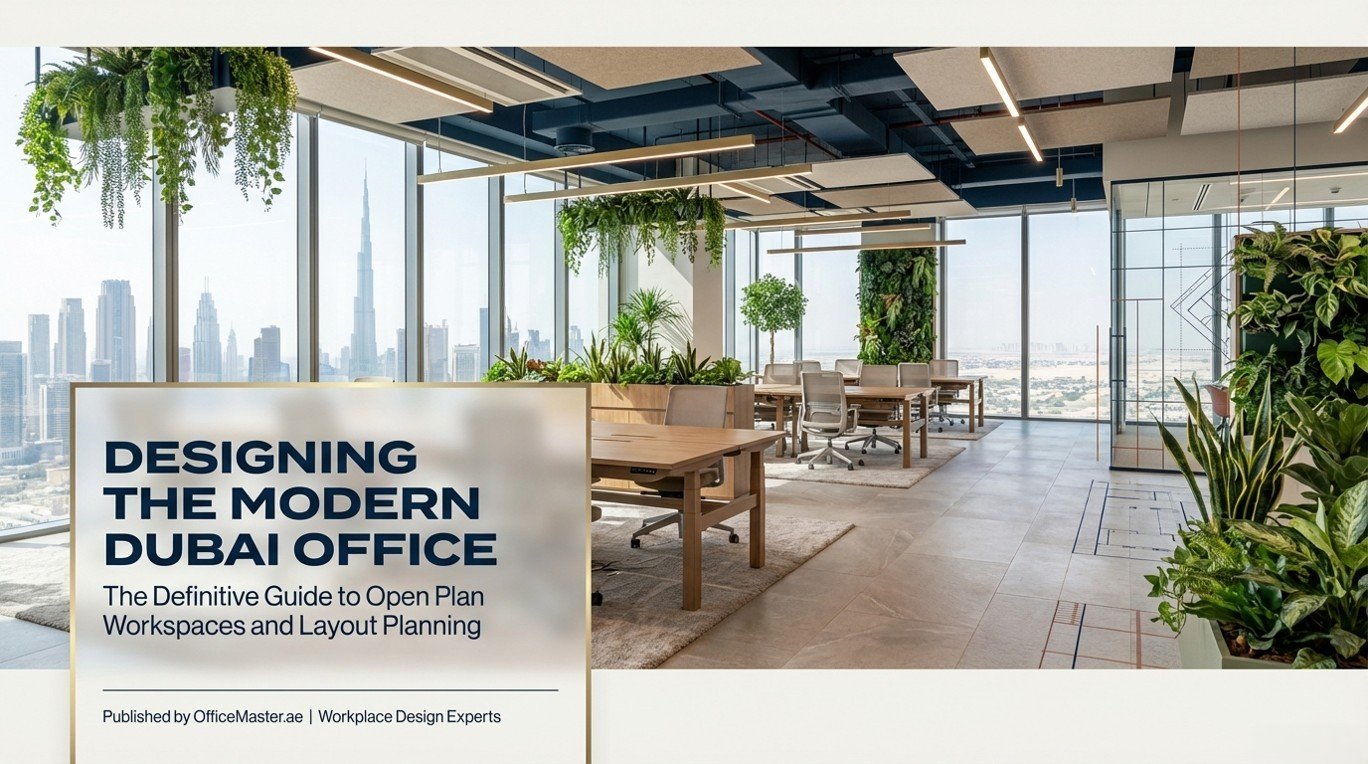
Dubai has evolved into one of the world’s most dynamic commercial hubs, attracting multinational corporations, fast-growing SMEs, and ambitious startups across its free zones, business districts, and mixed-use developments. As office space becomes an increasingly strategic asset rather than a fixed overhead, business owners, office managers, architects, and workplace consultants across the UAE are turning to open plan office design as a way to maximize space efficiency, encourage collaboration, and future-proof their working environments.
Planning an open plan office in Dubai, however, is far more nuanced than simply removing partition walls and installing rows of workstations. A well-designed open plan office in the UAE must reconcile competing priorities: the need for privacy in a culture that values discretion, acoustic comfort in environments that are inherently noisy, compliance with Dubai Municipality building and fire regulations, and the ergonomic wellbeing of a highly diverse, multi-national workforce.
This comprehensive guide from OfficeMaster.ae walks you through every dimension of open plan office planning and workstation layout design in Dubai, from initial space analysis and density planning to zoning strategies, acoustic management, ergonomic workstation specifications, technology integration, and the hybrid workspace models transforming UAE offices in 2024 and beyond. Whether you are fitting out a new office in DIFC, Business Bay, Dubai Internet City, or Sharjah, this guide provides the authoritative, actionable framework you need to plan your workspace with confidence.
Understanding the Open Plan Office Concept in the UAE Context
What Is an Open Plan Office?
An open plan office is a workspace configuration in which employees share a large, undivided floor area rather than occupying individual enclosed rooms or heavily partitioned cubicles. First popularized in Germany in the 1950s through the Bürolandschaft (‘office landscape’) movement, the model has since evolved substantially and now encompasses a spectrum of designs ranging from fully open, barrier-free environments to sophisticated activity-based working (ABW) layouts that incorporate a variety of zones tailored to different task types.
In the GCC and specifically in Dubai, open plan offices gained significant traction during the 2010s as free zones expanded and global businesses sought to replicate Silicon Valley-inspired workplace cultures locally. Today, the model is the dominant office format across Dubai’s major commercial districts, appearing in everything from boutique creative studios in Al Quoz to sprawling regional headquarters in Dubai Media City.
Why Dubai Businesses Are Embracing Open Plan Design
The business case for open plan offices in Dubai is compelling and multifaceted. Real estate in the emirate, while remaining competitively priced relative to London, New York, or Singapore, still represents a significant operational cost for most organizations. Open plan layouts allow companies to accommodate more employees per square meter than traditional cellular office designs, directly reducing per-head occupancy costs.
Beyond economics, the UAE’s position as a regional hub for trade, finance, media, and technology means that most Dubai offices host highly collaborative, project-driven teams that benefit from proximity and spontaneous interaction. Research published by the International WELL Building Institute (IWBI) indicates that employees in well-designed open environments report up to 32% higher satisfaction with team collaboration compared to those in traditional closed-office settings. Furthermore, the post-pandemic shift toward hybrid working has accelerated demand for flexible, reconfigurable office layouts that can accommodate fluctuating on-site headcounts, a need that open plan design addresses particularly well.
Open Plan Office: Advantages vs. Disadvantages
Understanding both sides of the open plan equation is essential before committing to this layout for your Dubai office.
| Aspect | Advantages | Disadvantages & Mitigations |
|---|---|---|
| Collaboration | Encourages spontaneous communication; faster decision-making; stronger team culture | Risk of over-interruption; mitigate with focus zones and protocols |
| Space Efficiency | Up to 40% more employees per sq.m. vs. private offices; reduces real estate cost per head | Poor layout planning can waste space; requires expert planning |
| Cost | Lower fitout cost per workstation; flexible furniture reduces long-term Capex | Acoustic and privacy solutions add upfront cost |
| Employee Wellbeing | Increased natural light access; sense of openness; reduced isolation | Noise stress; lack of privacy; mitigate with acoustic design |
| Flexibility | Easy reconfiguration for growth or restructuring; supports hybrid models | Frequent changes can disrupt workflow if not managed |
| Culture & Branding | Visible leadership; transparent culture; strong brand expression | Can feel impersonal without thoughtful design elements |
| Technology Integration | Easier to wire and network than cellular offices; shared AV resources | Cable management complexity in fully open floors |
| Compliance (Dubai) | Easier fire egress planning in open floors; clear sightlines for safety | Must meet Dubai Municipality density and air quality standards |
Workspace Strategy: Defining Goals Before You Design
Step 1: Conduct a Space Needs Assessment
Every successful open plan office project in Dubai begins not with furniture selection or floor plan sketches, but with a structured workplace strategy process. This begins with a space needs assessment, a data-driven exercise that quantifies your organization’s actual workspace requirements based on headcount, work patterns, growth projections, and business function.
A professional space needs assessment for a Dubai office should capture the following data points:
- Current and projected headcount over a 3–5 year horizon
- Peak simultaneous attendance rate (critical for hybrid organizations)
- Job function breakdown: individual focus workers vs. collaborative teams vs. mobile employees
- Existing technology infrastructure and AV requirements
- Meeting and conference room utilization rates (often as low as 30–40% in UAE organizations)
- Storage needs: personal, team, and archival
- Visitor and client interaction volumes
- Special function requirements: prayer rooms, mother’s rooms, wellness areas (mandated or desired)
Step 2: Establish Occupancy Density Targets
Office density, measured in net usable square meters per person (NIA/person), is one of the most critical parameters in open plan office planning. Dubai offices historically averaged 12–18 sq.m. per person in traditional layouts. Modern open plan designs, particularly in tech and media sectors, target 8–10 sq.m. per person inclusive of all support spaces. Post-pandemic, many UAE organizations are targeting 10–12 sq.m. per person to allow for greater spacing and wellbeing amenities.
Dubai Office Density Guidelines by Sector
| Office Sector | Traditional Layout (sq.m./person) | Open Plan Target (sq.m./person) | Hybrid Model Target (sq.m./person) |
|---|---|---|---|
| Financial Services (DIFC, ADGM) | 15–20 | 10–12 | 12–15 |
| Technology & Media (DIC, DMC, D3) | 12–16 | 8–10 | 10–12 |
| Professional Services (Business Bay) | 14–18 | 10–12 | 12–14 |
| Government & Semi-Government | 16–22 | 12–15 | 14–18 |
| Creative & Design Agencies (Al Quoz) | 10–14 | 7–9 | 9–11 |
| E-commerce & Logistics (JAFZA, DIP) | 10–13 | 7–9 | 9–11 |
| Healthcare Administration | 14–18 | 11–13 | 12–15 |
| Hospitality Management | 12–16 | 9–11 | 11–13 |
Step 3: Align Workspace Strategy with Business Culture
A workplace strategy document should explicitly define the cultural values your office is intended to express and reinforce. In Dubai’s multicultural business environment, this is particularly important. An organization’s workforce may include nationals who value hierarchy and private interaction, alongside Western expatriates who prefer flat, transparent structures, and South or Southeast Asian team members accustomed to high-density collaborative settings. A well-planned open plan office can serve all of these groups effectively through thoughtful zoning, providing private spaces where privacy is valued and collaborative areas where interaction is encouraged, without imposing a single working style on everyone.

3. Workstation Layout Planning: Principles and Approaches
Core Workstation Layout Models
The configuration of individual workstations within an open plan floor is the most operationally significant design decision you will make. Each layout model has distinct implications for collaboration, focus, space efficiency, supervision, and the quality of the employee experience. The following are the principal workstation layout typologies used in Dubai offices:
The bench or linear workstation layout arranges desks in long, continuous rows, typically facing the same direction. This is the most space-efficient configuration available and is widely used in contact centers, trading floors, and data-entry environments in Dubai. Bench layouts typically achieve densities of 5–7 sq.m. per person for the workstation zone alone, making them highly attractive for cost-conscious operators. The primary disadvantage is that the uniform, regimented arrangement can feel impersonal and offers limited acoustic privacy between adjacent colleagues.
- Back-to-Back Cluster Layout
In this configuration, two rows of office desks face away from each other, creating pairs of workstations that share a central cable management spine. This is arguably the most popular workstation layout in Dubai’s commercial offices, offering a balance of density, natural light access (with windows to the front or side), and moderate visual separation between facing teams. Clusters are typically sized in units of 4, 6, 8, or 12 workstations.
Pod layouts group 4–8 workstations around a shared central element, which may be a storage unit, a planter, a low screen, or simply open space. Pod configurations support strong team identity and facilitate rapid communication within a team, while the natural gap between pods provides acoustic and visual separation between different groups. This layout is particularly well-suited to creative agencies, marketing teams, and project-based organizations common in Dubai’s media and tech districts.
A spine layout organizes workstations along a central corridor or ‘spine’, with collaboration areas, meeting pods, and support spaces on either side. This is an effective layout for long, narrow floor plates common in older Dubai office towers, as it maximizes the usable width of the floor and creates logical circulation without dead ends.
- Activity-Based Working (ABW) Layout
ABW is the most sophisticated and increasingly preferred approach for progressive Dubai employers. Rather than assigning a fixed desk to every employee, ABW provides a range of workspace settings, focus booths, collaboration tables, standing desks, lounge areas, and phone booths, and allows employees to select the environment that best suits their current task. This model requires a cultural shift and robust technology support (hot-desking booking systems, clean desk policies) but can reduce the total workstation count by 20–30% for organizations with high mobility or hybrid attendance rates.
Workstation Layout Comparison for Dubai Offices
| Layout Type | Space Efficiency | Collaboration | Focus / Privacy | Flexibility | Best For |
|---|---|---|---|---|---|
| Linear / Bench | Excellent | Low | Low | Moderate | Contact centers, trading, data entry |
| Back-to-Back Cluster | Very Good | Good | Moderate | Good | Corporate offices, professional services |
| Pod / Island | Good | Very Good | Moderate | Very Good | Creative, tech, media, project teams |
| Spine Layout | Good | Moderate | Moderate | Good | Narrow floor plates, mixed-use floors |
| Activity-Based (ABW) | Excellent (with mobility) | Excellent | Excellent (booths) | Excellent | Hybrid workplaces, tech firms, consultancies |
| Herringbone | Good | Moderate | Good | Moderate | Sales floors, customer-facing teams |
| Horseshoe / Collaborative Clusters | Moderate | Excellent | Low | Moderate | Agile, sprint-based, creative teams |

4. Workstation Size Guidelines for Dubai Offices
One of the most frequent planning errors in Dubai office fit outs is specifying workstations that are either too small for the practical needs of the role or unnecessarily oversized, wasting valuable floor space. The following guidelines reflect current best practice for the UAE market, accounting for the dual monitor setups, document management needs, and ergonomic standards that apply to the region.
Standard Workstation Dimensions
| Workstation Type | Width (mm) | Depth (mm) | Height (Fixed) | Height (Adjustable) | Recommended For |
|---|---|---|---|---|---|
| Compact / Hot Desk | 1200 | 600 | 730–750 mm | 650–1250 mm | ABW, hot-desking, touchdown spaces |
| Standard Single Desk | 1400–1600 | 700–800 | 730–750 mm | 650–1250 mm | Most office roles, general admin |
| Standard Double Workstation | 1600 | 800 | 730–750 mm | 650–1250 mm | Dual monitor users, design roles |
| Executive / Senior Staff | 1800–2000 | 800–900 | 730–750 mm | 650–1250 mm | Senior managers, client-facing professionals |
| Technical / Engineering Desk | 1800–2400 | 900–1000 | 730–750 mm | 650–1250 mm | CAD operators, engineers, developers |
| Call Centre / Contact Desk | 1200–1400 | 600–700 | 730 mm (fixed) | N/A (fixed height common) | Contact center agents |
| Standing / Collaboration Table | 1800–3600 | 600–800 | 900–1100 mm (bar) | N/A | Collaborative stand-up meetings |
| L-Shape Corner Workstation | 1600 + 1200 | 800 | 730–750 mm | 650–1250 mm | Heavy multi-taskers, managers |
Circulation and Aisle Width Standards
Adequate circulation space between workstations is both a safety requirement under Dubai Municipality fire and life safety regulations and a fundamental contributor to employee comfort. The following minimum aisle widths should be integrated into your layout plan:
| Circulation Type | Minimum Width (mm) | Recommended Width (mm) | Notes |
|---|---|---|---|
| Primary corridor (main access routes) | 1200 | 1500–1800 | Must allow two people to pass comfortably; fire egress route |
| Secondary aisle (between workstation rows) | 900 | 1200 | Allows chair pullback and passage |
| Chair pullback clearance (behind desk) | 800 | 1000–1200 | Required behind every seated position |
| Walkway alongside meeting rooms | 1200 | 1500 | Prevent bottlenecks at room entries |
| Emergency egress route | 1200 (minimum) | 1500+ | Dubai Civil Defense requirement; must remain unobstructed |
| Accessibility (DDA-compliant) route | 1500 | 1800 | Required per UAE Federal Law No. 29 of 2006 |

5. Zoning Your Open Plan Office: Collaboration, Focus, and Support
Effective open plan office design in Dubai does not treat the floor as a single, undifferentiated workspace. Instead, it divides the floor into purposefully designed zones that cater to the full spectrum of work activities. This zoning approach, sometimes called a ‘palette of place’, is the single most powerful tool available to the office designer for resolving the inherent tension between collaboration and focus that characterizes all open plan environments.
The Five Core Zones of an Open Plan Dubai Office
- Zone 1: Focus/Deep Work Zone
This is the primary individual workstation area where employees spend the majority of their working day. In a well-designed Dubai office, the focus zone should occupy 50–60% of the total net usable area. It should be located away from high-traffic circulation paths, positioned to benefit from access to natural light, and designed with acoustics in mind, incorporating acoustic screens, sound-absorbing ceiling treatments, and carpet or acoustic floor finishes.
- Zone 2: Collaboration Zone
The collaboration zone encompasses a range of settings designed for group work: open collaboration tables for spontaneous discussions, project tables for team working sessions, and informal breakout areas with soft seating. This zone should account for 20–25% of the total floor area in a standard Dubai corporate office, increasing to 30–35% for creative, agile, or project-based teams. Collaboration zones work best when positioned at the center of the floor or adjacent to pantry and social areas, where natural footfall encourages their use.
- Zone 3: Private/Enclosed Spaces
Even the most progressive open plan offices in Dubai require a proportion of enclosed, acoustically separated spaces. These include formal meeting rooms (1–1.5 sq.m. per meeting seat is the Dubai standard), phone booths or focus pods for private calls, and small huddle rooms for 2–4 person discussions. Collectively, enclosed spaces should account for 15–20% of total floor area. Underinvesting in private space is one of the most common and costly mistakes made in open plan office fit outs across the UAE.
- Zone 4: Social and Amenity Zone
The social zone, which typically incorporates the office pantry, coffee station, and informal seating, serves multiple functions simultaneously. It provides a setting for informal networking and relationship-building, which is culturally important in the UAE business environment. It acts as a respite from the stimulation of the open floor. And, when well-designed, it becomes a magnet for organic collaboration and knowledge-sharing. The social zone should account for 8–12% of total floor area.
- Zone 5: Circulation and Support Zone
This includes all movement corridors, utility spaces, storage rooms, print stations, and building-core services. Efficient layout planning should target circulation at 15–20% of gross floor area; anything above 25% indicates an inefficient plan that is wasting rentable square meters.
Collaboration Zone Space Recommendations for Dubai Offices
| Collaboration Setting | Occupancy (persons) | Area per Unit (sq.m.) | Recommended Ratio | Key Features |
|---|---|---|---|---|
| Open collaboration table | 4–6 | 8–12 | 1 per 20–25 staff | Power outlets, screens, writable surface |
| Informal lounge / soft seating | 2–4 | 6–10 | 1 per 20 staff | Low-level acoustic screening, side tables |
| Huddle room (enclosed) | 2–4 | 8–12 | 1 per 15–20 staff | Video conferencing, whiteboard, glass walls |
| Meeting room (small) | 4–6 | 12–16 | 1 per 25–30 staff | AV, writable walls, acoustic rating Rw 42+ |
| Meeting room (medium) | 8–10 | 20–25 | 1 per 40–50 staff | AV, video conferencing, acoustic ceiling |
| Boardroom | 12–20 | 35–55 | 1 per organisation | Premium AV, acoustic treatment, climate control |
| Phone booth / focus pod | 1 | 1.5–2.5 | 1 per 8–10 staff | Acoustic Rw 30+, ventilation, power, USB |
| Project / war room | 4–10 | 18–28 | As needed | Dedicated wall displays, project storage |
| Training room | 10–25 | 2–2.5 sq.m. / person | As needed | Flexible furniture, AV, breakout capability |

6. Acoustic Design: Managing Noise in Dubai Open Plan Offices
Noise is consistently ranked as the number one complaint by employees working in open plan offices globally, and Dubai is no exception. A 2023 survey by the UAE Human Resources Forum found that 68% of employees working in open plan offices in the UAE reported noise distraction as a significant barrier to productive focus work. Addressing acoustics is therefore not an optional upgrade in your office fitout but a fundamental design requirement.
The ABC Framework for Open Office Acoustics
The international standard for open office acoustic design is the ABC framework, which stands for Absorb, Block, and Cover. Applying all three strategies simultaneously is essential for achieving acceptable acoustic conditions in Dubai open plan offices.
A — Absorb: Sound-Absorbing Materials
Sound absorption reduces the overall reverberation time of the open floor, preventing noise from bouncing and accumulating. Key absorption solutions include:
- Acoustic ceiling tiles with NRC (Noise Reduction Coefficient) of 0.80 or above, installed across the majority of the ceiling plane
- Carpet or carpet tiles in workstation zones (carpet reduces impact noise by up to 30% compared to hard flooring and should be specified as Class II fire-rated for UAE compliance)
- Acoustic hanging baffles or rafts suspended above high-energy collaboration zones
- Upholstered furniture in lounge and soft seating areas
- Acoustic wall panels or fabric-wrapped panels in areas without windows
- Green walls or biophilic planting elements, which provide both absorption and psychological benefit
B — Block: Physical Barriers
Physical barriers interrupt the direct transmission of sound between workstations. In an open plan office, this is achieved through:
- Workstation screens and acoustic desk dividers (minimum 400–500 mm height above desk surface; 600–800 mm for contact center environments)
- Full-height or partial-height partition glazing around meeting rooms and phone booths
- Storage units and bookshelves used as room dividers between zones
- Green walls or planted partition elements serving as visual and acoustic barriers
C — Cover: Sound Masking
Sound masking systems introduce an engineered background noise, typically a broadband signal tuned to the human speech frequency range, that raises the ambient noise floor slightly and makes speech less intelligible across the floor. Research by the Acoustical Society of America shows that well-calibrated sound masking can reduce speech intelligibility by 50–75% at distances of 3–5 meters, dramatically reducing distraction in open plan environments. Sound masking systems are a highly cost-effective acoustic intervention (typically AED 50–80 per sq.m. installed) and are increasingly specified as standard in quality Dubai office fitouts.
Target Acoustic Performance Levels for Dubai Open Plan Offices
| Acoustic Metric | Target for Focus Zones | Target for Collaboration Zones | Target for Meeting Rooms |
|---|---|---|---|
| Background noise level (LAeq) | 40–45 dB(A) | 45–52 dB(A) | 35–40 dB(A) |
| Speech Privacy Index (SPI) | 70–80% | 40–60% | 90%+ (confidential meetings) |
| Reverberation time RT60 (500–2000 Hz) | 0.4–0.6 seconds | 0.5–0.7 seconds | 0.4–0.6 seconds |
| Sound Transmission Class (STC) – partitions | N/A (open) | N/A (open) | STC 42–50 minimum |
| NRC of ceiling finish | 0.75–0.95 | 0.70–0.90 | 0.80–0.95 |

7. Ergonomic Workstation Design Standards for UAE Offices
Ergonomic workstation design is both a moral obligation and a legal responsibility for Dubai employers. The UAE Ministerial Decree No. 32 of 1982 (as updated) and subsequent Ministry of Human Resources and Emiratization (MOHRE) regulations establish baseline occupational health and safety requirements for workplaces. Beyond compliance, ergonomic design directly reduces absenteeism, musculoskeletal disorders (MSDs), and presenteeism (working while unwell), all of which carry substantial economic costs.
The Seven Pillars of Ergonomic Workstation Design
- Chair Ergonomics: Specify chairs with adjustable seat height (400–520 mm), adjustable lumbar support, tilt mechanism with tension adjustment, armrests with height and width adjustment, and a seat depth of 400–480 mm. For UAE offices, ensure chairs are certified to EN 1335 or BIFMA X5.1 standards and are rated for 8–9 hours of daily use.
- Desk Height and Adjustability: Fixed desk height of 730–750 mm suits the majority of the population when paired with a properly adjusted chair and footrest. Sit-stand desks with a height range of 650–1250 mm are increasingly specified in Dubai progressive workplaces and are strongly recommended for roles involving more than 4 hours of seated keyboard work per day.
- Monitor Placement: The top of the monitor screen should be at or slightly below eye level, at a distance of 500–700 mm from the user’s eyes. For dual-monitor setups (common in finance and tech roles), the primary monitor should be centered and the secondary offset to the non-dominant side. Monitor arms that clamp to the desk spine improve adjustability and free up valuable desk surface area.
- Keyboard and Mouse Positioning: Input devices should be positioned to allow the upper arms to hang naturally at the sides, elbows at approximately 90–100 degrees, and wrists in a neutral (flat) position. A keyboard tray or a desk deep enough to allow the keyboard to be pushed back from the desk edge (leaving forearm support space) is recommended.
- Lighting for Workstations: Horizontal illuminance at desktop level should be 300–500 lux for general office tasks and 500–750 lux for technical or detailed work. Glare from windows or overhead luminaires on screens is a significant issue in Dubai’s sun-drenched environment and must be managed through screen orientation, blinds, anti-glare screen filters, and careful luminaire positioning.
- Thermal Comfort: Dubai’s extreme summer climate means that HVAC performance in offices is critical. ASHRAE Standard 55 recommends a thermal comfort range of 20–26°C for sedentary office work. In practice, many Dubai offices are overcooled to temperatures of 18–20°C, which creates discomfort for many employees and is an energy inefficiency. Ensuring adequate airflow without creating cold draughts at workstations is a key consideration.
- Personal Storage and Desk Organization: Each workstation should be supported by adequate personal storage. A 600–800 mm wide pedestal unit with at least one lockable drawer provides the minimum required for most roles. Mobile pedestals that sit under or alongside the desk are preferred for open plan environments as they can be repositioned during desk reconfigurations.

8. Dubai Office Regulations and Compliance Considerations
Open plan office fitouts in Dubai must comply with a layered framework of regulations issued by multiple government authorities. Non-compliance can result in fitout rejection, stop-work orders, or occupancy permit refusals. The following are the primary regulatory touchpoints for open plan office projects in the emirate.
Dubai Municipality (DM) Building Regulations
Dubai Municipality’s Building Regulations and Specifications Manual sets out requirements for fire safety, means of egress, structural loads, and MEP services that directly affect open plan office design. Key requirements include:
- Minimum clear width of 1200 mm for all means of egress routes through the open floor
- Maximum travel distance to a fire exit of 45 meters in sprinklered buildings (30 meters in non-sprinklered buildings)
- Minimum 500 lux emergency lighting at floor level along all egress routes
- Sprinkler coverage requirements for open ceilings and raised floor areas
- Compliance with NFPA 101 Life Safety Code for occupant load calculations
Dubai Civil Defense (DCD) Approvals
All office fitout drawings in Dubai must receive Dubai Civil Defense approval before construction commences. Open plan offices are subject to the following DCD requirements:
- Fire alarm system (addressable) must cover all areas of the open floor, including raised floor voids if services are run beneath them
- Portable fire extinguishers must be located within 23 meters of all workstations
- Automatic sprinkler heads must not be obstructed by workstation screens, overhead storage, or hanging light fittings
- Exit signage must be visible from all points on the open floor
DEWA Regulations for Electrical Installations
Dubai Electricity and Water Authority (DEWA) regulations govern the design and installation of all electrical services in commercial office fitouts. For open plan offices, this includes power outlet density requirements (minimum one dual power outlet per workstation position), underfloor cable management system specifications, and earthing and bonding requirements for raised access floors.
Trakhees and Free Zone Authority Regulations
For offices located in Dubai’s free zones (JAFZA, DMCC, DAFZA, Dubai Internet City, Dubai Media City, Dubai Silicon Oasis, etc.), fitout approvals must be obtained from the relevant free zone authority rather than or in addition to Dubai Municipality. Each free zone authority has its own fitout guidelines that may set specific requirements for ceiling heights, floor loads, net usable area calculations, and partition materials.
UAE Accessibility Standards
UAE Federal Law No. 29 of 2006 requires that all commercial premises be accessible to people of determination (persons with disabilities). For open plan offices, this means providing at least one accessible workstation position per 50 standard workstations, with a minimum 1500 mm turning circle adjacent to the workstation and an accessible route of minimum 1500 mm clear width from the building entrance.

9. Lighting Design for Open Plan Offices in Dubai
Lighting design in Dubai open plan offices must address multiple competing demands simultaneously: providing adequate task illuminance for productive work, managing glare from intense external sunlight, supporting circadian health for the largely indoor workforce, minimizing energy consumption (in compliance with UAE Green Building Regulations), and contributing to the aesthetic quality of the workspace.
Daylighting Strategy
Dubai’s abundant solar radiation is a double-edged asset for office design. When harnessed correctly, natural light dramatically improves employee wellbeing and reduces artificial lighting energy consumption. When uncontrolled, it produces glare and solar heat gain that make perimeter workstations uncomfortable and increases cooling loads. The following strategies should be integrated into your open plan layout from the earliest planning stage:
- Orientate workstations so that monitors are parallel to the window line rather than facing windows or having windows directly behind them, preventing both direct and reflected glare
- Specify external or internal solar shading (roller blinds, fritted glazing, external louvres) on all south and west-facing facades, which receive the highest solar angles in Dubai
- Position collaboration zones and social areas at the perimeter, where higher light levels and views are most appreciated, and locate focus workstations in the middle band of the floor plate where light levels are more even
- Specify daylight-linked dimming controls for perimeter lighting zones to reduce energy use when natural light is sufficient
Artificial Lighting Specification
Modern Dubai office lighting schemes overwhelmingly favor LED luminaires, which offer significant energy savings over fluorescent alternatives (typically 40–60% reduction in lighting energy consumption), longer service life (50,000+ hours), and superior controllability. For open plan offices, specify:
- Linear LED luminaires with unified glare rating (UGR) not exceeding 19, the threshold below which lighting-induced visual discomfort becomes negligible
- Correlated Color Temperature (CCT) of 4000K for focus work zones (cool white supports alertness and concentration) and 3000–3500K for social and lounge areas (warmer tones promote relaxation and social interaction)
- Color Rendering Index (CRI) of 80 or above (Ra≥80) throughout the open plan floor
- Dimming controls and zoning to allow adjustment of light levels throughout the day and for different activities
- Addressable DALI-2 control systems for large floor plates, enabling scene setting, daylight linking, and occupancy-based control

10. Technology Integration in Open Plan Dubai Offices
Network Infrastructure Planning
A modern open plan office in Dubai requires a robust, resilient, and future-ready network infrastructure. For organizations with 50 or more workstations, this means designing a structured cabling system (Category 6A minimum for new installations) that provides at least two data ports per workstation position, a dedicated WIFI 6 or WIFI 6E wireless infrastructure with access point coverage of every zone including meeting rooms, phone booths, and social areas, and a network backbone capable of supporting VoIP telephony, video conferencing, and cloud-based business applications simultaneously.
Cable Management Solutions
Cable management is frequently an afterthought in open plan office planning but becomes a major operational headache and safety issue if inadequately addressed. The following cable management hierarchy is recommended for Dubai open plan offices:
- Underfloor raised access floor systems (150–200 mm void depth): the preferred solution for large open floor plates, allowing power and data services to be distributed to any point on the floor and reconfigured without disruption to the workspace above
- In-floor box outlets (flush floor service outlets): for medium-density workstation areas on solid concrete floors without raised access, specify flush floor boxes on a 3–5 meter grid to ensure power and data are within reach of any workstation position
- Cable management spines within bench workstation systems: integrated cable trays and spines within the workstation furniture itself keep cables controlled at desk level
- Overhead cable tray systems: for open ceilings where the aesthetic is acceptable, overhead cable trays provide a cost-effective distribution route
- Wireless charging pads and desk-mounted power modules: increasingly specified in high-quality UAE office fitouts to reduce trailing cables at workstation surfaces
AV and Collaboration Technology
The post-pandemic workplace demands seamless video collaboration capability at every meeting and collaboration point. For Dubai open plan offices, this means specifying:
- Integrated display screens with wireless casting (Miracast, Airplay) in all meeting rooms and collaboration zones
- All-in-one video bars (Microsoft Teams Rooms, Zoom Rooms, or equivalent) in all enclosed meeting spaces
- Digital signage for wayfinding and room booking display at meeting room entries
- Room booking and desk reservation systems integrated with the organization’s Microsoft 365 or Google Workspace environment
- Large-format touchscreen displays in collaboration zones for interactive team working

11. Privacy Solutions for Open Plan Offices
The erosion of privacy is the most significant human cost of poorly planned open plan offices, and it is a particular challenge in Dubai’s multicultural business environment, where attitudes toward privacy, hierarchy, and personal space vary considerably across nationalities and professional backgrounds. Addressing privacy through design is not merely a comfort consideration but a performance and retention issue.
Visual Privacy Solutions
- Workstation privacy screens: 400–600 mm height screens mounted on the desk surface or clamped to the desk spine provide effective visual screening between adjacent workstations without creating enclosed, tunnel-like conditions
- Fabric-wrapped or glazed partition panels between workstation clusters: panels of 1200–1600 mm height create a clear visual boundary between teams while maintaining an open feel
- Monitor privacy filters: anti-glare, directional privacy filters on laptop and desktop screens prevent adjacent colleagues from viewing sensitive information
- Strategic plant placement: curated planters and green walls create organic visual screening between zones without the institutional feel of hard partitions
Acoustic Privacy Solutions
- Phone booths and focus pods: enclosed, acoustically rated pods (Rw 30–35 minimum) for private calls and concentrated focus work are a non-negotiable element of any quality Dubai open plan office fitout
- Semi-enclosed focus stations: partially enclosed desk pods with acoustic side panels and a canopy reduce sound transmission by 10–15 dB(A) compared to fully open workstations
- Sound masking systems (as discussed in the acoustic section): the single most effective technology-based privacy solution for open plan environments
12. Hybrid Workspace Planning for Dubai Offices
The hybrid work model, in which employees split their working week between the office and remote locations, has been adopted by the majority of Dubai-based knowledge-industry organizations since 2021. According to the Dubai Statistics Centre, remote and hybrid working arrangements were in place at 74% of large private sector organizations in Dubai as of Q4 2023. This structural shift has profound implications for open plan office planning, creating both an opportunity to reduce workstation count and a challenge to ensure that the office provides a compelling reason for employees to attend in person.
Right-Sizing Your Workstation Count for Hybrid Working
In a traditional, fully in-office model, the ratio of workstations to headcount is 1:1 or close to it. In a hybrid model, the appropriate ratio depends on the organization’s peak simultaneous attendance rate. If, for example, your organization of 100 employees has a maximum simultaneous attendance rate of 70% (70 people on-site at any one time), you can theoretically provide 70–75 workstations rather than 100, freeing up the floor space released for collaboration zones, amenity areas, and wellbeing spaces that make the office more attractive.
However, this logic must be applied carefully. If you size your workstation count too tightly (below the 90th percentile attendance day), employees will arrive at the office and find no available desk, which is catastrophically damaging to morale and trust. The recommended approach is to size the workstation pool at 80–90% of projected peak attendance, supported by a desk reservation system, a clean desk policy, and overflow collaboration seating that can accommodate the remaining 10–20%.
Designing for the ‘Magnet Office’ Effect
The most progressive Dubai employers are designing their open plan offices not as places where employees must come to work but as places where employees want to come to work, creating what workplace strategy consultants call the ‘magnet effect’. Achieving this requires the open plan floor to offer genuine advantages over the home working environment, including:
- Superior technology infrastructure: fast, reliable connectivity, large screens, professional video conferencing
- High-quality social amenities: premium coffee, healthy food options, social spaces
- Variety and stimulation: a palette of workspace settings that offers more choice than a home office
- Strong community and culture: events, team rituals, leadership presence
- Ergonomic quality: better office chairs, sit-stand desks, ergonomic accessories than most home setups

13. Step-by-Step Open Plan Office Planning Process
The following planning sequence provides a practical framework for project teams undertaking an open plan office fitout in Dubai, from initial brief to post-occupancy evaluation.
Phase 1: Discovery and Briefing (Weeks 1–3)
-
- Commission a workplace occupancy study of your current office (if relocating or refitting an existing space) to establish actual utilization data
- Conduct stakeholder interviews and focus groups with employees across all departments to understand work patterns, pain points, and aspiration
- Compile a detailed space brief specifying headcount, growth projections, zone requirements, technology needs, and regulatory constraints
- Engage a qualified Dubai fitout consultant or interior architect with UAE commercial fitout experience
Phase 2: Concept Design (Weeks 4–7)
-
- Develop 2–3 alternative space layout concept options at 1:100 scale, testing different zoning and workstation layout strategies
- Model each option against the density, circulation, and compliance requirements outlined in this guide
- Present options to key stakeholders and select a preferred concept direction for development
- Commission a specialist acoustic consultant to review the preferred concept and recommend acoustic interventions
Phase 3: Detailed Design (Weeks 8–14)
-
- Develop the preferred concept to detailed design stage, specifying all furniture, finishes, lighting, AV, IT, and MEP elements
- Produce detailed furniture plans at 1:50 scale showing all workstation positions, collaboration settings, and support spaces
- Submit drawings to Dubai Municipality, Dubai Civil Defense, and the relevant free zone authority (if applicable) for approval
- Issue tender documentation and obtain competitive quotes from a minimum of 3 qualified fitout contractors
Phase 4: Delivery and Fitout (Weeks 15–28 for medium-sized projects)
-
- Appoint fitout contractor and commence construction works under a qualified project manager
- Order long-lead furniture items (sit-stand desks, acoustic pods, custom joinery) as early as possible; lead times of 8–16 weeks are typical in the UAE market
- Commission all MEP, IT, AV, and access control systems before furniture installation commences
- Install furniture in phases to allow snagging and adjustment before occupation
Phase 5: Occupation and Post-Occupancy Evaluation (Months 1–6 post-move)
-
- Conduct a post-occupancy survey at 6–8 weeks after occupation to identify any issues with layout, acoustics, temperature, technology, or storage
- Review desk utilization data from the desk booking system to identify underused zones and optimize the layout
- Establish a regular workplace review cycle (annually recommended) to ensure the office continues to meet the organization’s evolving needs

14. Common Mistakes to Avoid in Open Plan Office Planning
Drawing on the collective experience of Dubai workplace design professionals, the following are the most frequently observed and costly mistakes in open plan office fitout projects across the UAE:
- Underestimating acoustic investment: Acoustic solutions are consistently the most value-adding interventions in open plan offices yet are often among the first items cut when budgets are squeezed. An open plan office without proper acoustic design will fail to deliver its productivity benefits regardless of how good the furniture, lighting, or technology is.
- Specifying workstations that are too small: Sub-1200 mm wide workstations are a false economy. Employees who lack adequate desk space are less productive, more stressed, and more likely to seek employment elsewhere. Specify a minimum of 1400 mm for standard roles.
- Designing for average attendance rather than peak attendance: Calculating workstation count against average attendance rather than 90th percentile peak attendance leads to desk shortages on busy days and erodes trust in the hot-desking system.
- Ignoring prayer room and welfare facilities: UAE labor law and cultural norms require the provision of adequate prayer facilities and welfare amenities. These must be incorporated into the overall space plan from the outset, not added as an afterthought.
- Overcrowding the pantry and social zone: A social zone that is too small for the workforce it serves becomes a bottleneck during breaks and loses its social function. Size the pantry for the actual peak usage scenario, not the average.
- Neglecting natural light access for all employees: Positioning all perimeter workstations for senior staff (or giving windows to storage) while placing junior staff in the internal core is both a wellbeing and a legal risk under UAE occupational health standards.
- Underspecifying cable management: Cable management is far more costly to retrofit after occupation than to specify correctly from the outset. Budget adequately for underfloor, in-desk, and overhead cable management from the beginning.
- Failing to future-proof the layout: Open plan offices should be designed for change. Modular furniture systems, raised access floors, and demountable partitions dramatically reduce the cost of reconfiguration as the business evolves.
15. Modern Workplace Trends Shaping Dubai Offices in 2024–2025
Biophilic Design Integration
Biophilic design, the intentional incorporation of natural elements into the built environment, has moved from a niche trend to a mainstream expectation in premium Dubai office fitouts. Research by the Human Spaces Global Report found that employees working in environments with natural elements report 15% higher wellbeing and 6% higher productivity than those in nature-deficient environments. In Dubai open plan offices, biophilic design manifests through internal planting walls, pocket gardens, natural material palettes (timber, stone, linen), water features, and maximized access to daylight and outdoor views.
Wellbeing-Centric Office Design
The WELL Building Standard, administered by the International WELL Building Institute, provides a comprehensive framework for creating offices that actively support occupant health, from air quality and water quality to nourishment, light, movement, thermal comfort, and mental wellbeing. A growing number of Dubai employers, particularly multinational corporations and UAE government entities, are pursuing WELL certification or Well-informed design for their open plan offices as part of their broader ESG and talent attraction strategies.
Neurodiversity-Inclusive Workspaces
Progressive Dubai employers are increasingly designing their open plan offices to be inclusive of neurodivergent employees, including those with ADHD, autism spectrum conditions, and sensory processing differences. This means providing a genuinely diverse palette of workspace settings (very quiet focus rooms, moderate-stimulation workstations, high-energy collaboration areas), giving employees real choice about where and how they work, and avoiding sensory overloads (excessive noise, harsh lighting, strong scents) in the main open floor.
Sustainability and Green Fitout Standards
Dubai’s Green Building Regulations (Al Sa’fat for DM-regulated buildings and Estidama in Abu Dhabi) set minimum energy and water efficiency standards for commercial fitouts. Beyond compliance, leading organizations are targeting LEED Gold or Platinum, BREEAM Excellent, or Fitwel certification for their Dubai offices as evidence of environmental commitment to clients, investors, and employees. Sustainable open plan fitout practices include specifying low-VOC finishes, recycled content furniture, energy-efficient lighting and HVAC, and materials sourced from UAE-based or GCC-based suppliers to reduce embodied carbon.
16. Planning a Real-World Open Plan Office in Dubai: A Practical Scenario
To illustrate how the principles in this guide apply in practice, consider the following planning scenario:
Scenario: 60-Person Technology Company, Dubai Internet City
A technology startup with 60 employees is moving from an older, private-office layout in TECOM to a new 600 sq.m. Grade A open plan office in Dubai Internet City. The company operates a hybrid working model with a peak simultaneous attendance of 75% (45 people). The workforce is young, international, and highly collaborative, with a significant proportion of employees working across multiple time zones and requiring video call capability throughout the day.
Space Allocation at 600 sq.m.
| Zone | Area Allocated | % of Total | Key Elements |
|---|---|---|---|
| Focus Workstation Zone (48 desks) | 210 sq.m. | 35% | Sit-stand desks, acoustic screens, task lighting, 3 focus pods |
| Collaboration Zone | 120 sq.m. | 20% | 6 open collab tables, 3 lounge clusters, 1 project table |
| Enclosed Meeting & Huddle Rooms | 90 sq.m. | 15% | 1 x 10-person meeting room, 3 x 4-person huddle rooms, 6 phone booths |
| Social / Pantry Zone | 60 sq.m. | 10% | Coffee bar, dining tables, informal seating, refrigerators |
| Reception & Client Area | 36 sq.m. | 6% | Reception desk, 2-seat waiting, brand wall, display screen |
| Storage, Server Room, Print | 30 sq.m. | 5% | Central storage, IT comms room, 2 print stations |
| Circulation & Support | 54 sq.m. | 9% | Primary and secondary aisles, column zones |
With 48 sit-stand workstations for 45 peak attendees (ratio 1.07:1), the layout provides a small buffer for days with higher attendance. The ABW approach, combined with 6 phone booths and 3 focus pods, means that employees have a genuine choice of workspace throughout the day. The 3 huddle rooms are bookable via an integrated Microsoft Teams Rooms system, and the open collaboration zone is designed for unbooked, spontaneous use.

Frequently Asked Questions (FAQs): Open Plan Office Planning in Dubai
How much space do I need per person in an open plan office in Dubai?
The current best-practice recommendation for open plan offices in Dubai is 8–12 sq.m. net internal area (NIA) per person, inclusive of all workstations, meeting rooms, collaboration areas, and support spaces. For hybrid organizations with peak attendance below 80%, you can target the lower end of this range. For organizations requiring more collaboration space and wellbeing amenities, 12–15 sq.m. per person is recommended.
What is the minimum workstation size for a Dubai office?
The absolute minimum workstation size for a standard office role in Dubai is 1200 mm wide x 600 mm deep, appropriate only for hot-desking or compact ABW environments. For assigned desks in permanent office setups, a minimum of 1400 mm wide x 700 mm deep is strongly recommended. Technical roles (engineering, CAD, finance) should be given 1800 mm wide x 800–900 mm deep workstations to accommodate multiple monitors and reference materials.
Do I need a permit to fitout an open plan office in Dubai?
Yes. All commercial office fitouts in Dubai require approval from Dubai Municipality (DM) and Dubai Civil Defense (DCD) before construction commences. Offices in free zones may require additional approvals from the relevant free zone authority. Your fitout contractor should be registered with DM and should manage the NOC and permit process on your behalf.
What are the best workstation layout configurations for open plan offices?
The best configuration depends on your specific business requirements. Back-to-back cluster layouts are the most widely used in Dubai corporate offices due to their balance of density, light access, and team organization. Pod/island layouts work well for creative and project-based teams. Activity-based working (ABW) layouts offer the greatest flexibility and space efficiency for hybrid organisations. Contact a qualified workplace consultant or the OfficeMaster.ae team to identify the right configuration for your specific floor plate and workforce.
How do I reduce noise in an open plan office in Dubai?
Noise management in Dubai open plan offices requires a three-pronged approach: absorption (acoustic ceiling tiles with NRC 0.80+, carpet, upholstered furniture, acoustic wall panels), blocking (workstation screens, enclosed phone booths, glazed meeting rooms), and covering (sound masking systems that raise the ambient noise floor and reduce speech intelligibility). All three elements should be designed simultaneously for optimal results.
What are the ergonomic requirements for office workstations in UAE?
UAE Ministerial Decree No. 32 of 1982 and subsequent MOHRE regulations establish baseline ergonomic and occupational health requirements for workplaces. Workstations must support a neutral seated posture with feet flat on the floor, knees at 90 degrees, elbows at 90–100 degrees, and the top of the monitor at or below eye level. Task chairs must be fully adjustable and certified to EN 1335 or BIFMA X5.1. Sit-stand desks are increasingly recommended for roles involving prolonged computer use.
How many meeting rooms do I need for an open plan office?
A general guideline for Dubai offices is to provide one meeting room seat for every 4–5 open plan workstations. This translates to: one small (4–6 person) meeting room per 20–25 staff; one medium (8–10 person) room per 40–50 staff; and phone booths at a ratio of one per 8–10 staff. However, the optimal meeting room provision depends heavily on your organization’s specific meeting culture and should ideally be informed by utilization data from your current office.
What is activity-based working (ABW) and is it suitable for Dubai offices?
Activity-based working (ABW) is a workplace model in which employees do not have assigned desks but instead choose from a range of workspace settings based on the task they are performing at any given time. ABW is increasingly popular in Dubai’s tech, media, and professional services sectors, particularly in organizations with hybrid working models. It typically requires a desk-to-person ratio of 0.7–0.8:1, a clean desk policy, a digital desk booking system, and a diverse palette of workspace settings ranging from focus pods to open collaboration areas.
What are the Dubai Civil Defence requirements for open plan offices?
Dubai Civil Defense requires that all open plan offices have an approved addressable fire alarm system, automatic sprinkler coverage, portable fire extinguishers within 23 meters of all work areas, clearly signed emergency exit routes of minimum 1200 mm clear width, and exit signage visible from all points on the floor. Fitout drawings must receive DCD approval before construction commences, and the completed fitout must pass a DCD inspection before occupancy is permitted.
How much does an open plan office fitout cost in Dubai?
Open plan office fitout costs in Dubai vary widely depending on specification level, fitout category, and market conditions. As a general benchmark: Category B basic fitout (carpet, paint, basic lighting, standard workstations) ranges from AED 300–500 per sq.m. A mid-range fitout (quality furniture, acoustic treatments, basic AV, meeting rooms) typically costs AED 600–900 per sq.m. A premium fitout (bespoke furniture, high-end acoustic design, full AV/IT integration, WELL or LEED compliant) ranges from AED 1,000–1,800+ per sq.m. Furniture and workstations typically account for 25–35% of total fitout cost.
How do I plan an open plan office for a hybrid workforce in Dubai?
Planning an open plan office for a hybrid workforce requires accurately modelling your peak simultaneous attendance rate (typically the 90th percentile attendance day), then sizing your workstation pool at 80–90% of that figure. Supplement fixed workstations with a broader range of collaboration and informal settings than you would in a fully in-office model, and invest in desk booking technology, strong collaboration tech infrastructure (video conferencing at every meeting point), and social amenities that make the office a compelling destination compared to home working.
What are the best acoustic solutions for open plan offices in Dubai?
The most effective acoustic solutions for Dubai open plan offices, in approximate order of impact, are: sound masking systems (highest impact for cost), acoustic ceiling tiles with NRC 0.80+, carpet flooring in workstation zones, enclosed phone booths for private calls, workstation acoustic screens (minimum 400 mm above desk surface), fabric-wrapped wall panels, acoustic hanging baffles above high-energy areas, and upholstered furniture in social and collaboration zones. A specialist acoustic consultant should be engaged at the concept design stage.
Can I use sit-stand desks in an open plan office in Dubai?
Yes, and they are strongly recommended. Sit-stand desks (also known as height-adjustable desks or ergonomic desks) are widely available in Dubai from suppliers including OfficeMaster.ae and are increasingly the standard specification for new office fitouts in the UAE, particularly in tech, media, and professional services environments. They should offer a height range of 650–1250 mm, be operated by an electric motor with a programmable handset, and be compatible with the workstation cluster configurations in your layout.
What are the sustainability requirements for office fitouts in Dubai?
Dubai’s Green Building Regulations (Al Sa’fat) require all new commercial fitouts to meet specific energy efficiency, water efficiency, and indoor environmental quality standards. Beyond minimum compliance, organizations targeting LEED, BREEAM, WELL, or Fitwel certification must meet additional requirements related to materials selection, indoor air quality (including VOC limits for finishes and furniture), lighting energy density, and occupant wellbeing features. Specifying UAE-manufactured furniture and locally sourced materials also contributes to reduced embodied carbon.
How do I ensure privacy in an open plan office for UAE cultural norms?
Privacy in the UAE workplace context has both professional and cultural dimensions. Professionally, employees across all sectors require spaces for private calls, confidential conversations, and focused thinking. Culturally, the UAE’s diverse workforce includes employees who may be more comfortable with lower visual exposure than a fully open plan provides. Address both dimensions by providing adequate phone booths and focus pods (one per 8–10 staff), using strategic acoustic screening between workstation clusters, specifying monitor privacy filters for sensitive roles, and ensuring that enclosed meeting rooms represent at least 15–20% of the total floor area.
Planning Your Dubai Open Plan Office with Confidence
Planning an open plan office in Dubai is a complex, multi-dimensional undertaking that requires expertise across workplace strategy, space planning, acoustic design, ergonomics, technology integration, and regulatory compliance. Done well, an open plan office is one of the most powerful tools available to Dubai businesses for driving collaboration, optimizing real estate costs, attracting talent, and expressing organizational culture. Done poorly, it is a source of noise stress, lost productivity, and employee dissatisfaction that can undermine morale and drive staff turnover.
The framework set out in this guide provides a comprehensive, evidence-based foundation for planning your Dubai open plan office. From establishing your workspace strategy and density targets, through selecting the right workstation layout configuration and zoning your floor for collaboration and focus, to specifying ergonomic workstations, acoustic solutions, and hybrid-ready technology infrastructure, every element of this guide is designed to give you the knowledge and confidence to make great decisions for your organization and your people.
OfficeMaster.ae is Dubai’s specialist in office furniture and workspace solutions, offering the UAE’s most comprehensive range of ergonomic workstations, sit-stand desks, acoustic screens, collaborative furniture, and storage systems, all designed and specified for the demanding requirements of the UAE commercial office market. Our experienced workplace design team is available to support your project from initial space needs assessment through furniture specification and delivery.
Contact OfficeMaster.ae today for a free open plan office consultation. Whether you are planning a fitout in Business Bay, DIFC, Dubai Internet City, or anywhere across the UAE, our team is ready to help you design and furnish a workspace that delivers. Visit www.officemaster.ae or call our Dubai showroom to speak with a workplace design specialist.

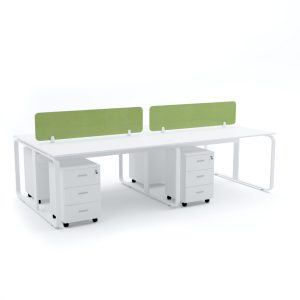
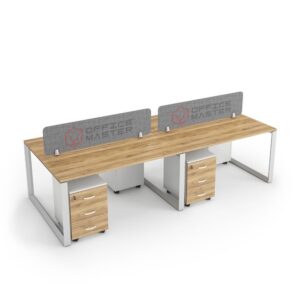
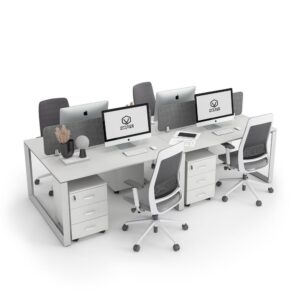
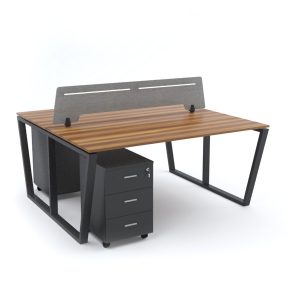
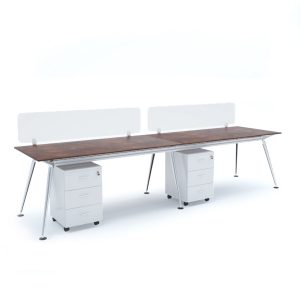
Premium Office Workstations by OfficeMaster for Modern Workspaces

From د.إ 3,035 incl. tax


From د.إ 5,200 incl. tax
From د.إ 2,750 incl. tax


From د.إ 5,985 incl. tax

From د.إ 2,940 incl. tax

From د.إ 3,938 incl. tax