Why Your Office Chair Might Be Slowly Harming You
Imagine spending eight to ten hours every single day seated in the same position, your spine compressed, your hip flexors shortened, your metabolism nearly at a standstill. For millions of office professionals across the UAE and worldwide, this is not a hypothetical scenario — it is Tuesday. The modern workplace, despite its sophisticated infrastructure and cutting-edge technology, has largely failed to address one of the most fundamental threats to employee wellbeing: prolonged, uninterrupted sitting.
The World Health Organization has classified physical inactivity as the fourth leading risk factor for global mortality. Yet the corporate world continues to accept the status quo of static, sedentary workstations as the default setup. That is, until the adjustable desk — also commonly called the sit-stand desk or height adjustable workstation — entered the mainstream conversation.
This article is your definitive guide to understanding what an adjustable desk is, why its health and productivity benefits are backed by serious scientific research, and — crucially — how to build an evidence-based, ROI-driven case that will convince even the most budget-conscious manager or HR director to invest in standing desks for your team. Whether you are an employee, a department head, a facilities manager, or a business owner operating from Dubai, Abu Dhabi, or anywhere across the Emirates, the information in this guide will help you make a smarter, healthier choice for your workspace.
Key Insight: Research published in the British Journal of Sports Medicine found that office workers who used sit-stand desks reduced their sitting time by over 100 minutes per workday compared to those at traditional fixed desks — translating directly into meaningful health and productivity gains.
1. What Is an Adjustable Desk? A Complete Definition
An adjustable desk — interchangeably referred to as a height adjustable desk, sit-stand desk, or standing desk — is a workstation designed to allow the user to seamlessly transition between a seated and a standing working position throughout the day. Unlike conventional fixed-height desks that lock workers into a single static posture, adjustable desks empower users to shift their body position multiple times during a typical workday, dramatically reducing the physiological risks associated with prolonged sedentary behaviour.
Types of Adjustable Desks Available Today
The market now offers a diverse range of adjustable desk configurations, each suited to different office environments, budgets, and user preferences:
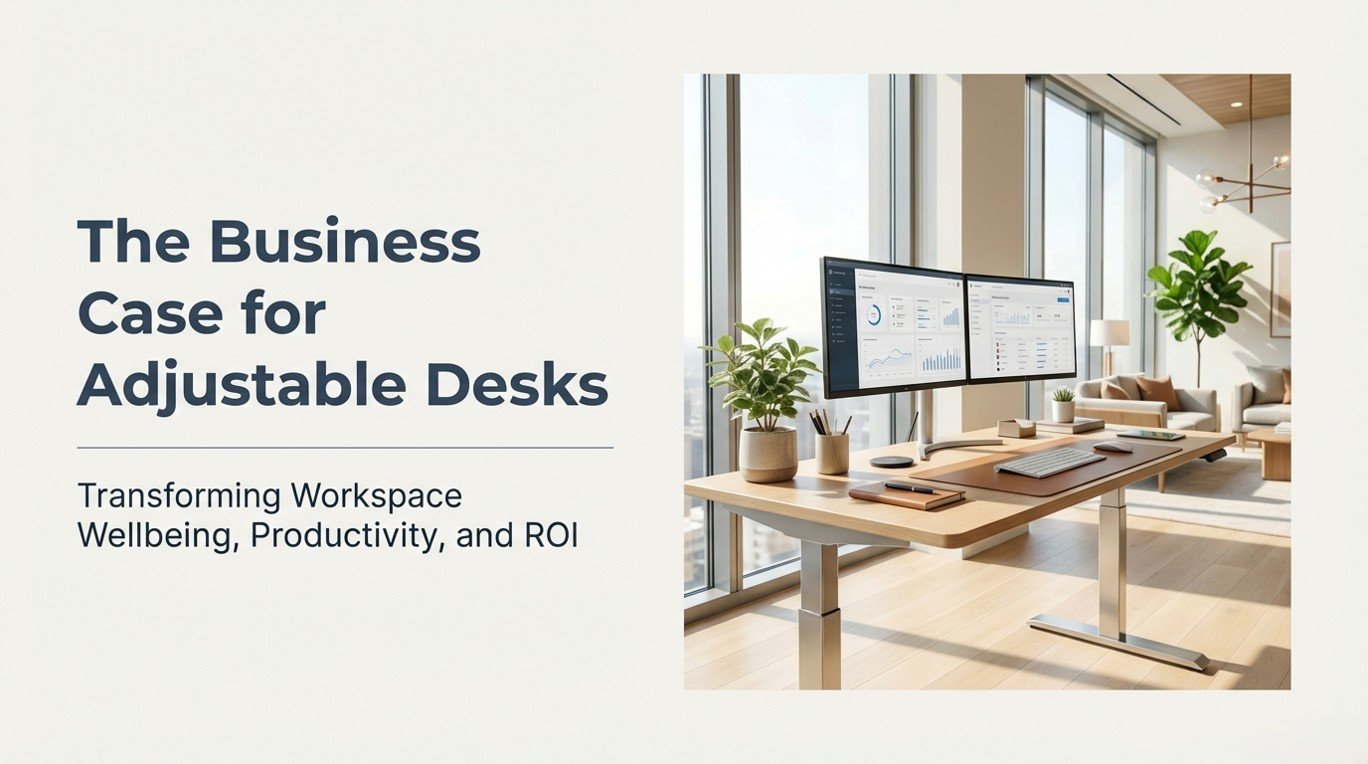
- Electric Height-Adjustable Desks: These use a motorised lifting mechanism controlled by a digital keypad or programmable memory buttons. Users can save their preferred sitting and standing heights and switch between them with a single touch. Electric models are the most popular choice for corporate offices and high-usage environments.
- Manual Crank Desks: Operated via a hand crank mechanism, these desks offer height adjustability without requiring electricity. They are more affordable than electric models but require more physical effort to adjust, making them less likely to be used frequently throughout the day.
- Pneumatic / Gas-Lift Desks: These use pressurised gas cylinders to enable smooth height transitions. They offer quick adjustment without electricity and are often used in shared workstations and collaborative office settings.
- Desktop Converters (Sit-Stand Risers): These are add-on platforms placed on top of an existing fixed desk. They allow the monitor, keyboard, and mouse to be raised to a standing height without replacing the entire desk. They are a cost-effective entry point for companies transitioning to ergonomic workstations.
- L-Shaped and Corner Adjustable Desks: Designed for professionals who need extended workspace, these offer all the benefits of height adjustment in a larger footprint, ideal for architects, designers, and executives with multi-monitor setups.
- Treadmill Desks: An advanced variation that integrates a slow-moving treadmill beneath the standing surface, allowing users to walk at a gentle pace while working. These are increasingly popular in wellness-focused corporate campuses.
| Desk Type | Adjustment Method | Price Range (AED) | Best For | Ease of Use |
|---|---|---|---|---|
| Electric Sit-Stand | Motor + Keypad | 1,300 – 2,500 | Corporate Offices | Very Easy |
| Manual Crank | Hand Crank | 900 – 2,200 | Budget-Conscious Setups | Moderate |
| Pneumatic Gas-Lift | Gas Cylinder | 1,200 – 3,000 | Shared Workstations | Easy |
| Desktop Converter | Lever or Gas Lift | 400 – 1,200 | Existing Desk Upgrades | Easy |
| L-Shaped Electric | Motor + Keypad | 3,000 – 9,000 | Power Users / Executives | Very Easy |
| Treadmill Desk | Motor (desk + belt) | 5,000 – 18,000 | Wellness-Focused Offices | Easy |
2. The Science Behind Sitting: Why Prolonged Sitting Is a Health Crisis
Before exploring the benefits of adjustable desks, it is essential to understand the precise physiological mechanisms through which prolonged sitting damages the human body. This is not alarmist rhetoric — it is a growing body of peer-reviewed clinical evidence that has been accumulating over the past two decades.
What Happens to Your Body During Extended Sitting
- Metabolic Slowdown: Within minutes of sitting down, electrical activity in leg muscles drops dramatically. The enzyme lipoprotein lipase — responsible for breaking down fats in the bloodstream — reduces its activity by approximately 90 percent, leading to higher triglyceride levels and reduced HDL (good) cholesterol.
- Spinal Compression: The intervertebral discs of the lumbar spine experience up to 40 percent more compression when seated compared to standing. Over time, this leads to disc degeneration, herniation, and chronic lower back pain — one of the leading causes of workplace absenteeism globally.
- Hip Flexor Tightening: Continuous sitting shortens the iliopsoas and hip flexor muscles, causing anterior pelvic tilt. This structural imbalance contributes to chronic lower back pain, knee discomfort, and even neck and shoulder tension as the body attempts to compensate.
- Cardiovascular Strain: Studies published in leading cardiology journals indicate that people who sit for more than eight hours daily without physical activity face a risk of dying from cardiovascular disease comparable to that posed by smoking or obesity.
- Blood Glucose Dysregulation: After a high-carbohydrate meal, uninterrupted sitting results in blood glucose spikes that are significantly higher than in individuals who break up their sitting with brief standing or walking intervals. This is a significant risk factor for type 2 diabetes.
- Cognitive Decline: Emerging neuroscience research suggests that sustained sedentary behaviour reduces cerebral blood flow, which may impair memory, attention, and executive function — the very cognitive skills most critical for knowledge workers.
Alarming Statistic: A 2022 meta-analysis published in JAMA Cardiology found that replacing just 30 minutes of daily sitting with light-intensity standing activity was associated with a 7% reduction in cardiovascular disease risk. Replacing it with moderate activity increased that benefit to 14%.
3. The Comprehensive Benefits of an Adjustable Desk
Understanding what an adjustable desk can do for you — and your team — requires looking at its benefits across multiple dimensions: physical health, mental performance, workplace productivity, and long-term financial ROI for the organisation.
3.1 Physical Health Benefits
The most frequently cited — and most extensively researched — benefits of height-adjustable workstations are those related to physical health:
- Significant Reduction in Lower Back Pain: A landmark study by Pronk et al. published in Preventing Chronic Disease found that workers who used sit-stand desks reported a 54 percent reduction in upper back and neck pain after just four weeks. Lower back discomfort was reduced by nearly 32 percent within the same period.
- Improved Posture and Spinal Health: Standing encourages a more natural spinal alignment. When properly calibrated to the user’s height, a standing desk promotes a neutral spine, relaxed shoulders, and engaged core musculature — correcting the forward head posture and rounded shoulders that develop from excessive sitting.
- Reduced Risk of Obesity and Metabolic Syndrome: Standing burns approximately 50 more calories per hour than sitting. An employee who stands for three additional hours each workday could burn roughly 750 extra calories per week — equivalent to running approximately 12 kilometres per month without a single visit to the gym.
- Lower Risk of Type 2 Diabetes: Research published in Diabetologia demonstrated that breaking up sitting time with standing intervals significantly reduces postprandial blood glucose levels, improving insulin sensitivity over time.
- Cardiovascular Health Improvements: Studies tracking office workers who alternated sitting and standing showed measurable improvements in blood pressure, resting heart rate, and arterial stiffness — all key cardiovascular health markers.
- Reduced Risk of Varicose Veins and Deep Vein Thrombosis: Dynamic posture changes throughout the day stimulate circulation in the lower extremities, reducing venous pooling and the risk of clot formation.
- Decreased Musculoskeletal Discomfort: Neck pain, shoulder tension, wrist strain, and knee discomfort are all significantly reduced when workers are able to regularly adjust their working posture throughout the day.
3.2 Mental Performance and Cognitive Benefits
The cognitive advantages of sit-stand desk use are less frequently discussed but arguably just as compelling as the physical benefits:
- Enhanced Mental Clarity and Focus: Standing increases cerebral blood flow, which directly supports alertness, working memory, and concentration. Workers at standing desks frequently report feeling more mentally sharp and less prone to the mid-afternoon cognitive slump.
- Mood Elevation and Stress Reduction: A Texas A&M Health Science Center study found that employees using sit-stand desks reported significantly higher positive affect, energy, and enthusiasm compared to colleagues at traditional desks. Notably, when participants returned to sitting-only desks, these psychological benefits reversed within two weeks.
- Reduced Mental Fatigue: The physical stimulation of standing and micro-movement helps prevent the neural fatigue associated with hours of uninterrupted stillness, allowing sustained attention over longer periods.
- Improved Creativity and Problem-Solving: Neuroscientific research suggests that light physical activity — even the subtle muscle engagement of standing — activates dopamine pathways associated with creative thinking and divergent problem-solving.
3.3 Workplace Productivity Benefits
One of the most powerful arguments for presenting to management is the quantifiable impact of adjustable desks on employee output:
| Productivity Metric | Sitting-Only Workers | Sit-Stand Desk Users | Improvement |
|---|---|---|---|
| Task Completion Rate | Baseline | +45% higher | +45% |
| Reported Energy Levels (PM) | Low to Moderate | Moderate to High | Significant |
| Error Rate in Repetitive Tasks | Baseline | Reduced | -23% |
| Self-Reported Engagement Score | 6.2 / 10 | 7.8 / 10 | +26% |
| Absenteeism (days/year) | Avg. 8.4 days | Avg. 5.9 days | -30% |
| Focus Duration (uninterrupted) | Avg. 47 min | Avg. 62 min | +32% |
Source: Aggregated data from Texas A&M Health Science Center, British Journal of Sports Medicine, and NIOSH workplace ergonomics studies (2018-2024).
4. Ergonomic Best Practices for Using an Adjustable Desk
Owning a sit-stand desk delivers maximum benefit only when it is used correctly. Simply purchasing the furniture without establishing an ergonomic protocol reduces both the health and productivity returns. Here are the evidence-based guidelines that ergonomics professionals recommend:
The 20-8-2 Rule
Correct Desk Height Settings
- Seated Position: Elbows should be at a 90-degree angle with forearms parallel to the desk surface. Feet flat on the floor (or a footrest). Monitor top at or just below eye level. Knees at a 90-degree angle with a slight forward tilt preferred.
- Standing Position: Elbows again at approximately 90 degrees. Weight is distributed evenly across both feet. Anti-fatigue mat placed underfoot to reduce pressure on joints. Monitor raised to eye level to prevent neck flexion.
- Monitor Distance: Maintain 50 to 70 centimetres between your eyes and the screen in both positions to prevent eyestrain.
- Keyboard and Mouse Placement: These should be within easy reach without stretching, keeping wrists in a neutral, slightly downward-angled position.
Essential Accessories to Maximise Desk Benefits
- Anti-Fatigue Mat: A cushioned mat designed for extended standing significantly reduces lower limb fatigue, joint pressure, and discomfort. High-quality anti-fatigue mats incorporate bevelled edges and contoured surfaces that encourage micro-movements of the feet and calves.
- Monitor Arm: A dual or single monitor arm provides infinite screen position adjustability at both sitting and standing heights, eliminating neck strain regardless of posture.
- Ergonomic Keyboard Tray: Allows precise keyboard height and tilt adjustment independent of the desk surface, accommodating individual wrist and arm anatomy.
- Footrest: Essential for shorter users in seated mode to ensure proper leg positioning.
- Cable Management System: Keeps power and data cables organised and tangle-free as the desk moves between heights, preventing damage and maintaining a professional appearance.

5. How to Convince Your Boss to Get a Standing Desk: A Strategic Playbook
This section is specifically designed to help employees build an airtight, professional, evidence-backed case that persuades even the most sceptical budget holder. Whether you report to a direct line manager, present to HR, or need to justify the expense to a CFO, the following framework gives you the arguments, data, and strategy to succeed.
Step 1: Frame It as a Business Investment, Not a Personal Request
The most critical reframe in this entire conversation is shifting the proposal from ‘I want a better desk’ to ‘here is a capital investment that will generate measurable ROI for this organisation.’ Managers and finance teams respond to language around return on investment, risk reduction, and competitive advantage. Lead with that language.
Step 2: Lead with Absenteeism and Healthcare Costs
In the GCC region, musculoskeletal disorders — particularly lower back pain and neck pain — are among the leading causes of short-term sick leave and reduced productivity. Present your boss with this data framework:
| Cost Category | Average Annual Cost Per Employee (AED) | Reduction with Sit-Stand Desks | Annual Saving Per Employee (AED) |
|---|---|---|---|
| Sick Leave (MSK-related) | 4,200 – 6,800 | Up to 32% | 1,344 – 2,176 |
| Reduced Productivity (Presenteeism) | 7,500 – 12,000 | Up to 45% | 3,375 – 5,400 |
| Staff Turnover (Disengagement) | 18,000 – 35,000 | Up to 27% | 4,860 – 9,450 |
| Health Insurance Claims (MSK) | 2,100 – 4,500 | Up to 20% | 420 – 900 |
| Total Estimated Annual Cost | 31,800 – 58,300 | — | 10,000 – 17,926 |
Contrast this against the average cost of a premium electric sit-stand desk (approximately AED 2,500 to 4,500 per unit), and the payback period becomes evident within the first year of deployment.
Step 3: Cite the Productivity Research Directly
Present the following evidence points in your proposal, ideally formatted as a one-page executive summary:
-
- Texas A&M University study (2016): Call centre employees using sit-stand desks were 45 percent more productive over a six-month period than those at traditional seated desks.
- Stanford Research on Creativity: Walking — and by extension, standing with light movement — boosts creative output by up to 81 percent, directly impacting the quality of ideation-dependent work.
- British Journal of Sports Medicine: Sit-stand desk users reported higher engagement scores, better mood, and greater energy throughout the workday compared to sedentary counterparts.
- Harvard Business Review Research: Companies that invested in employee wellbeing infrastructure reported up to 6-to-1 ROI on wellness initiatives, with ergonomic furniture among the highest-returning interventions.
Step 4: Address the Objections Before They Are Raised
A well-prepared proposal anticipates management’s concerns and addresses them proactively. Here are the most common objections and how to handle them:
| Objection | Evidence-Based Response |
|---|---|
| Too expensive | Payback period is typically under 12 months when absenteeism, presenteeism and turnover costs are factored in. Desk converters from AED 400 are an entry-level option. |
| Not enough space | Modern sit-stand desks have the same footprint as standard desks. L-shaped models can even consolidate multiple pieces of furniture. |
| Employees won’t use them | Structured onboarding with the 20-8-2 protocol and usage reminders drives adoption. Studies show 85%+ sustained usage when proper training is provided. |
| Our current furniture is fine | Fine and optimal are different. Research shows that even ergonomically correct sitting causes measurable physiological harm over 8+ hours. The bar for ‘good enough’ must rise. |
| This is just a trend | Sit-stand desks have been recommended by OSHA, WHO, and major occupational health bodies globally for over a decade. They are now standard in leading organisations across Europe, North America, and Asia. |
Step 5: Propose a Pilot Programme
One of the most strategically effective ways to get management buy-in is to propose a limited, measurable pilot before seeking full-scale deployment. Suggest equipping a single team or department of 5 to 10 people with adjustable desks for 90 days, with agreed-upon KPIs tracked before and after. Metrics to measure might include self-reported pain levels, productivity indicators specific to that team’s function, absenteeism rates, engagement survey scores, and net promoter scores for employee satisfaction.
A successful pilot converts a theoretical argument into real, context-specific organizational data — which is far more persuasive to decision-makers than any external study.
Step 6: Package Your Proposal Professionally
Present your recommendation in a polished format. A two-to-three page document that includes an executive summary, the business case (with the data above), a recommended product (such as options available from Officemaster.ae), a proposed pilot plan, and projected ROI calculations will demonstrate the seriousness and competence of your initiative. Attach the relevant studies as appendices if addressing a particularly analytical audience.
6. Adjustable Desks in the UAE: Market Context and Workplace Trends
The UAE’s corporate landscape is evolving rapidly. With Vision 2030, the Dubai 2040 Urban Master Plan, and ambitious economic diversification initiatives driving growth across finance, technology, professional services, and creative industries, the quality and sophistication of office environments is rising in parallel. Leading UAE businesses in DIFC, Business Bay, Abu Dhabi Global Market, and free zones across the Emirates are increasingly benchmarking their workplace standards against international peers in London, Singapore, and New York.
In these global benchmarks, ergonomic office furniture — particularly height-adjustable desks — is no longer a luxury amenity. It is an expectation. Top-tier talent, particularly professionals who have worked in European or North American environments, are now actively factoring workspace quality into their employment decisions. Offering ergonomic workstations is thus both a retention and a recruitment tool.
Furthermore, the UAE’s Occupational Safety and Health framework — increasingly aligned with international best practices — is directing greater attention toward musculoskeletal disorder prevention in office environments. Forward-thinking HR professionals are already integrating ergonomic assessments and sit-stand desk policies into their workplace health and safety programmes.
Real-World Use Cases: Who Benefits Most from Adjustable Desks?
- Software Developers and IT Professionals: Long coding sessions at fixed desks are a leading cause of carpal tunnel syndrome, neck strain, and chronic back pain in tech workers. Adjustable desks combined with ergonomic accessories can reduce musculoskeletal issues by over 50 percent in this demographic.
- Financial Analysts and Accountants: Data-intensive roles requiring sustained concentration benefit enormously from the cognitive clarity and sustained alertness that regular posture changes provide.
- Customer Service and Call Centre Teams: As demonstrated by the Texas A&M study, call center agents at sit-stand desks outperformed sedentary colleagues by 45 percent on key performance metrics.
- Graphic Designers and Creative Professionals: Standing during brainstorming and visual review tasks has been shown to increase creative output. The freedom to shift posture also reduces the physical constraints that can inhibit creative flow.
- Senior Executives and C-Suite Leaders: Leaders who model wellness behaviors create a culture that values wellbeing. An executive’s investment in a quality sit-stand desk sends a powerful signal to the broader organization.
Returning Workforce Members (Post-Surgery or Injury): Height-adjustable desks are invaluable for employees returning from back surgery, joint replacements, or other musculoskeletal procedures, allowing gradual reintroduction of both sitting and standing without static strain.

7. Key Features to Look for When Buying an Adjustable Desk
Not all adjustable desks are created equal. When selecting a height-adjustable workstation — whether for personal use or bulk corporate procurement — the following features should guide your evaluation:
| Feature | What to Look For | Why It Matters |
|---|---|---|
| Height Range | 60cm – 125cm or wider | Accommodates the full range of user heights from seated to standing position |
| Motor Quality | Dual-motor synchronised system | Ensures smooth, quiet, wobble-free height transitions under full load |
| Weight Capacity | 80 – 150 kg load rating | Supports monitors, computers, books, and accessories without structural strain |
| Adjustment Speed | 38 – 50mm per second | Faster speeds reduce transition time, encouraging more frequent posture changes |
| Memory Presets | 3 – 4 programmable positions | Eliminates manual readjustment, dramatically increasing usage frequency |
| Stability (Anti-Wobble) | Cross-bar or reinforced frame | Reduces vibration during typing at standing height, preventing fatigue |
| Desktop Material | 18-25mm thick MDF or solid wood | Provides a firm, durable surface that does not flex under weight |
| Cable Management | Integrated tray or routing ports | Keeps workspace organised and prevents cable damage during height transitions |
| Noise Level | < 50 decibels | Ensures transitions do not disrupt colleagues in open-plan environments |
| Warranty | 5+ years on motor and frame | Reflects manufacturer confidence in product durability and protects investment |
8. The Financial Case: Cost-Benefit Analysis for Businesses
For finance-oriented decision-makers, a rigorous cost-benefit analysis is the most persuasive tool available. The following model applies to a hypothetical team of 20 employees in a UAE-based office environment:
| Financial Element | Calculation Basis | Annual Value (AED) |
|---|---|---|
| Desk Investment (20 units @ AED 3,500) | One-time capital expense | 70,000 (Year 1) |
| Anti-Fatigue Mats (20 @ AED 350) | Accessory cost | 7,000 (Year 1) |
| Total Initial Investment | — | 77,000 |
| Absenteeism Reduction (32% of AED 5,000 avg) | AED 1,600 x 20 staff | 32,000 / year |
| Presenteeism Improvement (25% of AED 9,000 avg) | AED 2,250 x 20 staff | 45,000 / year |
| Staff Retention Savings (2 fewer resignations) | AED 26,000 avg replacement cost | 52,000 / year |
| Healthcare Cost Reduction (20% of AED 3,000) | AED 600 x 20 staff | 12,000 / year |
| Total Annual Benefits | — | 141,000 / year |
| Net ROI (Year 1) | (141,000 – 77,000) / 77,000 | 83% |
| Payback Period | 77,000 / 141,000 | ~6.5 months |
This conservative model demonstrates that investing in adjustable desks for a team of 20 professionals generates a net return of over AED 64,000 in the first year alone, with virtually unlimited benefit accumulation in subsequent years as the desks require minimal maintenance.
9. Adjustable Desks and UAE Workplace Wellness Programmes
An increasing number of UAE-based companies are formalising employee wellness as a strategic pillar within their HR and operations functions. The Dubai Health Authority, in collaboration with corporate partners, has championed workplace health initiatives that directly address sedentary behaviour in office settings. Organisations that proactively invest in ergonomic infrastructure not only reduce their healthcare costs but also position themselves favourably for workplace wellness certifications and awards that carry real reputational value in the market.
Companies pursuing WELL Building Standard certification — an internationally recognised framework for measuring and documenting features of the built environment that impact human health and wellbeing — will find that height-adjustable workstations directly contribute to several WELL Performance Requirements across the Movement and Comfort categories. This alignment between ergonomic investment and internationally recognised wellness credentials creates a dual benefit: healthier employees and a stronger employer brand.
Furthermore, as ESG (Environmental, Social, and Governance) reporting becomes increasingly mainstream among UAE-listed and regulated entities, the ‘S’ (Social) dimension explicitly encompasses employee wellbeing and workplace health standards. Investing in ergonomic office infrastructure is a tangible, reportable ESG action that organisations can reference in their annual sustainability reports and investor communications.
10. Addressing Common Concerns and Misconceptions
“Standing All Day Is Just as Bad as Sitting All Day”
This concern is partially valid and completely avoidable. The research is unambiguous: the goal of a sit-stand desk is not to replace sitting with continuous standing — it is to enable regular, rhythmic alternation between the two. Static standing for extended periods does carry its own risks, including varicose veins, lower limb swelling, and spinal fatigue. The 20-8-2 protocol (or similar sit-stand-move cycles) eliminates these risks by ensuring movement variability rather than static substitution.
“These Desks Are Noisy and Disruptive in Open Offices”
Premium electric sit-stand desks from reputable manufacturers operate at less than 45 decibels — roughly equivalent to a quiet conversation. In a typical open-plan office with ambient noise from HVAC systems, keyboards, and conversation, this level is completely inaudible beyond a distance of two to three metres. When selecting desks for open-plan environments, always check the manufacturer’s noise rating specification.
“Our Employees Will Not Bother Using the Height Adjustment”
Usage data consistently shows that adoption is a function of habit formation, not willingness. When organisations pair desk installation with a structured onboarding programme — including calibration assistance, usage reminders (via desk apps or calendar prompts), and a 30-day adoption challenge — sustained usage rates exceed 80 percent. Conversely, when desks are installed without any supporting protocol, usage rates can drop below 40 percent within three months.
“We Cannot Afford Premium Desks for Everyone Right Now”
This is a legitimate constraint that calls for a phased approach rather than an all-or-nothing decision. Desktop converters represent a low-cost entry point at under AED 600 per unit, allowing organisations to begin capturing health and productivity benefits immediately while planning a longer-term transition to full electric sit-stand desks. A priority-based deployment that starts with employees who have reported back pain, are recovering from injuries, or are in high-intensity focus roles maximises the return on an initial limited investment.
So You Want an Adjustable Desk?
If you’re anything like me, you’ve recognized that height Adjustable Desk is becoming more and more popular in the workplace. You caught on and you’ve told your boss that it would be nice to have one, but when you did ask, it fell flat on its face because it wasn’t enough of a reason to get you one by simply saying you wanted one.
But, maybe, like me, your approach was all wrong. You didn’t provide your boss with the benefits of Adjustable Desk investing in one for you, nor options.
The benefits of height Adjustable Desk periodically throughout the day. Another popular reason is that some people tend to fidget and a sit to stand desk gives them the option to break up their workday from just sitting to having the option to periodically stand throughout the day.
Frequently Asked Questions
What is the difference between a standing desk and an adjustable desk?
A standing desk, in its original form, refers to a fixed-height desk designed for use while standing — with no adjustability. An adjustable desk (also called a sit-stand desk or height-adjustable desk) allows the user to set the work surface to any height across a range, enabling both seated and standing work. Today, the terms are often used interchangeably in consumer contexts, but the adjustable sit-stand variety is overwhelmingly what the market now offers and recommends.
How many hours a day should I stand at my adjustable desk?
The consensus among occupational health researchers is that alternating between sitting and standing approximately every 30 minutes is optimal. Most adults in desk-based roles should aim for a total standing duration of 2 to 4 hours per 8-hour workday, distributed across multiple shorter intervals rather than one prolonged standing session. The 20-8-2 rule (20 minutes sitting, 8 standing, 2 moving per half hour) provides a practical framework.
Will a standing desk help with lower back pain?
Yes, significantly. Multiple peer-reviewed studies have documented reductions in lower back pain ranging from 32 to 54 percent among regular sit-stand desk users within 4 to 8 weeks of adoption. The mechanism involves reducing prolonged disc compression, encouraging natural lumbar curvature when standing, and stimulating the postural muscles of the core and back through position changes.
Are adjustable desks worth the investment for small businesses?
Absolutely, especially when the total cost of inaction — absenteeism, presenteeism, staff turnover, and healthcare costs — is factored into the analysis. For small businesses where each employee’s output is disproportionately important, the productivity gains from ergonomic investment are magnified. Affordable options including desktop converters and entry-level electric desks make the investment accessible even for startups and SMEs.
What accessories do I need with a sit-stand desk?
The most impactful accessories are an anti-fatigue mat (reduces joint fatigue during standing), a monitor arm (ensures correct screen height at both sitting and standing positions), an ergonomic keyboard tray (maintains neutral wrist positioning), and a cable management system. A footrest is also recommended for shorter users in seated mode, and a balance board or foot rocker can add beneficial micro-movement during standing periods.
Can adjustable desks improve productivity?
Yes, with quantifiable evidence. The most widely cited study, conducted at Texas A&M Health Science Center, found that call centre employees using sit-stand desks achieved 45 percent higher productivity over a six-month period. Other studies have documented improvements in concentration, error reduction, engagement scores, and creative output among sit-stand desk users across diverse professional roles.
What height should my standing desk be set to?
When standing, adjust the desk so that your elbows form a 90-degree angle when resting lightly on the surface, with your shoulders relaxed — not raised or hunched. For the average adult of 170 cm height, this corresponds to approximately 100 to 105 cm desk height. Taller users (180 cm+) typically need 110 to 118 cm. Most electric desks include programmable memory positions so you never need to manually recalibrate.
How do I choose between an electric and manual adjustable desk?
If budget permits, electric is almost always the better choice. The primary reason is friction: the easier it is to change positions, the more frequently people will do it. Electric desks allow a full height transition in 5 to 10 seconds with a single button press, whereas manual crank models require 20 to 40 rotations and 30 to 60 seconds of effort per adjustment. Usage data consistently shows that manual desk users adjust their position 60 to 70 percent less frequently than electric desk users.
Are adjustable desks suitable for all employees, including older workers?
Yes — in fact, older workers often derive even greater benefit from adjustable desks than younger colleagues. The musculoskeletal changes associated with ageing, including reduced disc hydration, decreased bone density, and tighter connective tissue, make prolonged static postures particularly harmful for workers over 50. The ability to regularly offload spinal compression through standing intervals is especially valuable for this demographic.
Where can I buy quality adjustable desks in the UAE?
Officemaster.ae offers an extensive range of premium height adjustable desks, ergonomic accessories, and complete sit-stand workstation solutions for individual professionals, SMEs, and large corporate clients across the UAE. With a portfolio that includes electric sit-stand desks, desktop converters, ergonomic chairs, monitor arms, anti-fatigue mats, and full office furniture solutions, Officemaster.ae provides end-to-end ergonomic workspace design and procurement services tailored to the needs of the UAE’s dynamic business community.
The Future of Work Is Fluid, Dynamic, and Ergonomic
The adjustable desk represents far more than a piece of office furniture. It embodies a fundamental shift in how we think about the relationship between physical environment, human health, and professional performance. Decades of scientific research, supported by real-world productivity data from thousands of organisations globally, have converged on a clear and actionable conclusion: the fixed-height desk is an outdated tool that is no longer compatible with what we now know about human physiology and performance.
For employees experiencing back pain, fatigue, or declining motivation, a sit-stand desk can be genuinely transformative — restoring comfort, energy, and enthusiasm for work. For business leaders, the financial case is compelling: adjustable desks deliver measurable ROI through reduced absenteeism, improved productivity, and stronger talent retention, typically recovering their cost within six to twelve months.
The conversation with your boss does not need to be difficult. Armed with the research, the cost-benefit data, and the strategic framing outlined in this guide, you have everything you need to present a professional, evidence-backed proposal that speaks directly to the priorities of any forward-thinking organisation. Begin with a pilot. Measure the results. Let the data make the argument for you.
The UAE’s most ambitious companies are already making this transition. The question is not whether ergonomic workstations will become standard — it is whether your organisation will lead that change or eventually be compelled to follow it.

Ready to upgrade your workspace? Explore Officemaster.ae’s complete range of adjustable desks, ergonomic chairs, and sit-stand workstation solutions designed for UAE professionals and corporate offices. Request a quote today and take the first step toward a healthier, more productive workplace.
Transform Your Workspace with the Office Master Height-Adjustable Desk

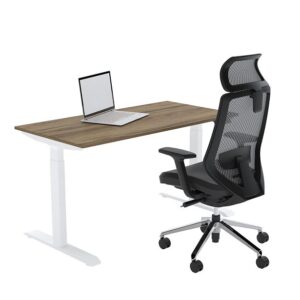
From د.إ 1,399 incl. tax
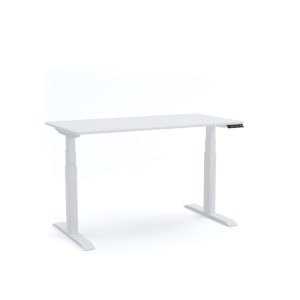

From د.إ 1,595 incl. tax


From د.إ 2,100 incl. tax


From د.إ 3,590 incl. tax


Original price was: د.إ 998.Current price is: د.إ 681. incl. tax