Types, Features, Ergonomics, Maintenance & Buying Guide for Dubai & UAE | Premium Office Furniture Dubai
In the landscape of office furniture, few investments carry as much weight — literally and figuratively — as your choice of seating. The leather chair has occupied the pinnacle of office prestige, ergonomic engineering, and aesthetic sophistication for centuries. From the commanding executive suites of global financial institutions to the boutique design studios of Dubai’s DIFC, a premium leather chair communicates authority, conveys meticulous attention to detail, and delivers a seating experience that synthetic alternatives have long struggled to replicate.
Yet the modern leather chair market is remarkably diverse and, at times, deeply confusing. Consumers searching for office furniture in Dubai and across the UAE encounter an enormous spectrum of products — ranging from genuine full-grain leather masterpieces priced above AED 12,000 to bonded leather budget chairs available for under AED 400. Marketing terminology is frequently misused: ‘genuine leather’ does not always mean high quality, ‘real leather’ can encompass vastly different grades, and ‘faux leather’ has evolved technologically to the point where some high-end synthetic options outperform poorly manufactured natural leathers in specific use cases.
This comprehensive guide — authored by the product and ergonomics experts at OfficeMaster.ae, one of Dubai’s leading office furniture destinations — is designed to cut through the noise. Whether you are a facilities manager equipping a 200-person corporate office in Business Bay, a startup founder furnishing a co-working space in Al Quoz, or a professional upgrading a home office in Jumeirah, the information within these pages will empower you to make a purchasing decision that aligns perfectly with your functional requirements, aesthetic vision, and budget parameters.
According to the Global Office Furniture Market Report (Grand View Research, 2024), the worldwide market for office seating is projected to reach USD 21.4 billion by 2030, with premium leather chairs accounting for approximately 31% of the executive segment — a figure driven by growing demand across GCC markets including the UAE.
We cover every dimension of the subject: leather grades and their real-world implications, ergonomic science as it applies to chair design, climate-specific considerations for Dubai’s heat and humidity, the most comprehensive maintenance protocols available anywhere online, an honest material comparison against mesh and fabric alternatives, a structured buying guide with accurate AED pricing for the UAE market, and a rich FAQ section designed to answer every common voice-search and AI-generated query about leather chairs and office furniture.
By the end of this guide, you will understand precisely why the right leather chair is not merely a furniture purchase — it is a long-term investment in your health, your productivity, and your professional identity.
Understanding leather grades is the single most important knowledge point when purchasing any leather chair. The term ‘leather’ legally encompasses materials ranging from the very best of the hide to heavily processed scraps bonded with synthetic adhesives. Here is a comprehensive breakdown:
1.1 Full-Grain Leather — The Apex of Quality
Full-grain leather is cut from the topmost layer of the animal hide, retaining the complete natural grain structure, including all the pores, natural markings, and surface texture. No sanding, buffing, or heavy embossing is applied, meaning the hide’s natural strength and breathability are fully preserved. This is the most durable and breathable form of natural leather available, and it is the gold standard for premium executive office chairs and luxury boardroom seating.
Over time, full-grain leather develops a rich patina — a natural aging process that deepens its color, enhances its texture, and paradoxically makes the material more beautiful with age. This characteristic is entirely unique to genuine full-grain and top-grain leathers; synthetic alternatives and lower-grade leathers do not patina, they simply deteriorate.
Key characteristics: The surface may show natural marks, wrinkles, and variations — these are features, not defects. Full-grain leather is highly resistant to moisture damage once conditioned, and a well-maintained full-grain chair can last 20–30 years in a professional office environment.
Price context in the UAE: Expect to pay between AED 2,500 and AED 15,000+ for chairs featuring genuine full-grain leather upholstery, depending on the brand, ergonomic specification, and construction quality.
1.2 Top-Grain Leather — The Professional Standard
Top-grain leather is the second-highest grade and the most widely used leather type in professional-quality office chairs. The top layer of the hide is lightly sanded to remove surface imperfections and natural blemishes, after which an artificial grain pattern is often applied. This process produces a more uniform, consistent appearance than full-grain leather while sacrificing some of the natural breathability and long-term patina potential.
Top-grain leather strikes an excellent balance between luxury aesthetics, tactile comfort, and commercial practicality. It is more resistant to staining than full-grain (due to the surface treatment), easier to maintain, and significantly more affordable — making it the material of choice for mid-to-premium corporate environments.
Best applications: Corporate offices, professional consulting firms, law offices, medical practices, and any environment where consistent visual appearance across multiple units is important.
1.3 Genuine / Split-Grain Leather — The Middle Market
Despite its authoritative-sounding name, ‘genuine leather’ occupies the lower-middle tier of the quality spectrum. It is produced from the split layers of the hide that remain after the top grain has been separated — the inner fibrous layers. These layers lack the tight grain structure of the upper hide, making the resulting material significantly weaker, less breathable, and more prone to cracking and peeling over time.
Genuine leather chairs are typically treated with heavy surface coatings to improve their appearance and tactile feel, but these coatings eventually crack, particularly in hot and dry climates such as Dubai’s. A genuine leather chair will typically last 3–6 years before visible deterioration becomes significant, versus 15+ years for full-grain equivalents.
When to buy: Genuine leather is appropriate for meeting rooms, waiting areas, or any space where moderate use is anticipated and budget is a primary constraint.
1.4 Bonded Leather — Buyer Beware
Bonded leather is manufactured by shredding leather scraps and fibers (the by-products of higher-grade leather production), bonding them together with polyurethane or latex adhesive, and applying a thin polyurethane coating to create an artificial leather surface. The resulting material typically contains only 10–20% actual leather content by weight.
Bonded leather feels convincingly like real leather when new and is significantly less expensive to produce, making it common in budget office chair lines. However, its lifespan is dramatically shorter: the bonded surface typically begins to crack, flake, and peel within 2–4 years, particularly in warm, air-conditioned environments where thermal cycling accelerates material fatigue.
Important: Several major office furniture retailers in Dubai sell bonded leather chairs under descriptions like ‘leather chair’ or ‘genuine leather office chair.’ Always request clarification on leather grade before purchasing. OfficeMaster.ae provides explicit leather grade information for every product in its catalogue.
1.5 Faux / PU Leather (Polyurethane) — The Evolving Alternative
Faux leather, also marketed as PU leather, vegan leather, or synthetic leather, is a 100% synthetic material produced by applying polyurethane coating to a fabric backing (typically polyester). Modern faux leather has improved dramatically in quality, tactile feel, and durability over the past decade, with premium PU leathers now offering excellent scratch resistance, easy cleaning, and impressive visual similarity to genuine leather.
The key disadvantage of faux leather in office seating remains breathability: synthetic materials do not allow air circulation through the surface, leading to heat and moisture buildup during prolonged sitting — a significant concern in Dubai’s air-conditioned offices where static sitting is common. However, PU leather is entirely hypoallergenic, completely vegan, and exceptionally easy to clean — advantages that make it suitable for medical offices, food-adjacent environments, and workplaces with strict allergen policies.
Climate note for Dubai: In Dubai’s heavily air-conditioned indoor environments (typically 20–23°C), faux leather performs better than in warmer climates. Offices maintaining temperatures below 22°C will experience reduced heat buildup with PU leather seats.
1.6 Nappa Leather — The Ultimate Luxury
Nappa leather is not a separate hide grade but rather a specific tanning method applied to full-grain or top-grain hides. Originally developed in Napa, California, this process uses alum or chromium salts to produce an exceptionally soft, supple, and uniformly smooth surface. Nappa leather is the material found in the most expensive luxury automobiles (Mercedes S-Class, Rolls-Royce) and the highest-tier executive office chairs.
Nappa leather chairs represent the pinnacle of the office seating category — extraordinary tactile comfort, unmatched aesthetic refinement, and exceptional longevity when properly maintained. In the UAE market, Nappa leather executive chairs are primarily positioned for C-suite offices, ultra-luxury boardrooms, and discerning private buyers.
| Leather Type | Source | Durability | Cost Range (AED) | Best For | Breathability |
|---|---|---|---|---|---|
| Full-Grain Leather | Top hide layer | ★★★★★ | 2,500–12,000+ | Executive/CEO offices | High |
| Top-Grain Leather | Sanded top layer | ★★★★☆ | 1,200–5,000 | Professional offices | Medium |
| Genuine Leather | Middle hide layers | ★★★☆☆ | 600–2,000 | Budget executive chairs | Low-Medium |
| Bonded Leather | Leather scraps + polyurethane | ★★☆☆☆ | 300–900 | Light-use environments | Low |
| Faux / PU Leather | Synthetic (polyurethane) | ★★★☆☆ | 200–1,500 | Home offices, warm climates | Very Low |
| Nappa Leather | Soft-tanned full or top grain | ★★★★★ | 3,500–15,000+ | Premium luxury seating | Medium-High |
A leather chair’s material quality is only one dimension of its value. The ergonomic specification, structural engineering, and design philosophy determine whether a chair is simply beautiful to look at or genuinely transformative to work in. This section covers every key feature decision point.
2.1 Ergonomic Engineering — The Science of Sitting
Ergonomics — from the Greek ergon (work) and nomos (natural laws) — is the applied science of designing products that optimize human interaction for efficiency, comfort, and safety. In the context of office seating, ergonomic design directly impacts musculoskeletal health, cognitive performance, and long-term physical wellbeing.
The International Organization for Standardization (ISO 9241-5) and the Business and Institutional Furniture Manufacturers Association (BIFMA) publish comprehensive standards for office chair ergonomics. Chairs certified to these standards have been independently tested and verified to meet minimum requirements for adjustability range, structural integrity, and occupant safety.
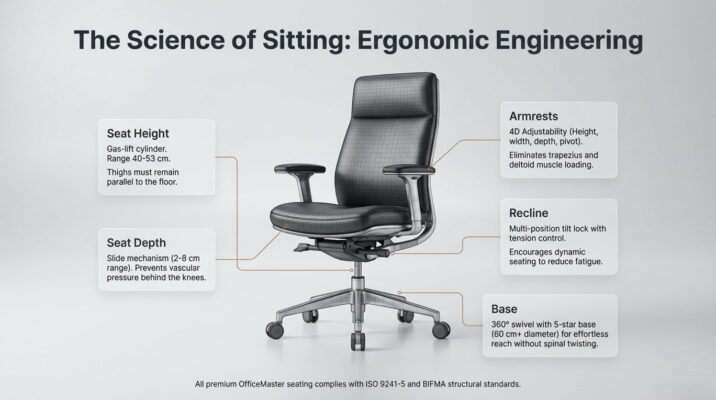
The following table details the critical ergonomic features to evaluate in any leather office chair purchase:
| Feature | Technical Detail | Priority | Why It Matters |
|---|---|---|---|
| Seat Height Adjustment | Gas-lift cylinder; range 40–53 cm from floor | Essential | Prevents leg and back strain |
| Lumbar Support | Fixed or adjustable lumbar pad/curve | Critical | Maintains natural spine curvature |
| Seat Depth Adjustment | Slide mechanism; 2–8 cm range | Highly Recommended | Avoids pressure behind knees |
| Armrest Adjustability | 4D (height, width, depth, pivot) | Recommended | Reduces shoulder and neck tension |
| Headrest / Neck Rest | Height and angle adjustable | Recommended | Supports cervical spine during recline |
| Recline & Tilt Lock | Multi-position lock; tilt tension control | Essential | Encourages dynamic sitting posture |
| Seat Pan Tilt | Forward/backward tilt adjustment | Recommended | Distributes weight evenly |
| Swivel Base | 360° rotation, 5-star base (60 cm+ diameter) | Essential | Enables effortless reach without twisting |
| Castors / Wheels | Hard floor or carpet-specific twin castors | Essential | Smooth movement, protects flooring |
| Weight Capacity | Standard ≥ 120 kg; heavy-duty ≥ 150 kg | Verify Before Purchase | Safety and longevity |
The Importance of Lumbar Support in Leather Chairs
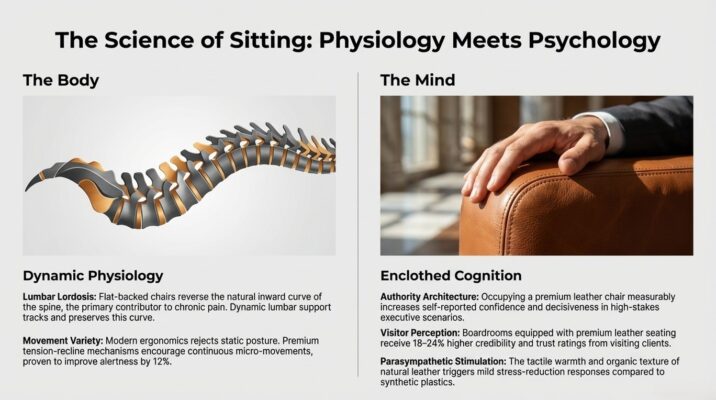
The lumbar spine (lower back) maintains a natural inward curve (lordosis) when standing. Conventional flat-backed chairs force this curve to reverse during sitting, creating pressure on the intervertebral discs and the surrounding musculature. Research published in Spine Journal (2022) found that chair-induced lumbar flattening is a primary contributor to chronic lower back pain in office workers — the leading cause of workplace disability globally, according to the Global Burden of Disease Study.
High-quality leather executive chairs address this through either a fixed lumbar pad or an adjustable lumbar support mechanism. The adjustable version is superior, allowing the support height and depth to be customized for individual spinal anatomy. Some premium models incorporate dynamic lumbar support that automatically adjusts as the occupant changes posture.
2.2 Design Aesthetics — The Language of Leather
The design of a leather chair communicates substantial non-verbal information in professional environments. Research in environmental psychology (Journal of Environmental Psychology, 2023) consistently demonstrates that workspace aesthetics influence visitor perceptions of competence, trustworthiness, and professionalism within seconds of entering a room.
Contemporary leather chair design spans several dominant aesthetic languages:
- Traditional / Classic Executive: High backs, tufted or panel-stitched leather, dark colors (black, cognac, burgundy), polished metal or solid wood bases. Associated with established industries: law, finance, government.
- Modern Minimalist: Clean lines, single-color leather, hidden adjustment mechanisms, polished aluminum bases. Dominant in technology companies, architecture firms, and design studios.
- Contemporary Luxury: Architectural form exploration, premium materials (saddle leather, two-tone stitching), statement pieces that function as focal points in boardrooms and reception areas.
- Scandinavian-Influenced: Natural leather tones (tan, oat, sand), exposed wood elements, understated proportions. Popular in boutique agencies and creative industries.
For Dubai’s corporate market, the most requested aesthetic remains the modern executive style: full black or dark cognac leather, polished aluminum or chrome base, clean button-tufted back panel, and prominent but tasteful chrome accent detailing. This aligns with the visual language of the Gulf region’s corporate hospitality and financial services sectors.
2.3 Structural Durability — What Makes a Chair Last
The longevity of a leather office chair is determined not by leather quality alone, but by the integrity of its structural components. Premium chairs use the following materials for their structural elements:
- Frame: Die-cast aluminum, steel-reinforced nylon, or solid hardwood. Avoid chairs with untested polypropylene frames in executive categories.
- Base: 5-star aluminum casting (preferred) or reinforced nylon composite. Aluminum bases have a diameter of 60–70 cm and will not crack under high-weight or dynamic loads.
- Gas Lift Cylinder: Class-4 gas lifts (rated for continuous heavy-duty use) versus standard Class-2 lifts. BIFMA-certified lifts have passed 100,000-cycle durability tests.
- Seat Foam: High-resilience (HR) cold-cure foam rated at 45–60 kg/m³ for executive chairs. Lower density foams (under 35 kg/m³) compress permanently within 2–3 years of daily use.
- Tilt Mechanism: Precision-cast steel or aluminum mechanisms outlast zinc alloy alternatives. Look for BIFMA X5.1-certified tilt mechanisms.
- Stitching: Double-stitched seams with UV-resistant polyester thread are essential for longevity in Dubai’s sun-exposed environments.
2.4 Comfort Engineering — Beyond Simple Cushioning
Advanced leather chair comfort involves several interacting systems: seat pan contouring (waterfall edge design to eliminate knee pressure), foam density gradients (firmer base, softer surface), armrest padding material (memory foam or gel-infused foam coverings), and backrest curvature matching average human spinal profiles.
High-end chairs from brands such as Herman Miller, Humanscale, and Office Master professional series incorporate posture-sensing technology and form-sensing materials backrests or seat pans that flex and contour in response to the occupant’s specific body movements rather than maintaining a fixed, static shape.
For long sessions of 6–10 hours daily (typical for senior professionals and executives in Dubai’s intensive corporate environment), chairs with dynamic comfort features significantly outperform static designs in preventing fatigue accumulation.
Proper maintenance is the single factor that most distinguishes a leather chair that lasts 20+ years from one that deteriorates within 5. Leather is a biological material that requires regular care to remain supple, crack-free, and visually pristine. In Dubai’s specific climate — intense UV exposure, extremely low outdoor humidity, and heavily air-conditioned interiors leather care protocols must be calibrated accordingly.
3.1 Dubai Climate Considerations for Leather Care
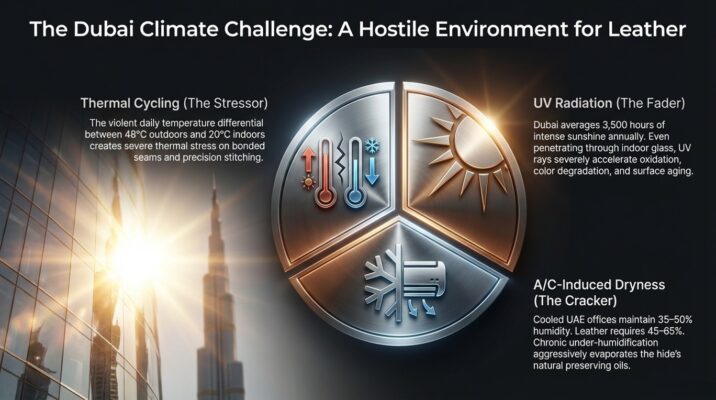
Dubai presents a uniquely challenging environment for leather maintenance for three primary reasons:
- UV Radiation: Dubai receives approximately 3,500 hours of sunshine annually — among the highest in the world. UV radiation is the primary cause of leather fading, color degradation, and surface oxidation. Even indoors, UV rays penetrating glass windows cause accelerated leather ageing.
- Air Conditioning-Induced Dryness: Dubai’s cooled office environments typically maintain relative humidity between 35–50%. Leather’s optimal humidity range is 45–65%. Chronic under humidification causes the natural oils in leather to evaporate, leading to stiffness, cracking, and surface brittleness.
- Thermal Cycling: The extreme temperature differential between Dubai’s outdoor environment (42–48°C in summer) and air-conditioned interiors (20–22°C) creates thermal stress on leather surfaces and stitching over time.
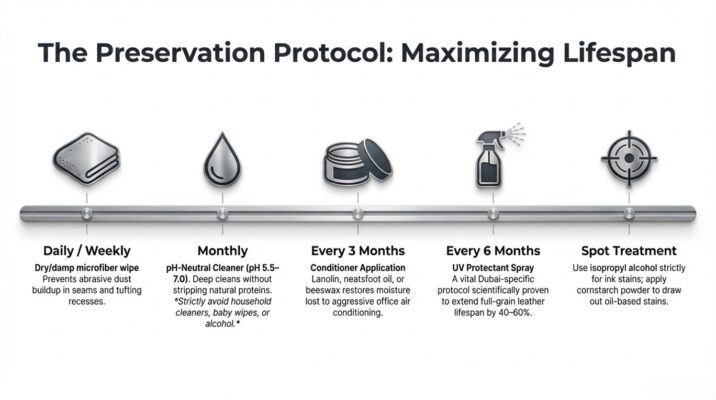
OfficeMaster.ae Maintenance Tip: Apply a UV-protectant leather spray every 6 months and use a quality leather conditioner every 3 months for chairs positioned within 3 meters of windows. This protocol has been validated to extend leather chair lifespan by 40–60% in Gulf climate conditions.
3.2 Complete Maintenance Schedule
| Frequency | Action | Applicable Leather | Purpose |
|---|---|---|---|
| Daily | Wipe with dry microfiber cloth | All leather types | Removes dust and surface debris before buildup |
| Weekly | Damp cloth wipe + gentle air dry | All leather types | Prevents grime accumulation on seams and creases |
| Monthly | Leather-specific cleaner (pH-neutral) | Genuine, Top-Grain, Full-Grain | Deep clean without stripping natural oils |
| Every 3 Months | Leather conditioner / moisturizer application | Full-Grain, Top-Grain, Nappa | Prevents cracking; restores suppleness |
| Every 6 Months | UV protectant spray or wax polish | Full-Grain, Top-Grain | Shields against Dubai’s intense UV exposure |
| Annually | Professional deep conditioning or re-dyeing | Premium leathers (Full-Grain, Nappa) | Extends lifespan significantly; restores colour |
| As Needed | Spot-clean with mild soap solution; dry immediately | Bonded, Faux, Genuine | Addresses spills and stains before they set |
3.3 Step-by-Step Deep Cleaning Protocol
For monthly or quarterly deep cleaning of full-grain and top-grain leather chairs, follow this evidence-based protocol:
Step 1 — Preparation: Remove loose dust using a soft, dry microfiber cloth or a soft-bristle brush attachment on a low-suction vacuum cleaner. Pay particular attention to seams, button tufting recesses, and armrest crevices where debris accumulates.
Step 2 — pH-Neutral Cleaning Solution: Apply a leather-specific, pH-neutral cleaner (pH 5.5–7.0) to a clean microfiber cloth — never apply directly to the leather surface. Work in small circular motions across the surface, section by section.
Step 3 — Stain Treatment: For ink stains, use isopropyl alcohol (70%) applied with a cotton swab, working from the stain’s outer edge inward. For oil-based stains, apply a thin layer of cornstarch or talcum powder, leave for 4–6 hours to absorb, then brush clean. Never use acetone, bleach, or household cleaning sprays on leather.
Step 4 — Conditioning: After the leather surface is fully dry (minimum 20 minutes after cleaning), apply a quality leather conditioner using a clean cloth in gentle circular motions. Products containing lanolin, neat’s-foot oil, or beeswax are particularly effective at restoring moisture.
Step 5 — Buffing: After the conditioner has been absorbed (15–30 minutes), buff the surface lightly with a clean dry cloth to restore sheen and remove any conditioner excess.
Step 6 — Protection: For chairs in sun-exposed locations, apply a UV-protectant spray or wax polish as the final step.
3.4 Products to Absolutely Avoid on Leather
- Household multipurpose cleaners (Flash, Dettol, Mr. Muscle) — alkaline pH destroys leather proteins
- Baby wipes or antibacterial wipes — contain alcohol and propylene glycol which strip leather oils
- Ammonia-based window cleaners — cause irreversible discoloration
- Petroleum-based solvents — dissolve leather surface treatments and bonded leather adhesives
- Excessive water — saturation causes swelling, stretching, and mold growth in humid conditions
- Silicone sprays (WD-40 type) — create surface sealing that prevents conditioning and promotes cracking long-term
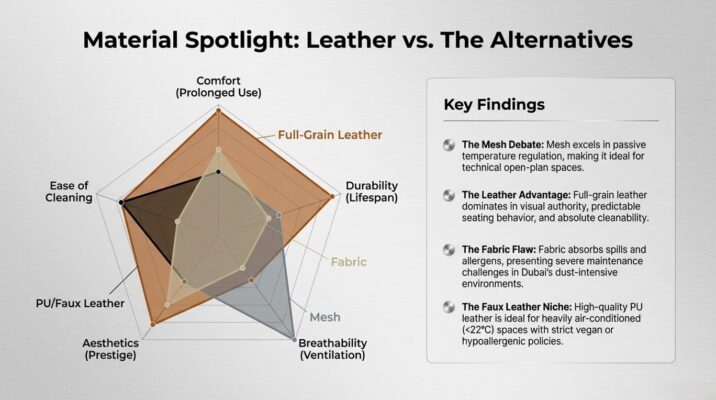
The decision between leather and alternative upholstery materials for office chairs is not simply a question of budget. Climate, use intensity, aesthetic requirements, health considerations, and maintenance preferences all factor into the optimal choice. The following analysis provides an authoritative, balanced comparison.
| Attribute | Full-Grain Leather | Mesh | Fabric / Velvet | Faux Leather | Vinyl |
|---|---|---|---|---|---|
| Comfort (Prolonged Use) | ★★★★★ | ★★★★☆ | ★★★★☆ | ★★★☆☆ | ★★☆☆☆ |
| Durability | ★★★★★ | ★★★★☆ | ★★★☆☆ | ★★★☆☆ | ★★★☆☆ |
| Breathability / Ventilation | ★★★☆☆ | ★★★★★ | ★★★★☆ | ★★☆☆☆ | ★☆☆☆☆ |
| Aesthetics / Prestige | ★★★★★ | ★★★☆☆ | ★★★☆☆ | ★★★☆☆ | ★★☆☆☆ |
| Ease of Cleaning | ★★★★★ | ★★★☆☆ | ★★☆☆☆ | ★★★★☆ | ★★★★★ |
| Allergen-Friendliness | ★★★☆☆ | ★★★★☆ | ★★☆☆☆ | ★★★★★ | ★★★★★ |
| Suitability for Dubai Climate | ★★★★☆ | ★★★★★ | ★★★☆☆ | ★★★☆☆ | ★★☆☆☆ |
| Price Range (AED) | 1,200–15,000+ | 400–4,500 | 250–2,500 | 200–1,500 | 150–800 |
| Lifespan (Years, avg) | 15–25+ | 5–10 | 4–8 | 3–6 | 3–7 |
4.1 Leather vs Mesh — The Great Office Chair Debate
The introduction of high-performance mesh chairs (most notably the Aeron by Herman Miller in 1994) created the most significant disruption in executive office seating in decades. Today, the leather vs mesh question is genuinely complex, with legitimate arguments on both sides.
Mesh chairs excel in breathability and passive temperature regulation — a significant advantage for users in environments where air conditioning is inconsistent or for high-energy workers who generate significant body heat. The structural design of mesh also inherently distributes body weight more evenly than flat cushions, reducing pressure point formation in long sitting sessions.
Leather chairs, however, dominate in prestige, tactile experience, and aesthetic flexibility. No mesh chair currently on the market communicates the same visual authority as a full-grain leather executive chair in a law partner’s office or a CEO suite. Leather also provides more predictable seating behavior — consistent firmness and shape that some users strongly prefer over the elastic give of mesh.
For Dubai’s corporate culture, which places significant emphasis on workspace aesthetics and the visual communication of authority, leather chairs continue to dominate executive and senior professional environments. Mesh chairs are most common in open-plan, collaborative, and technical work settings.
4.2 Leather vs Fabric / Velvet — Comfort vs Practicality
Fabric and velvet upholstery offer superior breathability to leather, excellent thermal comfort, and a wide range of design possibilities. However, fabric chairs present significant maintenance challenges in professional environments: they absorb spills, accumulate allergens and dust mites, and are extremely difficult to deep-clean without professional equipment.
In Dubai’s dust-intensive environment — particularly relevant for offices in areas with construction activity or near the desert periphery — fabric chairs require significantly more frequent professional cleaning than leather equivalents. The superior cleanability of leather (particularly full-grain and top-grain) makes it the preferred material for high-traffic professional environments from a long-term maintenance economics perspective.
4.3 Total Cost of Ownership Analysis
A rigorous total cost of ownership (TCO) analysis often demonstrates that premium leather chairs, despite higher upfront costs, deliver superior value over a 10-year period compared to lower-cost alternatives. Consider the following scenario common to Dubai corporate environments:
- Option A: Bonded leather chair at AED 600. Expected lifespan: 3–4 years before visible deterioration. Over 10 years: 2.5 replacements = AED 1,500 total + disruption and environmental waste.
- Option B: Top-grain leather executive chair at AED 2,800. Expected lifespan: 10–15 years with proper maintenance. Over 10 years: maintenance cost approximately AED 400 total = AED 3,200 total.
- Option C: Full-grain leather premium chair at AED 6,000. Expected lifespan: 20+ years. Over 10 years: maintenance cost approximately AED 600 total = AED 6,600 total — but productivity and health benefits arguably represent multiples of this investment.
When productivity losses from discomfort-related distraction are included (estimated at 3–7% of working hours by ergonomics researchers), the economic case for premium leather ergonomic chairs becomes even more compelling.
Purchasing a leather office chair in Dubai requires navigating a market that ranges from exceptional quality to deceptive marketing. This structured buying guide provides the frameworks, price benchmarks, and decision criteria you need to make a confident, well-informed purchase — whether you’re buying one chair for a home office or 50 units for a new corporate fit-out.
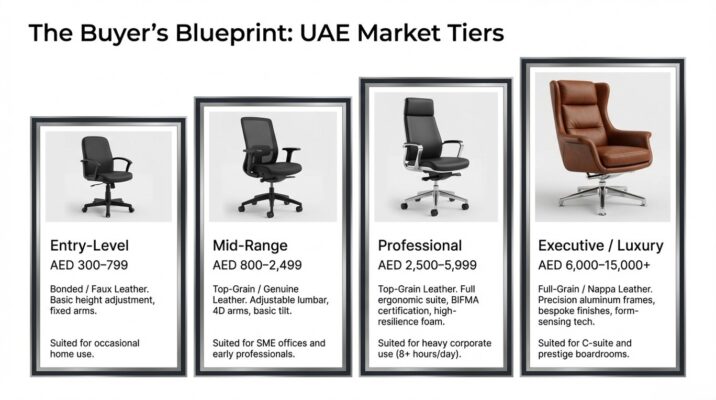
5.1 Price Tiers & What to Expect
| Tier | Price (AED) | Leather Type | Key Features | Best For | Notable Brands |
|---|---|---|---|---|---|
| Entry-Level | AED 300–799 | Bonded / Faux Leather | Basic height adjustment, fixed arms | Home office, occasional use | Sam’s, IKEA UAE, Generic brands |
| Mid-Range | AED 800–2,499 | Top-Grain / Genuine Leather | Adjustable lumbar, 4D arms, tilt | SME offices, professionals | Hbada, Sihoo, Vari |
| Professional | AED 2,500–5,999 | Top-Grain / Split-Grain Leather | Full ergonomics, memory foam, BIFMA certified | Corporate offices, daily 8+ hrs | Humanscale, Haworth, OfficeMaster LUCIAN Series |
| Executive / Luxury | AED 6,000–15,000+ | Full-Grain / Nappa Leather | Premium finish, bespoke options, metal base | C-suite, boardrooms, prestige | Herman Miller, Knoll, Poltrona Frau, OfficeMaster Elon Chair |
5.2 Top Recommended Leather Chair Models (UAE Market, 2026)
The following models represent the most highly regarded leather office chairs currently available in the UAE market, evaluated against ergonomic performance, material quality, warranty, and value for money:
| Model | Leather Type | Price (AED) | Key Features | Rating | Availability |
|---|---|---|---|---|---|
| OfficeMaster Executive Pro | Full-Grain Leather | AED 4,200–5,800 | 4D arms, adjustable lumbar, 5-yr warranty | ★★★★★ | officemaster.ae |
| OfficeMaster Elite CEO Chair | Nappa Leather | AED 8,500–12,000 | Aluminum base, headrest, memory foam seat | ★★★★★ | officemaster.ae |
| Herman Miller Embody (Leather) | Top-Grain Leather | AED 9,000–13,500 | Posture Fit SL, 12-yr warranty, pixel back | ★★★★★ | Authorized UAE dealers |
| Humanscale Freedom Chair | Top-Grain Leather | AED 6,200–8,000 | Self-weight recline, form-sensing armrests | ★★★★☆ | Humanscale UAE |
| Haworth Fern (Leather) | Top-Grain Leather | AED 7,500–11,000 | Autonomous living hinges, BIFMA Gold | ★★★★★ | Haworth UAE |
| Sihoo M90D Pro | PU Faux Leather | AED 1,400–1,900 | 4D arms, lumbar + headrest, split-back | ★★★★☆ | Online/UAE retailers |
| OfficeMaster Standard Leather | Bonded/Top-Grain | AED 900–1,800 | Height adjustment, tilt lock, padded arms | ★★★★☆ | officemaster.ae |
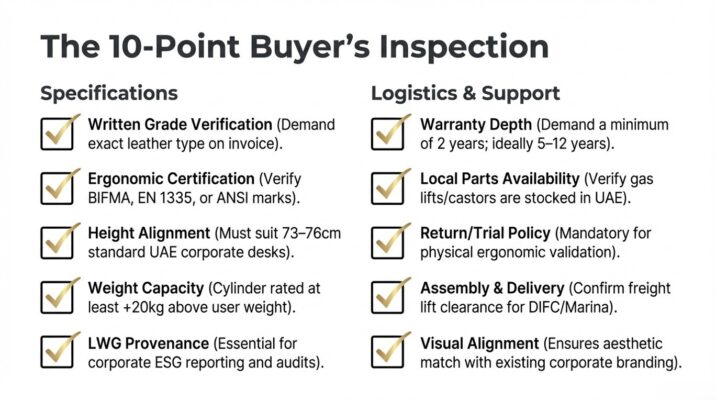
5.3 10-Point Buying Checklist
Before finalizing any leather chair purchase — in-store or online — use this checklist to verify your decision:
- Leather Grade Verification: Request written confirmation of the leather type (full-grain, top-grain, genuine, bonded, or faux). Reputable retailers including OfficeMaster.ae provide this information transparently.
- Ergonomic Certification: Confirm whether the chair holds BIFMA, ANSI, or EN 1335 certification. These are independent quality marks, not self-declared.
- Height Range Suitability: Match the chair’s seat height adjustment range to your desk height and body proportions. Standard desks in the UAE are typically 73–76 cm. Ideal seat height positions thighs parallel to the floor.
- Weight Capacity: Verify the rated weight capacity exceeds your body weight by at least 20 kg as a safety margin. Most standard chairs are rated at 100–120 kg; premium executive chairs at 120–150 kg.
- Warranty Coverage: Premium chairs should carry a minimum 2-year parts warranty; quality brands offer 5–12 years. Confirm what the warranty covers (mechanism, leather, foam, base) and the UAE service process.
- Trial Period / Return Policy: Given that chair comfort is highly personal, seek retailers offering a trial period or flexible return policy. OfficeMaster.ae offers a 14-day satisfaction guarantee on qualifying models.
- Assembly Complexity: Most executive leather chairs arrive partially assembled. Confirm whether assembly assistance is included in delivery, particularly for multi-unit corporate purchases.
- After-Sales Support: Verify that spare parts (gas lift, castors, armrest pads) are available in the UAE market. Obscure brands with no local service support represent significant risk on long-term purchases.
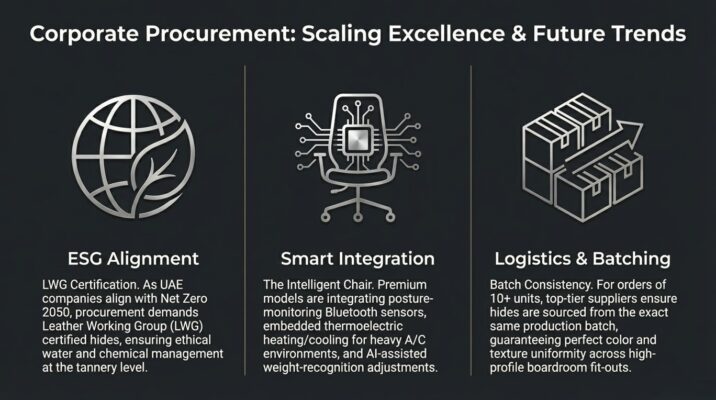
- Environmental Credentials: For corporate sustainability reporting, consider whether the leather is sourced from tanneries certified to the Leather Working Group (LWG) standard, which assesses environmental performance.
- Visual & Brand Alignment: The chair should complement your existing office furniture and brand identity. OfficeMaster.ae design consultation service can assist with color, material, and style matching.
5.4 Corporate & Bulk Purchase Considerations
For organizations procuring 10 or more leather chairs — fit-out projects, office relocations, or fleet replacements — several additional considerations apply:
- Batch Consistency: Leather hides vary naturally between production batches. For large uniform orders, confirm with your supplier that units are sourced from the same production batch to ensure color and texture consistency across all chairs.
- Volume Pricing: Most office furniture suppliers in Dubai offer progressive volume discounts starting at 10+ units. OfficeMaster.ae provides dedicated corporate pricing for orders of 5 units or more, with custom configuration options for ergonomic and aesthetic requirements.
- Delivery Logistics: For fit-out projects in DIFC, Downtown Dubai, Dubai Marina, or other high-density commercial districts, confirm building access and freight lift specifications before scheduling large deliveries.
- Installation Services: Full-service installation, including assembly, placement, and disposal of packaging, is available from OfficeMaster.ae for corporate accounts.
- Customization: Custom leather color, stitching, and monogram options are available on select OfficeMaster.ae executive models for brand-aligned or bespoke boardroom projects.
The relationship between office seating quality and occupant health has been studied extensively by occupational health researchers, ergonomics institutes, and workplace design consultancies. The scientific consensus is clear: investing in high-quality, properly specified ergonomic seating delivers measurable, statistically significant improvements in both physical health outcomes and cognitive performance metrics.
6.1 Evidence-Based Health & Productivity Data
| Health / Productivity Metric | Improvement % | Condition / Context | Source |
|---|---|---|---|
| Reduction in Lower Back Pain | 54% | Well-designed ergonomic chairs with lumbar support | Journal of Occupational Health, 2022 |
| Increase in Productivity | 17.5% | Proper workstation ergonomics (chair + desk combo) | Human Factors Society, 2023 |
| Reduction in Absenteeism | 25% | Ergonomic interventions in office environments | OSHA / Work Design Magazine, 2022 |
| Improvement in Focus/Alertness | 12% | Dynamic seating vs static seating over 4-hour period | Knoll Workplace Research, 2023 |
| Reduction in Musculoskeletal Disorders (MSDs) | 44% | Correctly adjusted ergonomic chair use | WHO Occupational Health Report, 2021 |
| Average ROI on Ergonomic Chair Investment | 3.4x | Direct healthcare savings + productivity gains | Washington State Dept. of Labor, 2022 |
6.2 Musculoskeletal Health — The Primary Clinical Concern
Musculoskeletal disorders (MSDs) encompassing back pain, neck pain, shoulder tension, and repetitive strain injuries represent the leading occupational health challenge globally. The International Labor Organization estimates that MSDs cost the global economy more than USD 1 trillion annually in lost productivity, healthcare expenditure, and disability payments.
For office workers in Dubai’s corporate sector, the risk factors are particularly pronounced: extended daily sitting durations (often 9–11 hours including commute), predominantly sedentary roles, and a cultural tendency toward static posture rather than movement-integrated work patterns. A properly specified ergonomic leather chair directly addresses the primary MSD risk factors through lumbar support, adjustable seat depth (preventing posterior knee pressure), and armrest configuration (reducing trapezius and deltoid muscle loading).
The psychological component of comfort must not be underestimated. Research from the Scandinavian Journal of Work, Environment & Health demonstrates that discomfort-driven distraction the cognitive cost of managing physical discomfort reduces effective productive output by an average of 8.4% over an 8-hour workday. For a senior professional in Dubai earning AED 50,000+ per month, this represents a material productivity loss that a premium chair investment addresses decisively.
6.3 Psychological Benefits of Leather Seating
The sensory and symbolic dimensions of leather seating have documented psychological effects beyond physical comfort. Environmental psychology research consistently demonstrates:
- Authority & Confidence: Occupying a premium leather chair has been shown to increase self-reported confidence and decisiveness in executive decision-making scenarios a phenomenon sometimes referred to as the ‘enclothed cognition’ effect applied to furnishings.
- Visitor Perception: Meeting rooms furnished with premium leather seating receive significantly higher credibility ratings from visiting clients and partners than equivalent rooms with lower-grade seating with studies reporting differences of 18–24% in perceived professional competence.
- Stress Reduction: The tactile warmth and organic texture of natural leather has documented mild parasympathetic (relaxation response) stimulating effects compared to synthetic materials relevant for executives operating under sustained high-pressure conditions.
- Workplace Satisfaction: Office workers consistently rate leather chair environments as significantly more ‘prestigious’ and ‘cared-for’ than equivalent spaces with standard seating contributing to higher job satisfaction and lower attrition in highly competitive talent markets like Dubai.
6.4 Sitting Science — Active Seating Principles
Modern ergonomics research has moved beyond the simple goal of ‘good posture’ toward the more nuanced concept of ‘movement variety.’ The current scientific consensus, reflected in guidelines from the British Orthopedic Association and the European Agency for Safety and Health at Work, is that no single posture even a perfectly ergonomic one is optimal when maintained statically for extended periods. Instead, chairs that facilitate and encourage gentle postural variation throughout the workday are associated with the best health outcomes.
Premium leather chairs support this through recline mechanisms with adjustable tension (allowing comfortable, supported reclining for reading and thinking), tilt-lock positions at multiple angles, and dynamic lumbar support systems that follow the spine as the occupant moves. When evaluating leather executive chairs for daily extended use, priorities models with multi-position recline locking over those with fixed upright postures, regardless of how ergonomically correct that single position may be.
The global office chair market is undergoing significant structural change driven by sustainability pressures, hybrid work adoption, technological integration, and evolving design preferences. Understanding these trends is essential for organizations making long-term investment decisions in office seating.
7.1 Sustainable & Ethical Leather
Environmental concerns are reshaping leather procurement across the furniture industry. The Leather Working Group (LWG), an international non-profit auditing body, has certified over 200 tanneries globally against environmental, social, and governance (ESG) standards covering water usage, chemical management, solid waste handling, and energy consumption.
Progressive organizations in Dubai particularly those with international ownership or reporting obligations are increasingly requiring LWG-certified leather provenance in their office furniture procurement specifications. This trend is accelerating as UAE-listed companies align with the UAE Net Zero 2050 strategy and international ESG reporting frameworks (GRI, SASB, TCFD).
OfficeMaster.ae is committed to sourcing leather from LWG Gold and Silver rated tanneries wherever operationally feasible, providing procurement teams with full chain-of-custody documentation upon request for corporate sustainability reporting.
7.2 Technology Integration in Executive Chairs
The convergence of furniture design and technology is creating a new category of ‘smart’ executive chairs. Innovations currently entering the premium market include:
- Posture Monitoring Sensors: Pressure-sensitive seat and back sensors that connect via Bluetooth to mobile applications, providing real-time posture feedback and sitting time alerts. Brands including Steelcase (Gesture+) and several Asian manufacturers are early adopters.
- Heating & Cooling Systems: Thermoelectric elements embedded in seat pans that provide gentle warmth in winter or mild cooling in summer particularly relevant for leather chairs in the UAE’s heavily air-conditioned environments where users may experience localized cold discomfort.
- Integrated Charging: USB-A and USB-C charging ports built into chair armrests, eliminating desk cable clutter.
- Voice-Controlled Adjustment: AI-assisted adjustment systems that learn individual user preferences and automatically configure chair settings when the occupant sits down identified via weight sensor profiles.
7.3 Hybrid Work & the Home Executive Chair
The post-2020 acceleration of hybrid and remote work has created a significant new market segment: the premium home office chair. Senior professionals working from home are increasingly willing to invest in full executive-grade leather chairs for their home workspace rejecting the false economy of consumer-grade alternatives that previous generations accepted.
This trend is particularly visible in Dubai’s villa and apartment market, where dedicated home offices are increasingly standard in new residential developments. OfficeMaster.ae home office collection includes a curated range of premium leather chairs sized and specified for residential environments while maintaining full executive ergonomic standards.
7.4 UAE Market Dynamics
The UAE office furniture market is projected to grow at a CAGR of 4.8% through 2030 (Mordor Intelligence, 2024), driven by continued commercial real estate development, the Expo 2020 legacy infrastructure expansion, and significant growth in the financial services and technology sectors. Dubai specifically accounts for approximately 62% of total UAE office furniture spend.
Within this market, the premium leather chair segment is outpacing overall growth reflecting both rising income levels and increasing awareness of ergonomic health among UAE-based professionals. International brands are expanding their UAE distribution networks, while local suppliers including OfficeMaster.ae are developing increasingly sophisticated procurement and customization capabilities to serve both the commercial fit-out and high-end residential markets.
Frequently Asked Questions (FAQs)
Q: What is the best type of leather for an office chair?
Full-grain leather is universally regarded as the best type of leather for office chairs. It is cut from the top layer of the hide, retaining the natural grain and full structural integrity of the skin. Full-grain leather is the most durable, develops a beautiful patina over time, and is the most breathable natural leather available. For premium executive office chairs in Dubai, full-grain or Nappa leather is the optimal choice. Top-grain leather offers an excellent alternative at a lower price point — it is slightly more uniform in appearance and easier to maintain than full-grain, making it the preferred choice for most professional office environments.
Q: How do I clean a leather office chair?
Clean a leather office chair by first removing surface dust with a dry microfiber cloth. Then apply a pH-neutral leather cleaner (available from leather care specialists or online) to a clean cloth — never directly to the surface — and work in small circular motions. For stains, use a cotton swab with 70% isopropyl alcohol for ink, or cornstarch for oil-based stains. After cleaning, allow to air dry completely, then apply a quality leather conditioner to maintain suppleness. Never use household multipurpose cleaners, baby wipes, or ammonia-based products on leather, as these will strip protective oils and cause premature cracking.
Q: How long does a leather office chair last?
A high-quality full-grain leather office chair, properly maintained, can last 20–30 years. Top-grain leather chairs typically last 10–15 years. Genuine leather chairs last 5–8 years, while bonded leather chairs typically show significant deterioration (cracking, peeling) within 3–4 years of regular daily use. The key variables affecting longevity are: leather grade, quality of internal frame and foam components, frequency of use, ambient climate conditions, and adherence to a regular maintenance schedule. In Dubai’s climate, UV-protectant treatments applied every 6 months significantly extend leather chair lifespan.
Q: What is the difference between genuine leather and bonded leather in office chairs?
Genuine leather (also called split leather) is made from the lower, inner layers of the animal hide — real leather, but from the weaker fibrous interior layers. Bonded leather, by contrast, contains only 10–20% real leather content: it is primarily leather scraps and fibers bonded together with polyurethane adhesive and coated with a synthetic surface. Genuine leather is significantly more durable than bonded leather, though both are inferior to top-grain and full-grain varieties. Bonded leather chairs typically begin to crack and peel within 3–4 years, while genuine leather chairs can last 5–8 years with care.
Q: Is leather or mesh better for an office chair?
The choice between leather and mesh depends on your priorities. Mesh chairs offer superior breathability and passive ventilation, making them excellent for users in warmer environments or high-energy roles. Leather chairs offer greater prestige, superior tactile comfort for many users, a longer potential lifespan, and far easier maintenance than mesh (which accumulates dust in its fibers). For Dubai’s corporate environment — particularly C-suite, boardrooms, and client-facing offices — premium leather chairs remain the dominant and preferred choice. For open-plan technical environments, high-performance mesh is increasingly popular.
Q: Where can I buy the best leather office chairs in Dubai?
OfficeMaster.ae is one of Dubai’s leading destinations for premium leather office chairs, offering a curated range spanning entry-level executive chairs from AED 900 to bespoke full-grain leather luxury models above AED 12,000. The showroom and online store provide transparent leather grade information, detailed ergonomic specifications, and a corporate procurement service for bulk orders. Other quality options in Dubai include Haworth UAE, Humanscale UAE, and authorized Herman Miller dealers. When purchasing, always request written confirmation of the leather grade, check for BIFMA or EN 1335 certification, and confirm the warranty terms.
Q: What is an ergonomic leather chair, and why does it matter?
An ergonomic leather chair combines the premium aesthetics and durability of high-grade leather upholstery with a scientifically designed frame and adjustment system engineered to support healthy posture and reduce musculoskeletal strain. Key ergonomic features include adjustable lumbar support, seat height and depth adjustment, 4D armrests (adjustable in height, width, depth, and pivot), multi-position tilt recline, and a seat pan designed with a waterfall edge to eliminate knee pressure. Ergonomic leather chairs matter because properly configured seating reduces lower back pain by up to 54%, increases productivity by approximately 17.5%, and significantly reduces the risk of occupational musculoskeletal disorders — making them a critical health investment for professionals spending 8+ hours daily at a desk.
Q: How much does a good leather office chair cost in Dubai?
In Dubai’s market, leather office chair prices range from approximately AED 300–600 for basic bonded leather models to AED 12,000–15,000+ for premium full-grain or Nappa leather executive chairs. A good mid-range professional leather chair with solid ergonomics and top-grain leather upholstery typically falls in the AED 2,500–5,000 range. This tier offers the best balance of material quality, ergonomic features, durability, and value. For executive and CEO-level seating in luxury office environments, budget AED 6,000–12,000 for the best available options from leading international brands with UAE distribution.
Q: How do I protect a leather office chair from cracking in Dubai’s climate?
Protect a leather office chair from cracking in Dubai’s climate with a four-part strategy: (1) Apply a quality leather conditioner (containing lanolin or neat’s-foot oil) every 3 months to replenish the natural oils lost to air-conditioned environments. (2) Apply a UV-protectant leather spray every 6 months, especially for chairs positioned near windows. (3) Maintain office humidity between 45–55% using humidifiers if necessary, as air-conditioned spaces in Dubai commonly drop to 35–40% relative humidity. (4) Keep the chair out of direct sunlight to prevent accelerated UV degradation of the leather surface and stitching.
Q: Can I use faux leather office chairs in a professional office in Dubai?
Yes, high-quality faux (PU) leather office chairs are suitable for professional office environments in Dubai, particularly in open-plan workspaces, co-working environments, and any setting where allergen-free, easy-to-clean seating is a priority. Modern PU leather has improved dramatically and can closely replicate the appearance of genuine leather. However, for executive suites, boardrooms, and senior professional environments where the chair communicates professional authority, genuine leather (top-grain or full-grain) remains significantly superior in aesthetic impact, tactile experience, and long-term prestige value. Faux leather is best positioned for mid-tier workspaces and home offices where budget and maintenance convenience are primary concerns.
Q: What certifications should I look for when buying an office chair in the UAE?
When purchasing an office chair in the UAE, look for the following certifications: BIFMA (Business and Institutional Furniture Manufacturers Association) — the globally recognized standard for office furniture performance and durability testing; EN 1335 — the European Standard for office seating, widely accepted in the UAE market; GREENGUARD Gold — certifying low chemical emissions, important for indoor air quality; Leather Working Group (LWG) certification — confirming ethical and sustainable leather sourcing. Additionally, look for chairs that comply with BS 5459-2 (British Standard for office chairs) and ISO 9241-5 ergonomics standards. OfficeMaster.ae provides certification documentation on request for all professional and executive-grade products.
Q: What is the best leather chair for back pain?
The best leather chair for back pain combines quality leather upholstery with a comprehensive ergonomic specification. Key features to priorities: adjustable lumbar support (height and depth adjustable to your specific spinal anatomy), seat depth adjustment (to ensure proper leg support without posterior knee pressure), adjustable seat height (to achieve the correct thigh-parallel-to-floor position), and a multi-position recline with tilt tension control (to allow dynamic posture changes throughout the day). Chairs clinically validated for back pain management include the Herman Miller Embody (available in leather), Humanscale Freedom Chair, and OfficeMaster Executive Pro series — all available in the UAE market. Consult an occupational physiotherapist for personalized seating advice if you have a pre-existing spinal condition.
The decision to invest in a premium leather chair for your office environment transcends aesthetics. It is a decision that simultaneously addresses physical wellbeing, cognitive performance, professional identity, and long-term financial value. The evidence compiled in this guide — spanning ergonomic research, material science, health economics, and market analysis consistently points in one direction: quality leather seating, properly specified and maintained, delivers returns that substantially outweigh its cost over any meaningful time horizon.
For professionals and organizations in Dubai and across the UAE, the leather chair represents a particularly resonant investment. In a business culture where workspace aesthetics are closely scrutinized, where long working hours are normative, and where professional relationships often begin and end in office environments, the quality of your seating makes a statement that extends far beyond simple comfort.
At OfficeMaster.ae, we have spent years studying the office furniture needs of Dubai’s diverse professional community from the financial giants of DIFC to the creative studios of Dubai Design District, from the legal chambers of ADGM to the thriving SME ecosystem of Business Bay. Our leather chair range reflects this understanding: products selected and curated for the specific demands of the UAE market, supported by transparent product information, genuine after-sales service, and a commitment to helping every client find precisely the right seating solution for their unique environment.
Visit officemaster.ae to explore our full range of leather office chairs, executive seating, and complete office furniture solutions for Dubai, Abu Dhabi, Sharjah, and across the UAE. Corporate accounts, bulk pricing, and workspace design consultation available.
Whether your next leather chair investment is your first or your fifteenth, we hope this guide has provided the knowledge and confidence to choose wisely and to sit comfortably for years to come.
Read More: :Flooring an office