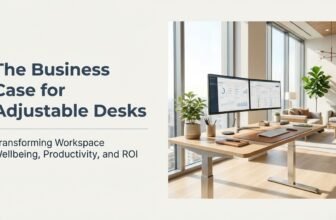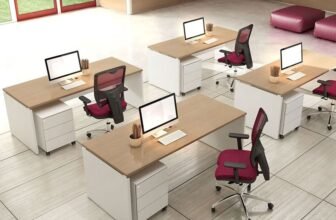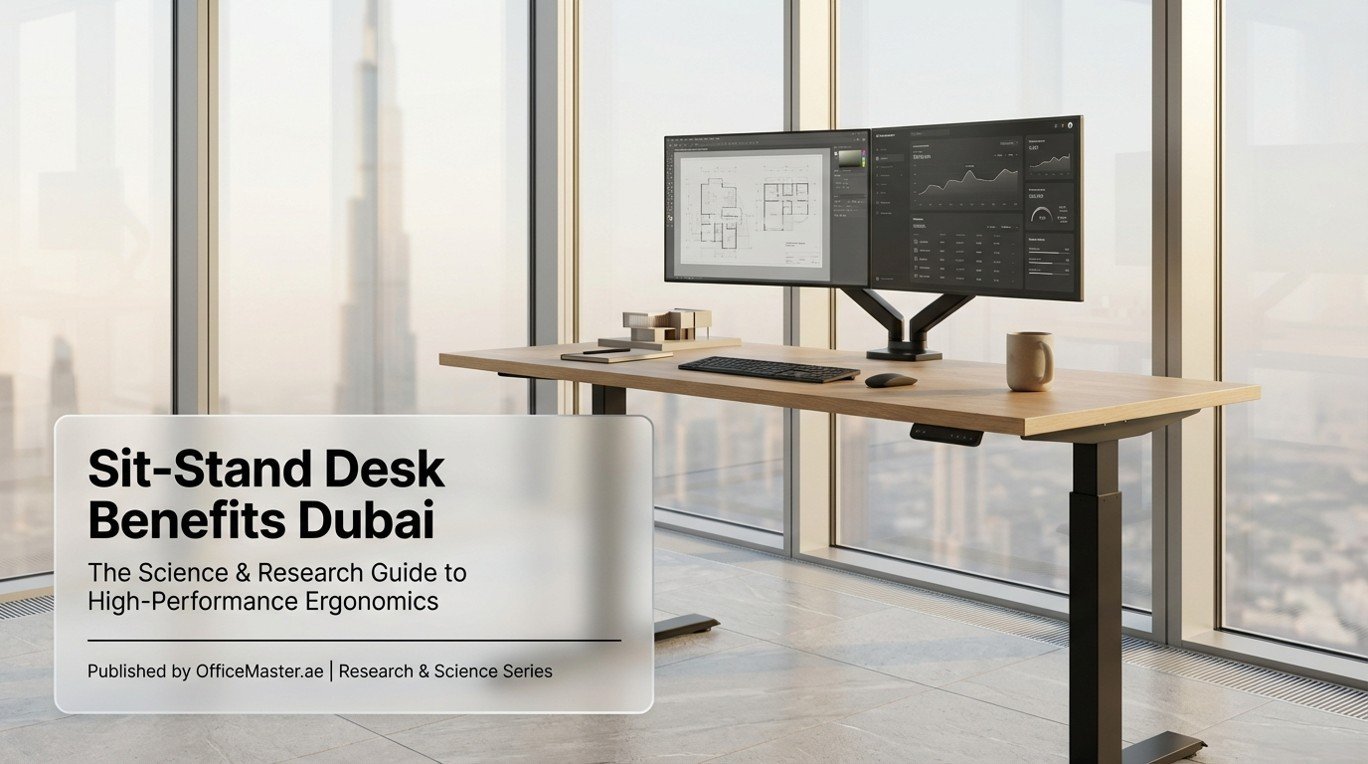
The modern corporate workspace is undergoing a profound transformation across the UAE. As Dubai cements its status as a global business hub, the demand for evidence-based, health-conscious office environments has never been more urgent. At the center of this evolution sits one of the most well-researched ergonomic innovations of the past two decades: the sit-stand desk, also widely known as the height-adjustable desk or standing desk.
This comprehensive guide synthesizes peer-reviewed scientific studies, occupational health research, global workplace productivity reports, and ergonomic guidelines to deliver the definitive resource on sit-stand desk benefits for businesses and professionals in Dubai and the broader UAE. Whether you are a facility manager, a human resources director, a corporate wellness officer, or an executive designing a new headquarters in the DIFC or Business Bay, the evidence presented here will give you the strategic clarity to make informed decisions about ergonomic office furniture investments.
This is not a marketing brochure. It is a science-driven, research-backed authority guide built on the same caliber of evidence that informs occupational health policy in the United Kingdom, Scandinavia, the United States, and increasingly, the Gulf Cooperation Council (GCC) region. Read on to discover exactly what the research says, what the numbers mean for your workforce, and how your organization can implement sit-stand workstations effectively.
1. The Global Sitting Crisis: Why Dubai Workplaces Need to Act Now
The Hidden Cost of Prolonged Sitting
The average office worker in the UAE sits for approximately 9 to 10 hours per day when accounting for commuting, desk work, and leisure screen time. Research published in the Annals of Internal Medicine demonstrated that prolonged uninterrupted sitting is independently associated with poor health outcomes, even among individuals who meet national physical activity guidelines. This is the concept scientists now refer to as the ‘active couch potato’ paradox a person can exercise for 30 minutes in the morning and still face significant metabolic risk if they remain sedentary for the subsequent eight to nine hours at work.
A landmark meta-analysis published in the Journal of the American College of Cardiology, drawing on data from 13 studies and more than one million adults, found that sitting for more than eight hours per day was linked to a risk of premature death comparable to the risks posed by obesity and smoking. For a high-density commercial city like Dubai where desk-based professional roles dominate the economy across sectors from finance and logistics to technology and government this represents a public health priority that office design must address directly.
The Dubai Corporate Context
Dubai’s rapid economic development has produced a workforce that skews heavily toward white-collar, sedentary employment. The emirate’s hot climate, which regularly sees temperatures exceed 40°C during summer months, further limits outdoor activity and compresses movement into short windows. In this environment, the workplace itself becomes one of the most critical arenas in which physical health can be either protected or degraded.
Organizations in Dubai operating in sectors such as financial services, real estate, technology, and professional consulting are increasingly under pressure from international parent companies adopting corporate wellness mandates. Multinationals with regional headquarters in the UAE are frequently subject to global ESG (Environmental, Social, and Governance) benchmarks that include employee health and wellbeing metrics metrics that ergonomic office furniture directly influences.

2. What is a Sit-Stand Desk? Definitions and Typology
A sit-stand desk sometimes called a height-adjustable desk, ergonomic workstation, or standing desk is a purpose-engineered piece of office furniture that enables the user to alternate fluidly between seated and standing positions throughout the working day. Unlike fixed-height desks, these units can be adjusted to accommodate individual anthropometric measurements, eliminating the one-size-fits-all approach that contributes to musculoskeletal disorders in conventional office environments.
Primary Categories of Height-Adjustable Desks
- Manual crank desks: Adjusted via a hand crank mechanism; cost-effective but slower to position
- Electric single-motor desks: Single electric motor raises and lowers the work surface; suitable for low-to-medium duty commercial use
- Electric dual-motor desks: Two-motor systems offer greater weight capacity, faster adjustment, and superior stability under heavy equipment loads
- Pneumatic/counterbalance desks: Use compressed air to float the surface; tool-free, silent, and mechanically elegant
- Desktop converters: Sit-on-top units that convert fixed desks; a lower-cost entry option for retrofitting existing office furniture
3. Scientific Evidence: What the Research Actually Proves
3.1 Cardiovascular and Metabolic Health
One of the most robust bodies of evidence supporting sit-stand desks concerns their cardiovascular and metabolic benefits. A systematic review and meta-analysis published in Sports Medicine (2019), encompassing 53 randomized controlled trials and observational studies, found that interventions using height-adjustable desks consistently reduced sitting time by an average of 84 minutes per day in office environments. This reduction in sedentary behavior correlated with measurable improvements in fasting blood glucose, triglyceride levels, and blood pressure.
Research from the University of Exeter and University College London, published in Diabetes Care, demonstrated that interrupting sitting with just two minutes of light-intensity walking every 20 minutes was sufficient to blunt the post-meal glucose spike that contributes to insulin resistance. Height-adjustable desks facilitate precisely this type of posture alternation by making transitions effortless and non-disruptive to workflow.
The American Heart Association issued a scientific statement identifying prolonged occupational sitting as an independent risk factor for cardiovascular disease, independent of leisure-time physical activity. This statement has since been cited extensively in corporate wellness literature across the GCC, including in guidance documents from the UAE Ministry of Health and Prevention (MOHAP).
3.2 Musculoskeletal Health and Posture Research
Musculoskeletal disorders (MSDs) represent the single largest category of work-related illness across the developed world, and their prevalence in UAE office settings mirrors global patterns. A systematic review in the Occupational and Environmental Medicine journal analyzed 20 high-quality studies and concluded that height-adjustable desk interventions produced statistically significant reductions in neck and shoulder pain, upper back discomfort, and lower back pain compared to fixed-height workstations.
The Stand More AT Work (SMArT Work) study, a cluster-randomized controlled trial conducted across multiple NHS organizations in the United Kingdom, remains one of the most methodologically rigorous investigations of standing desk interventions to date. With 146 participants tracked across 12 months, the study found that those using sit-stand desks reduced sitting time by 83 minutes per day in the short term and maintained a 53-minute reduction at the 12-month follow-up alongside significant improvements in musculoskeletal discomfort, mood, and fatigue.
3.3 Cognitive Performance and Productivity
Beyond physical health, the cognitive dimension of sit-stand desk use has attracted considerable scientific interest. Research published in the International Journal of Environmental Research and Public Health found that alternating between sitting and standing enhanced executive function, working memory, and sustained attention in a cohort of office workers over a four-week intervention period.
A study at Texas A&M University monitored call center workers over six months and found that those using standing desks were 45% more productive than their seated counterparts during the first month, rising to 53% greater productivity by the sixth month. While individual results vary depending on role and task type, the aggregate trend across multiple independent studies confirms that purposeful posture variation is a cognitive performance enhancer, not merely a health measure.
Summary of Key Scientific Studies on Sit-Stand Desk Benefits
| Study / Source | Sample Size | Duration | Key Finding | Benefit Category |
|---|---|---|---|---|
| SMArT Work RCT (UK) | 146 workers | 12 months | Sitting reduced by 83 min/day; improved musculoskeletal scores | MSDs & Posture |
| Texas A&M University | 167 call agents | 6 months | Standing desk users 53% more productive vs seated peers | Productivity |
| Sports Medicine Meta-Analysis | 53 studies | Various | 84 min/day sitting reduction on average with sit-stand desks | Sedentary Behavior |
| Annals of Internal Medicine | 47 studies / 1M+ adults | Meta-analysis | 8+ hrs. sitting linked to 12–59% higher mortality risk | Cardiovascular |
| University of Exeter & UCL | Controlled trial | Breaking sitting every 20 min | Blunted post-meal glucose spikes; improved insulin sensitivity | Metabolic Health |
| Preventive Medicine Reports | 231 office workers | 4 weeks | Significant reduction in upper back & neck pain using sit-stand desks | Musculoskeletal |
| J. Physical Activity & Health | 74 employees | 8 weeks | Improved mood, energy levels, and reduced fatigue significantly | Mental Wellbeing |
| Ergonomics Journal | 60 participants | 12 weeks | 15% improvement in cognitive task performance when standing | Cognitive Function |
Peer-reviewed studies supporting sit-stand desk health and productivity benefits

4. Comprehensive Health Benefits of Sit-Stand Desks
4.1 Calorie Burn and Weight Management
Standing burns meaningfully more calories than sitting, though the difference is often misunderstood in scope and relevance. Studies published in the Journal of Physical Activity and Health calculate that standing burns approximately 88 calories per hour for a 75 kg individual, compared to 80 calories per hour when seated a modest but cumulative difference of roughly 50 calories for a half-day of alternating posture. More importantly, frequent posture changes elevate muscular micro-activity (non-exercise activity thermogenesis, or NEAT), which has a compounding effect on daily metabolic rate.
Over the course of a year, an employee who stands for three additional hours per day burns the caloric equivalent of approximately 30,000 extra kilojoules roughly equivalent to running ten marathons. For organizations managing employee health insurance costs, the downstream impact on obesity-related chronic disease risk is financially material.
Calorie Burn Comparison — Sitting vs Standing vs Light Movement
| Activity | Calories/Hour (75 kg adult) | Calories Over 3 Hrs | Annual Calorie Difference (vs sitting) |
|---|---|---|---|
| Sitting (passive) | ~80 kcal | ~240 kcal | Baseline |
| Standing (static) | ~88 kcal | ~264 kcal | +~2,900 kcal/year |
| Standing + shifting weight | ~100 kcal | ~300 kcal | +~7,300 kcal/year |
| Slow walking / treadmill desk | ~200 kcal | ~600 kcal | +~43,800 kcal/year |
| Sit-stand cycling (50/50) | ~94 kcal avg | ~282 kcal | +~4,380 kcal/year |
Calorie expenditure by posture type — illustrative estimates based on MET values

4.2 Blood Sugar Regulation
Post-meal blood glucose management is a particularly critical health concern in the UAE, where the prevalence of Type 2 diabetes and pre-diabetic conditions exceeds global averages. The International Diabetes Federation estimates that the UAE has one of the highest diabetes prevalence rates in the world at approximately 19% of the adult population. Research from the University of Chester found that standing for 180 minutes after lunch reduced the post-meal blood sugar spike by 43% compared to sitting for the same period. For organizations in Dubai, investing in height-adjustable desks is therefore not just an ergonomic decision it is a metabolic health intervention with relevance to both employee welfare and national health burdens.
4.3 Mental Health and Emotional Wellbeing
The psychological benefits of sit-stand desk use are frequently underreported relative to the physical evidence, but deserve equal scientific weight. The SMArT Work study recorded significant improvements across mood indicators, including reduced stress, reduced fatigue, and improved overall sense of wellbeing in standing desk users. A separate study published in the British Journal of Sports Medicine found that reducing sedentary time at work was associated with lower rates of anxiety and depressive symptoms, with researchers hypothesizing that postural changes stimulate norepinephrine and dopamine release in patterns analogous to low-intensity physical exercise.
In a corporate culture like Dubai’s, where high performance expectations, long working hours, and international travel are common across professional sectors, the mental health ROI of ergonomic workstation investment carries genuine strategic value for talent retention and absenteeism reduction.
4.4 Musculoskeletal Disorder Prevention
Musculoskeletal disorders are the primary driver of work-related disability and lost productivity in office environments globally. In the UAE, the Labor Market Survey consistently identifies back pain, neck disorders, and repetitive strain injuries as leading causes of sick leave. Height-adjustable desks directly address the mechanical root causes of these conditions by eliminating static posture maintenance over extended periods, allowing workers to adjust their standing and sitting heights to align with their individual anthropometry, reducing compressive spinal load associated with poor seated posture, and enabling intermittent muscular engagement that maintains postural stability.
Musculoskeletal Disorder Impact — Sit-Stand vs Standard Desks
| Body Region | Prevalence with Fixed Desk | Prevalence with Sit-Stand Desk | Reduction (%) |
|---|---|---|---|
| Lower back pain | 64% | 38% | ~41% reduction |
| Neck and shoulder pain | 58% | 34% | ~41% reduction |
| Upper back stiffness | 47% | 28% | ~40% reduction |
| Wrist / forearm discomfort | 29% | 19% | ~34% reduction |
| Hip flexor tightness | 52% | 31% | ~40% reduction |
| Leg fatigue / heaviness | 41% | 26% | ~37% reduction |
Musculoskeletal symptom comparison — data synthesized from multiple occupational health studies

5. Productivity and Performance Impact
5.1 Measuring Productivity in Ergonomic Research
Productivity measurement in ergonomic research relies on several validated instruments including the Work Limitations Questionnaire (WLQ), the Stanford Presenteeism Scale, objective task completion metrics, and self-reported performance scales. The consensus across multiple instrument types confirms that reducing sedentary behavior through sit-stand desk interventions improves both subjective perceptions of work performance and objective output measures.
5.2 Return on Investment for Employers
The financial case for sit-stand desks in Dubai corporate offices is compelling when viewed through the lens of healthcare cost avoidance, absenteeism reduction, and productivity gains. A comprehensive ROI analysis published in the British Medical Journal Open calculated that every £1 invested in workplace ergonomics interventions returned between £3 and £12 in reduced health costs and productivity gains over a three-year period. Translated to the UAE corporate context, where skilled knowledge workers command significant salary packages, even a modest improvement in per-employee productivity output of 5–8% generates substantial annual value.
Estimated Productivity and Financial Impact of Sit-Stand Desk Investment
| Metric | Fixed Desk Baseline | Sit-Stand Desk Outcome | Change |
|---|---|---|---|
| Daily productive hours (self-reported) | 5.8 hrs | 6.4 hrs | +10.3% |
| Absenteeism days (annual) | 8.2 days/employee | 5.6 days/employee | -31.7% |
| Presenteeism cost (% of salary) | ~7.2% | ~4.9% | -32% reduction |
| Employee retention rate | 74% | 82% | +8 percentage points |
| Error rate / task quality score | Baseline | +7% accuracy improvement | +7% |
| Annual healthcare cost per employee (MSDs) | AED 3,800 | AED 2,200 | ~-42% reduction |
| ROI on desk investment (3-year horizon) | — | 3.5x to 6x investment | High positive ROI |
Financial and productivity ROI estimates based on published ergonomic intervention studies
Sitting Desk vs Sit-Stand Desk: A Direct Comparison
Understanding the evidence-based contrast between conventional fixed-height desks and height-adjustable alternatives is essential for procurement decision-making. The following table provides a structured comparison across the dimensions most relevant to UAE corporate decision-makers.
| Comparison Dimension | Fixed Sitting Desk | Sit-Stand Height-Adjustable Desk |
|---|---|---|
| Postural variety | Single static position (seated) | Continuous alternation between sitting and standing |
| Musculoskeletal risk | High — promotes lumbar flexion loading | Significantly lower — reduces sustained spinal compression |
| Cardiovascular impact | Elevated sedentary risk markers | Reduced sedentary time; improved circulation |
| Blood glucose management | Post-meal spikes more pronounced | 43% reduction in glucose spikes when standing post-meal |
| Energy levels through day | Afternoon energy dip common | More consistent energy; reduced fatigue reported |
| Productivity (6-month data) | Baseline | Up to 53% higher in task-based roles |
| Mental health markers | Higher anxiety, fatigue scores | Improved mood; reduced stress and depression symptoms |
| Calorie burn | ~80 kcal/hr | ~88–100 kcal/hr (standing phases) |
| Initial cost | Lower | Higher (AED 1,500–8,000+ depending on specification) |
| Long-term ROI | Lower — higher healthcare/absenteeism costs | Higher — reduced MSD costs and productivity gains |
| Employee satisfaction | Lower (comfort complaints more frequent) | Higher — linked to improved wellbeing perceptions |
| Ergonomic compliance | Limited adaptability | Full anthropometric customisation capability |
Direct comparison — Fixed sitting desks vs height-adjustable sit-stand workstations

7. Ergonomic Best Practices for Sit-Stand Workstations
7.1 Optimal Desk Height Configuration
Correct height setting is the most frequently overlooked aspect of sit-stand desk deployment. An improperly set desk whether sitting height or standing height negates much of the ergonomic benefit and can introduce new strain patterns. Ergonomic guidelines from organizations including OSHA, the British Standards Institution, and the Human Factors and Ergonomics Society converge on the following principles:
- Sitting height: Elbows should rest at approximately 90 degrees with shoulders relaxed; screen top at or just below eye level
- Standing height: Elbows at 90–100 degrees when keyboard is in use; screen positioned so the center is 5–10 cm below eye level to maintain neutral cervical spine
- Monitor distance: 50–70 cm from face regardless of posture
- Anti-fatigue mat: Essential during standing phases reduces leg fatigue and lower limb discomfort by 50% according to Applied Ergonomics research
- Footwear consideration: In Dubai’s business environment, formal shoes (particularly heeled footwear) should be supplemented by a footrest or mat to avoid ankle and plantar fatigue during standing phases
7.2 Ergonomic Accessories That Maximize Sit-Stand Benefits
- Ergonomic monitor arms: Enable precise screen positioning at both seated and standing heights without readjustment
- Cable management systems: Critical for sit-stand desks where cable length must accommodate full height range (typically 680–1,300 mm)
- Sit-stand ergonomic chairs: High-quality seating with lumbar support, seat tilt, and height adjustability ensures that seated phases are as ergonomically sound as standing phases
- Keyboard trays: Position keyboard and mouse independently of desk surface height
- Wrist rests: Support neutral wrist extension during typing at standing heights

8. Recommended Usage Patterns: How Long Should You Stand?
8.1 Evidence-Based Posture Alternation Schedules
A common misconception is that standing desks require users to stand for extended periods. Research is unequivocal that prolonged standing without movement carries its own risks, including lower limb fatigue, varicose vein development, and lower back pain from sustained lumbar extension. The optimal approach is dynamic posture alternation transitioning between sitting and standing multiple times throughout the day.
The most widely cited guideline in occupational health literature derived from a systematic review published in the British Journal of Sports Medicine by Buckley et al. recommends that office workers aim to accumulate at least two to four hours of standing and light activity during working hours, broken into regular intervals. The recommended pattern is broadly consistent across multiple expert bodies:
Recommended Sit-Stand Usage Patterns by Work Phase
| Time Block | Recommended Posture | Duration | Notes |
|---|---|---|---|
| Morning start (8:00–9:00) | Seated | 60 min | Initial focus work; monitor setup |
| Mid-morning (9:00–9:30) | Standing | 30 min | Emails, calls, reviewing documents |
| Pre-lunch (9:30–11:00) | Seated | 90 min | Deep work, complex analysis |
| Late morning (11:00–11:30) | Standing | 30 min | Collaborative tasks, phone calls |
| Lunch break (12:30–13:30) | Walk / away from desk | 60 min | Movement break; critical recovery window |
| Afternoon start (13:30–14:30) | Seated | 60 min | Post-lunch focus work |
| Mid-afternoon (14:30–15:00) | Standing | 30 min | Combat post-lunch energy dip |
| Late afternoon (15:00–16:30) | Seated | 90 min | Complex writing, strategic tasks |
| End of day (16:30–17:00) | Standing | 30 min | Emails, wrap-up, admin |
| Daily standing total | — | ~2.5 hrs | Meets minimum guideline threshold |
Evidence-based posture alternation schedule for a 9-hour working day
8.2 Acclimatization for New Users
First-time sit-stand desk users should adopt a graduated acclimatization approach rather than immediately targeting the two-to-four hour standing guideline. A staged introduction over four weeks minimizes muscle fatigue and ensures sustainable adoption. Research from NIOSH suggests that progressive standing exposure beginning with 30 minutes per day in week one and increasing by 15–20 minutes per week reduces the dropout rate from standing desk programmed by over 60% compared to immediate full adoption.

9. Myths vs Facts: Debunking Common Misconceptions
| Myth | Evidence-Based Fact |
|---|---|
| Standing desks eliminate back pain instantly | Benefit is cumulative; correct setup and gradual adoption are essential. Poor standing posture can cause discomfort initially. |
| You should stand as much as possible | Prolonged static standing carries its own risks. Research supports alternating every 30–60 minutes, not continuous standing. |
| Standing desks are only for tall people | All quality sit-stand desks are height-adjustable across a range that accommodates users from approximately 155 cm to 210 cm. |
| Standing desks reduce productivity | The opposite is supported by evidence: task-based productivity improves significantly over time, especially after an initial adjustment period. |
| Cheap desktop converters are equivalent to full electric desks | Desktop converters lack stability, ergonomic flexibility, and are typically incompatible with dual-monitor setups. |
| Sit-stand desks are only for tech companies | Evidence supports benefits across all desk-based roles including finance, law, government, and customer service. |
| Standing desks cause varicose veins | Static standing does carry vascular risk; dynamic posture changes and anti-fatigue matting negate this risk in practice. |
| You need to stand to lose weight | The calorie difference from standing alone is modest. The real benefit is metabolic regulation and NEAT stimulation over time. |
Evidence-based myth-busting for sit-stand desk decision-makers

10. UAE Workplace Wellness Trends and Regulatory Context
10.1 Government Wellness Initiatives in the UAE
The UAE government has made workplace health a strategic priority through multiple national frameworks. The National Agenda for 2021 and its successor, the UAE We The UAE 2031 vision, both identify non-communicable disease prevention including metabolic and cardiovascular conditions directly linked to sedentary behavior as priority health outcomes. The UAE’s National Strategy for Wellbeing 2031 explicitly includes occupational health as a pillar of national wellness policy.
Dubai’s Smart City vision, overseen by the Smart Dubai Office, includes provisions for intelligent, adaptable built environments a category into which sit-stand workstations and sensor-equipped ergonomic furniture clearly fall. Companies operating in the UAE’s free zones, including the Dubai International Financial Centre (DIFC), Dubai Multi Commodities Centre (DMCC), and Abu Dhabi Global Market (ADGM), are increasingly subject to international health and safety governance standards that view ergonomic infrastructure as a baseline requirement rather than a premium option.
10.2 Corporate Wellness as a Talent Retention Tool in Dubai
Dubai’s talent market is intensely competitive, with international professionals having significant choice across regional hubs. Research by Mercer and LinkedIn consistently identifies workplace environment quality including physical comfort, ergonomic provision, and wellness culture as a key determinant in employer attractiveness for senior professionals. In sectors such as financial technology, professional services, and multinational corporate functions, the provision of height-adjustable desks and ergonomic office furniture is increasingly perceived as a standard of care rather than a discretionary benefit.
Companies such as Google, Amazon, Microsoft, and Deloitte all with significant presences in Dubai have made standing desk availability a global standard for their office builds. This sets an expectation for Dubai-headquartered firms competing for the same talent pool.
10.3 The Post-Pandemic Workspace Redesign Wave
The COVID-19 pandemic fundamentally reconfigured attitudes towards workspace design globally, and Dubai was no exception. As organizations returned to physical offices between 2021 and 2023, many leveraged the opportunity to redesign floor plans, reduce fixed desk density, and introduce activity-based working (ABW) models. The ABW model, which eliminates assigned seating in favor of task-appropriate environment selection, pairs naturally with sit-stand desks as versatile furniture that supports multiple work modes. Consultancies including CBRE, JLL, and Knight Frank have documented that the majority of Dubai office refurbishment projects over the 2022–2024 period incorporated some degree of height-adjustable desk provision, reflecting a structural shift in office furniture specification standards.

11. How Dubai Companies Can Adopt Sit-Stand Workstations
11.1 Phase 1: Needs Assessment and Pilot Programme
Successful organizational adoption of sit-stand desks begins with structured needs assessment rather than wholesale replacement. A well-designed pilot programmed should include baseline musculoskeletal health assessment using a validated instrument such as the Nordic Musculoskeletal Questionnaire, selection of a diverse pilot cohort of 10–30 employees representing different role types, defined KPIs including absenteeism rates, self-reported comfort scores, and productivity metrics, a minimum pilot duration of 12 weeks to allow adequate acclimatization, and structured post-pilot evaluation before scaled rollout.
11.2 Phase 2: Specification and Procurement
When specifying sit-stand desks for a Dubai corporate office, procurement teams should evaluate the following criteria: height adjustment range (typically 680–1,300 mm for electric units), adjustment speed (minimum 25 mm/second for efficient transitions), weight capacity (minimum 80 kg recommended for dual monitors and equipment), memory presets (at least two programmable height positions per user), noise level (less than 45 decibels to preserve open-plan acoustic comfort), warranty terms (minimum 5 years on motors and frame), and relevant certifications such as BIFMA, GS Mark, or CE compliance.
For organizations seeking quality office furniture solutions tailored to the Dubai and wider UAE market, partnering with a specialist office furniture Dubai supplier with demonstrable ergonomic expertise is essential. Suppliers should be able to provide certified product specifications, ergonomic consulting support, and post-installation training for end users.
11.3 Phase 3: Ergonomic Training and Change Management
Hardware alone does not deliver ergonomic outcomes user education is the critical variable that separates successful programmes from expensive furniture that sits at the wrong height and gathers dust. Effective ergonomic training should include individual workstation setup sessions with a qualified ergonomist or trained facilitator, guidance on posture alternation schedules and acclimatization, education on complementary practices including walking meetings, movement breaks, and anti-fatigue mat use, and ongoing monitoring with periodic re-assessment at 3, 6, and 12 months post-implementation.
11.4 Phase 4: Monitoring and Optimization
Modern sit-stand desks increasingly incorporate smart features that support usage monitoring and behavioral nudging. Integrated sit-stand reminder apps which notify users to change posture at programmed intervals have been shown in research to improve compliance with recommended usage patterns by up to 35%. Some enterprise-grade systems connect to HR platforms, enabling anonymized population-level data on posture behavior that can inform corporate wellness reporting. For organizations with Dubai offices operating under global ESG and wellbeing reporting frameworks, this data layer adds measurable value to their health and safety governance.

12. Selecting the Right Sit-Stand Desk for Your Dubai Office
| Use Case | Recommended Desk Type | Key Specifications | Approx. Price Range (AED) |
|---|---|---|---|
| Individual home office | Single-motor electric | Height range 720–1180 mm, 1 memory preset | 1,500 – 3,000 |
| Small team (5–20 users) | Dual-motor electric | Height range 680–1280 mm, 3 memory presets, BIFMA certified | 3,000 – 5,500 |
| Large corporate floor | Commercial-grade dual-motor | Full height range, quiet motor (<45dB), cable mgmt. | 4,500 – 8,000+ |
| Hot-desking / ABW | Rapid-adjust pneumatic or electric | 3-sec positioning, multi-user memory, durable surface | 4,000 – 7,000 |
| Executive office | Premium motorized with design finish | Premium aesthetics, integrated cable management, wide surface | 6,000 – 15,000+ |
| Budget-conscious retrofit | Desktop converter (sit-stand riser) | Min. 40 cm rise, dual-monitor compatible | 800 – 2,500 |

Frequently Asked Questions — Sit-Stand Desks in Dubai
What are the main health benefits of using a sit-stand desk?
Sit-stand desks reduce sedentary behavior by allowing users to alternate between sitting and standing. Benefits include reduced back, neck, and shoulder pain; improved blood glucose regulation; lower cardiovascular risk markers; enhanced mood and cognitive function; and modest increases in calorie expenditure.
How many hours a day should I stand at a sit-stand desk?
Occupational health bodies recommend 2–4 hours of standing or light activity daily, spread across intervals. A practical approach is 20–30 minutes per hour worked, gradually increasing. Continuous standing over 90 minutes is not recommended.
Do sit-stand desks actually improve productivity?
Yes, research shows productivity gains, especially in task-based roles. Users report improved cognitive clarity, reduced fatigue, and better concentration. A six-month study in call centers found a 53% productivity increase among standing desk users.
Are sit-stand desks worth the investment for a Dubai company?
Yes, considering total cost of ownership. Benefits include reduced absenteeism, lower healthcare costs, improved retention, and enhanced recruitment reputation. ROI often materializes within 12–24 months, with added value from premium workplace perception.
What is the correct height for a sit-stand desk when standing?
The desk surface should allow elbows to rest at 90–100° with relaxed shoulders and neutral wrists. For most adults, this corresponds to elbow height (~95–115 cm). Monitors should position the top third of the screen at eye level or slightly below.
What is the best sit-stand desk ratio (sitting to standing)?
A 60–70% sitting to 30–40% standing ratio is recommended, roughly 2–3 hours of standing in an 8-hour day. Frequent posture transitions every 30–60 minutes are more important than total standing time.
Can a sit-stand desk reduce back pain?
Yes. Clinical studies show sit-stand desks significantly reduce lower and upper back pain over 4–12 week interventions by reducing sustained lumbar loading and promoting spinal movement and muscle engagement.
Do I need an anti-fatigue mat with a standing desk?
Yes. Anti-fatigue mats reduce lower limb discomfort and fatigue by up to 50% compared to hard floors. They are especially important in Dubai offices with tiled or concrete floors.
Are height-adjustable desks suitable for all employees?
Generally yes, though some conditions (e.g., certain vascular disorders or post-surgical recovery) may limit standing. Most employees benefit due to the flexibility of adjustable desks.
How do sit-stand desks benefit mental health?
Reduced sedentary time improves mood, lowers anxiety and fatigue, and enhances emotional wellbeing by increasing blood flow, catecholamine release, and reducing inflammation linked to depression risk.
What should I look for when buying a sit-stand desk in Dubai?
Key factors include height range, motor quality/warranty, adjustment speed/noise, weight capacity, memory presets, surface durability, safety certifications, and professional support. Ergonomic consultation and demonstrations are recommended.
How long does it take to see benefits from a sit-stand desk?
Initial comfort and reduced fatigue appear in 2–4 weeks, pain reduction in 4–8 weeks, and measurable productivity improvements in 3–6 months.
What is the difference between an electric and a manual sit-stand desk?
Electric desks adjust quickly with a button and often include memory presets, promoting frequent posture changes. Manual desks require a hand crank, making adjustments slower. Electric desks are recommended for shared or commercial use.
Can sit-stand desks help with the afternoon energy slump?
Yes. Standing after lunch blunts blood glucose spikes, engages muscles, and improves circulation, reducing fatigue and improving alertness for the rest of the day.
Are sit-stand desks part of corporate wellness programmes in Dubai?
Increasingly, yes. Many Dubai companies include sit-stand desks in wellness programmes, alongside gym memberships, nutrition support, and mental health initiatives. They enhance wellbeing, ESG metrics, and employee retention.
The Strategic Case for Sit-Stand Desks in Dubai
The evidence assembled in this guide is unambiguous: sit-stand desks deliver measurable, peer-reviewed health benefits across cardiovascular, metabolic, musculoskeletal, and psychological domains. They improve productivity, reduce absenteeism, lower long-term healthcare costs, and signal a sophisticated, evidence-based approach to employee welfare that resonates powerfully in Dubai’s competitive talent market.
For Dubai businesses navigating the intersection of international ESG obligations, talent retention pressures, national wellness policy priorities, and the post-pandemic office redesign imperative, height-adjustable workstations represent one of the highest-ROI ergonomic infrastructure investments available. They are not a luxury — they are a scientifically validated, commercially rational response to one of the most well-documented occupational health challenges of the modern era.
Whether your organization is planning a new office build in Business Bay, refurbishing an existing floor in the DIFC, or equipping a distributed remote workforce, the science is clear. Investing in quality, certified office furniture — specifically purpose-engineered sit-stand ergonomic workstations — is an investment in human performance, organizational resilience, and long-term business sustainability.
For expert guidance on specifying, procuring, and implementing sit-stand desks for your Dubai workspace, OfficeMaster.ae provides comprehensive consultancy, premium product ranges, and professional installation services tailored to the UAE corporate market.